

Memories of Vienna never stop resonating. Not even after months of being out of touch with the city, the Viennese atmosphere keeps reminding me of one of the nicest and most adventurous springs I experienced, when my life was in blossom just as the Viennese trees and flowers.
As you might have guessed, I have a very strong bond with the city of Vienna. It might appear surprising, as I only spent something over one month living there during one of my internships. Though the city, with its neat and peaceful streets, felt like home even after just one month of living there.
I will happily share my impressions of Vienna with all of you, along with the stories of the city that I managed to collect during my numerous wanders. So without further ado, here’s the list of the top places and stories that I decided to include in my love letter to Vienna:
- Historical centre
- Belvedere Castle and the story of thousand oranges
- Botanical Gardens and the story of exotic medicine
- Karlskirche and the story of a great vow
- Musikverein and the stories from the Golden Hall
- Opera House and the story of the One Ring(strasse) to rule them all
- St. Stephen’s Dome and the story of the Toothache Lord
- Mozart’s House and some of the stories of a musical genius
- Danube River and the legend of the Danube siren
- Café Demel and stories of love letters and violet sorbet
- Hofburg and the stories of ghosts and secret passages
- Schweizerhof and the story behind its name
- National Library and the story of the legends from paper and ink
- Schmetterlinghaus and the story of the butterfly arrival
- Albertina and the story of great love for (not only) art
- Volksgarten and the story of war and roses
- The musems and the story of Viennese twins
- Parliament Building and the story of a melting pot
- Burgtheater and the story of its secret tunnel
- Rathaus and the story of Rathausmann the Great
- Votivkirche and the story of an assassination
- Schönbrunn
- Palace of Schönbrunn and the story of a magical child
- Gardens of Schönbrunn and stories of their many faces
- Maze of Schönbrunn and the story of secret encounters
- Greenhouses of Schönbrunn and the story of the biggest glass house in the world
- ZOO of Schönbrunn and the story of the giraffe mania
- Gloriette of Schönbrunn and the story of many victories
- Annex: The best restaurants & cafés in Vienna
~
Historical centre
Now, let’s imagine we’ve just arrived in Vienna together. We got off the train at the main railway station (that btw, is a very impressive by its modern architectural design) and we’re heading north, towards the vast and culturally rich city centre.
Herein, I can tell you that there is so much to look forward to in the historical centre of Vienna or – as the locals call it – ‘die Innere Stadt’ (‘the inner city’).
It is mainly due to the fact that the historical centre of Vienna has a lot to offer to both the fans of architecture (as architectural marvels are here almost on every step) and those who enjoy the greenness of nature (since the city has a lot of neat parks that are a rich source of calmness within the vastness of this central European metropole). So let’s explore the Innere Stadt!
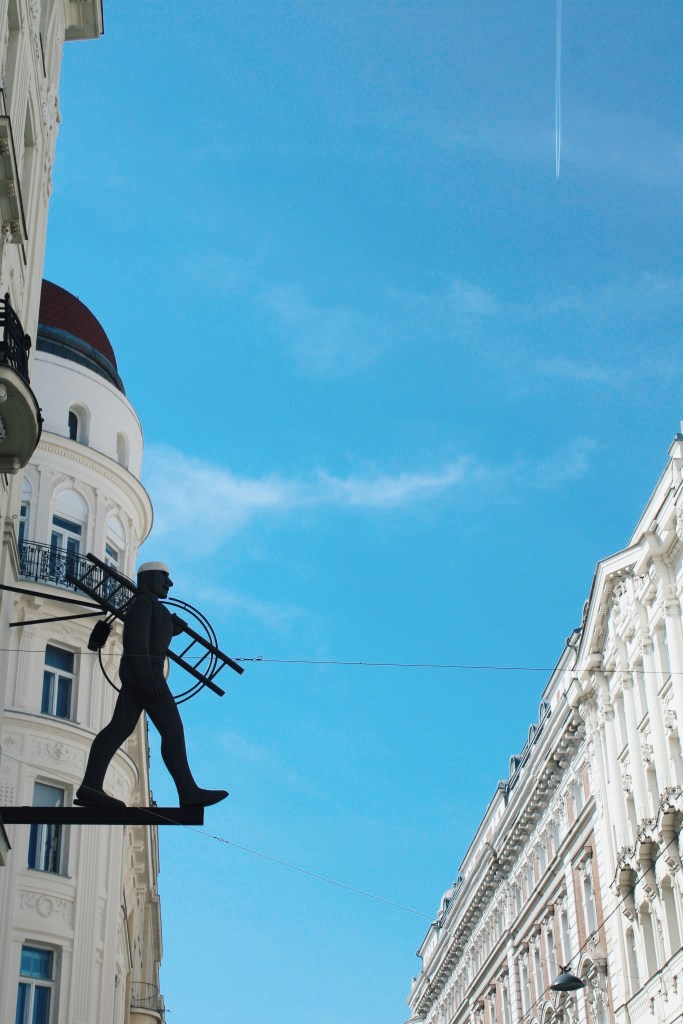
Belvedere Castle and the story of thousand oranges
The first stop of our tour would be none other than the stunning Belvedere Castle, the former residence of Prince Eugene of Savoy, who was famous for his contribution to the military achievements of the Austro-Hungarian Empire.
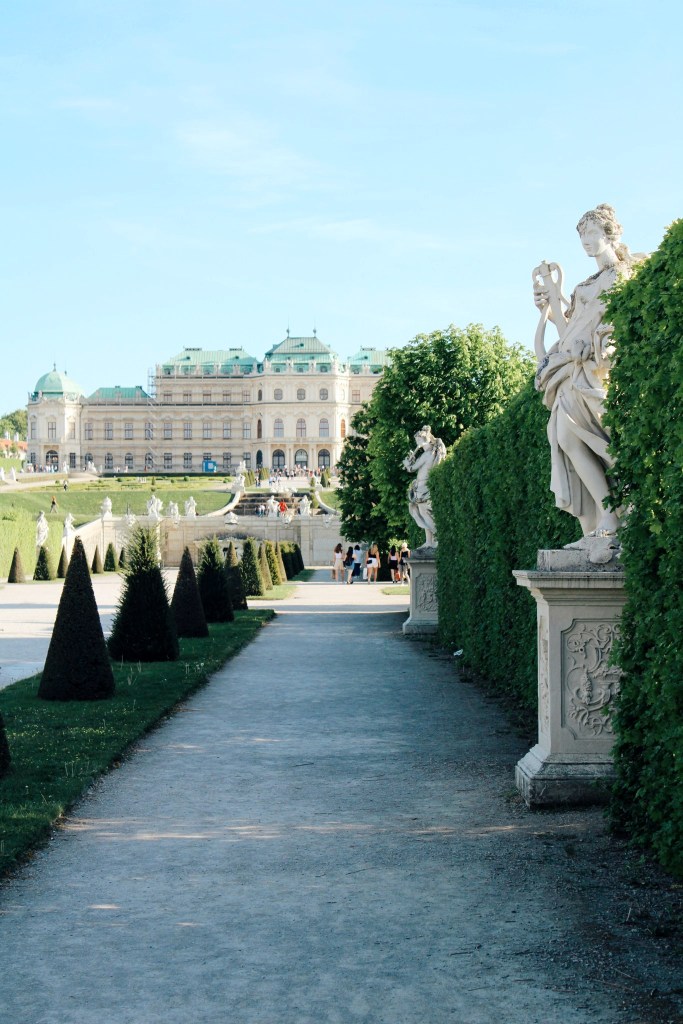
He was a military commander at service of the Habsburg dynasty for more than 60 years. Known as the ‘Savior of the West’, Prince Eugene of Savoy built his majestic residence on a hill with wonderful view of Vienna (now Vienna city centre) which you can admire still – as the panorama of historical part of Vienna has not changed much.
Besides, Princ Eugene of Savoy had two major passions. The first one – more commonly known – was the love of art, which led him to collecting world-famous paintings within the castle walls.
Thus, to commemorate him, there are regular exhibitions of wide range of paintings organized in the Belvedere Castle to this day. I definitely encourage you to check for the exhibition schedule before you visit. Otherwise, you might miss out on seeing artwork from painters like Salvador Dalí, Gustav Klimt, Claude Monet, Paul Cézanne and many more.
However, we must not forget about the second and the less known of Prince Eugene of Savoy’s passions. It was the love of oranges that led him to establish an immense Orangery in the Lower Belvedere Castle. It is said that the Orangery itself still is an architectural marvel and thus, it is definitely worth visiting.
Sadly, the oranges cannot be found there anymore, since they were removed shortly after the death of Princ Eugene but still, the interior of Orangery offers an amazing experience hosting different collections of contemporary art.
Botanical Gardens and the story of exotic medicine
Right next to the Belvedere Castle, you can find one of the Viennese botanical gardens, specifically the one originally established as part of the University of Vienna. I have to admit that the unique beauty of this place made me return there multiple times during my stay in Vienna.
I absolutely admired all the cosy corners the botanical garden has (and there is a lot of them) and thus I had the urge to show this rather hidden jewel of Viennese city centre to all the friends I could guide through the blossoming Vienna.
Another interesting trait of this botanical garden is its Japanese garden section that already leads us to the more exotic character of the entire place.
As you might have already presumed, the garden attached to the University of Vienna indeed was established for research purposes (in 1754 by Empress Maria Theresa) and that is also the primary cause for the wide spectre of plants (over 11 500 species in total) that are being cultivated in its area.

It is known that the main motivation of Maria Theresa was to have a research facility focused on the treatment of various disorders based on the exotic medicine. And though the research focus might have changed over the course of centuries, the botanical garden serves as a research facility of the University of Vienna to this day.
Karlskirche and the story of a great vow
As we head on north from the Belvedere Castle, there is a church that is – at least from my point of view – almost impossible to miss, as its immense dome reaches high above the surrounding buildings.
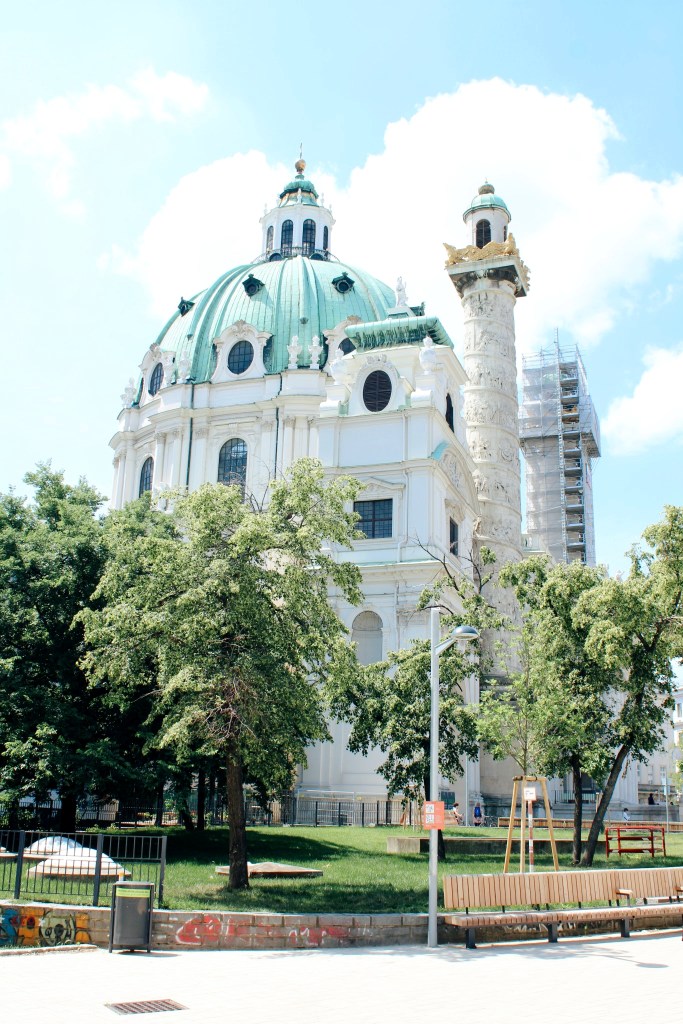
And just as it seems like something one should not miss out on, it only stresses the fact that this church is a true must-see on our wander through Vienna.
Already mentioned Karlskirche (or St. Charles Church in translation), is not just an architectural marvel, but also a great viewpoint for seeing most of the Viennese historical centre in one breathtaking panorama.
Moreover, the interior of this church will truly surprise you. Not just by its historical decorations and paintings, but also by the modern art, that at first glance seems almost too daring to shatter the decorations of the church’s ceiling, but after a longer look, it becomes something so perfectly integrated into the interior of the church, you most probably won’t fancy seeing this church without it anymore.

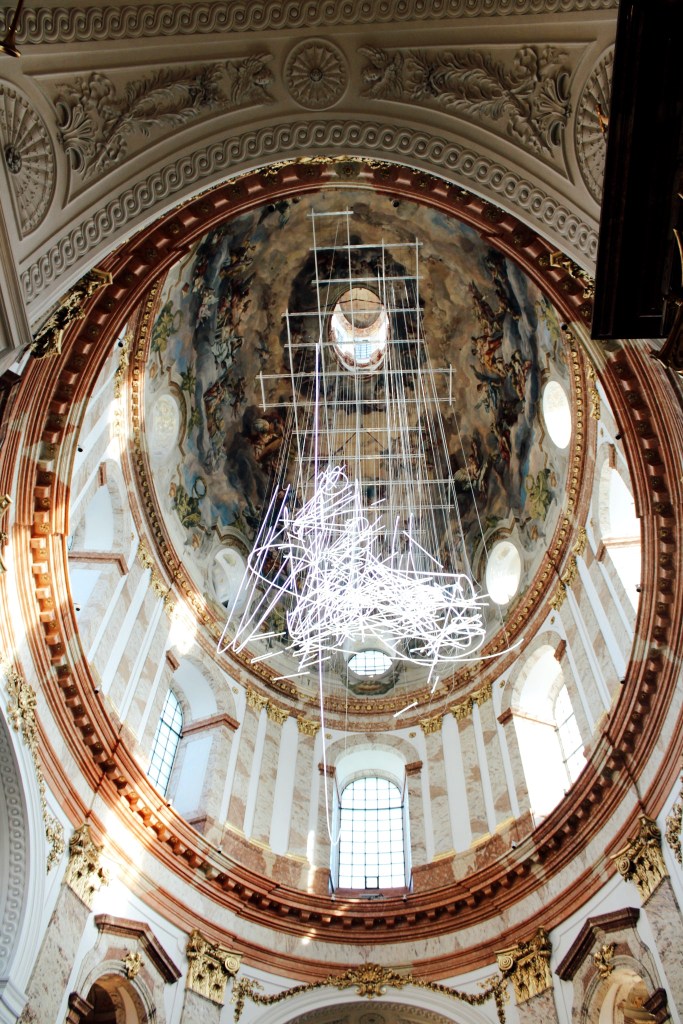

Besides a great visual side of this architectural landmark, Karlskirche has its depth hidden in the story of its origin. Interestingly, this church originated from a vow of Emperor Charles VI who was in almost desperate situation during the plaque outbreak in 1713.
Wishing the city to be spared from the tragedy and thousands of deaths, the emperor swore to build a church if the plaque fades away and leaves the city of Vienna and its inhabitants (along with him) in no harm.
Luckily, his wish was magically fulfilled, as the plaque epidemic faded away almost in front of the gates of Vienna. And so after the storm was gone, the emperor also fulfilled his vow to the city by building this immense and beautiful church.
Yet, this church is connected to the times of plaque even more than by its very origin. Another connection is its very name, as the Karlskirche has been sacred to Saint Charles Borromeo, who was a bishop that contributed a lot to helping people during the plaque outbreak in the 16th century and thus, he is now considered the patron of the plaque sufferers.
Bearing his name, the Karlskirche became a true memory of the Vienna’s recovery from the plaque epidemic and a symbol of its endurance.


Musikverein and the stories from the Golden Hall
Crossing Karlsplatz, which is the square in front of Karlskirche (and a great spot to sit and chat with friends during the warm summer evenings), the path will lead you right to the world-famous Musikverein, the House of Music, which is also the main venue of the phenomenal Wiener Philharmoniker (or in translation, the Viennese Philharmonic).
This symphonic orchestra has recognition on a global scale mostly because of the annual tradition of the New Year concerts, that each year welcome visitors from all around the world but are also streamed to over 150 countries worldwide.
All these concerts take place in the marvellous Golden Hall which is an iconic place bound to the tradition of the New Year concerts. The immense Golden Hall has both great visage and acoustics. Designed in a pompous and opulent style, it was built with aim to resemble ancient Greek temple.
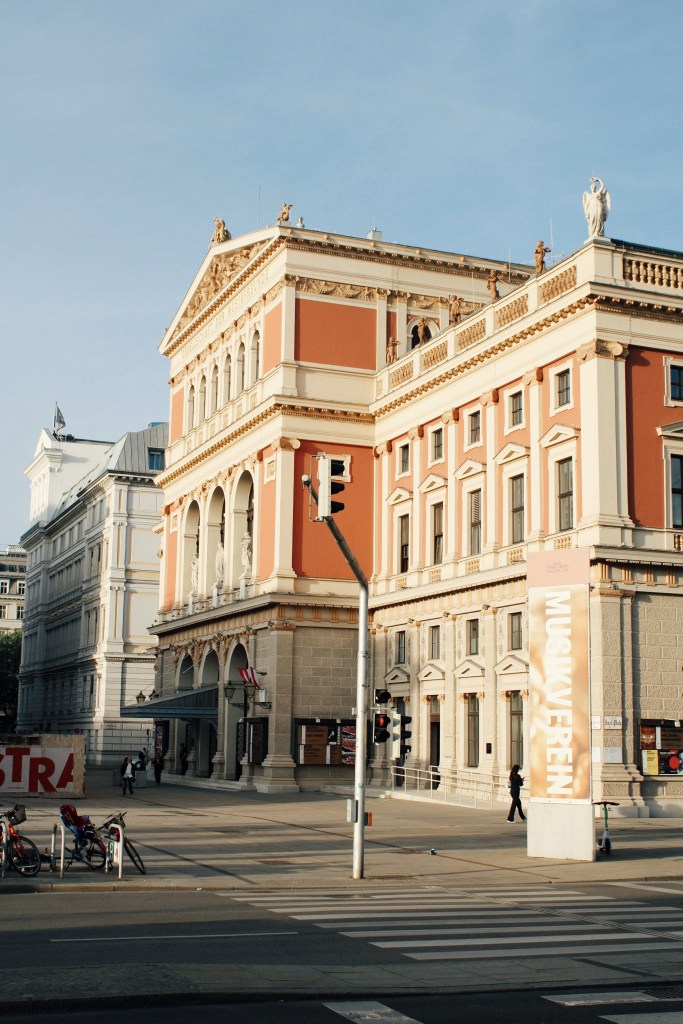
The tradition of the New Year concerts itself began in the dark era of World War II when the concerts’ main purpose was to increase morale during wartime. In December 1939, when the first concert took place on the New Year’s Eve, the total income from the concert was used for donation to the Winter War Relief fund.
The tradition of the concerts then continued even after the war and during those more than 80 years, it even survived hard times including the COVID19 pandemic which resulted in concert being held in the empty Golden Hall.
Although the concerts from the Golden Hall nowadays can hardly ever disappoint their viewers, historically, there is an interesting story from the Golden Hall which entered history as the ‘Scandal Concert’.
This event took place in 1913 and besides awaking an outrage in part of the visitors, it unexpectedly uncovered the cultural clash between the traditionalists and the more progressive spectators who actually liked the avant-garde music played during the concert.
The negative emotions between the two groups of viewers quickly escalated to an open fist fight where even organizers of the concert had their participation. Due to a huge chaos and violence, the concert had to be ended prematurely and the police had to be called to restore order and escort the riotting crowd from the Golden Hall.
During the following lawsuit, it was stated that ‘the slap was the most harmonious sound of the evening‘. This is the reason why the ‘Scandal Concert’ entered history also under another name – the ‘Slap Concert’.
Opera House and the story of the One Ring(strasse) to rule them all
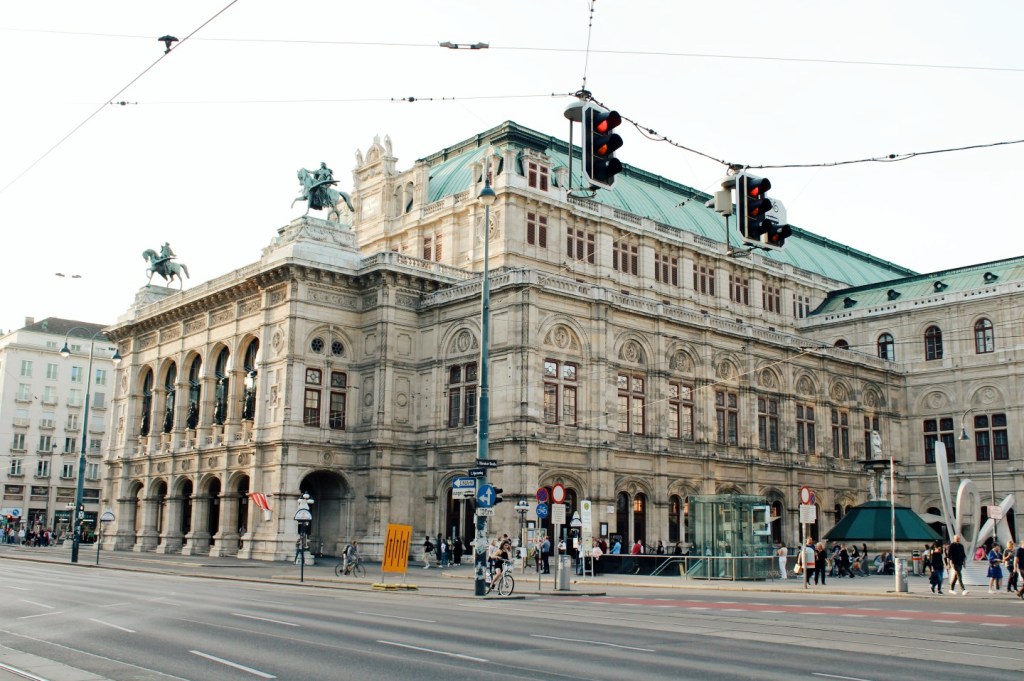
Just a couple of blocks north from the Musikverein, we can find one of the most beautiful historical opera houses in the world. And even though that Viennese Staatsoper (State Opera in translation) does not hold the place of the most beautiful opera house ever, it definitely is the busiest opera house in the world, as it hosts in total 300 performances per year and maintains a wide spectre of plays in their portfolio, as over 50 different plays are performed within its walls each year.
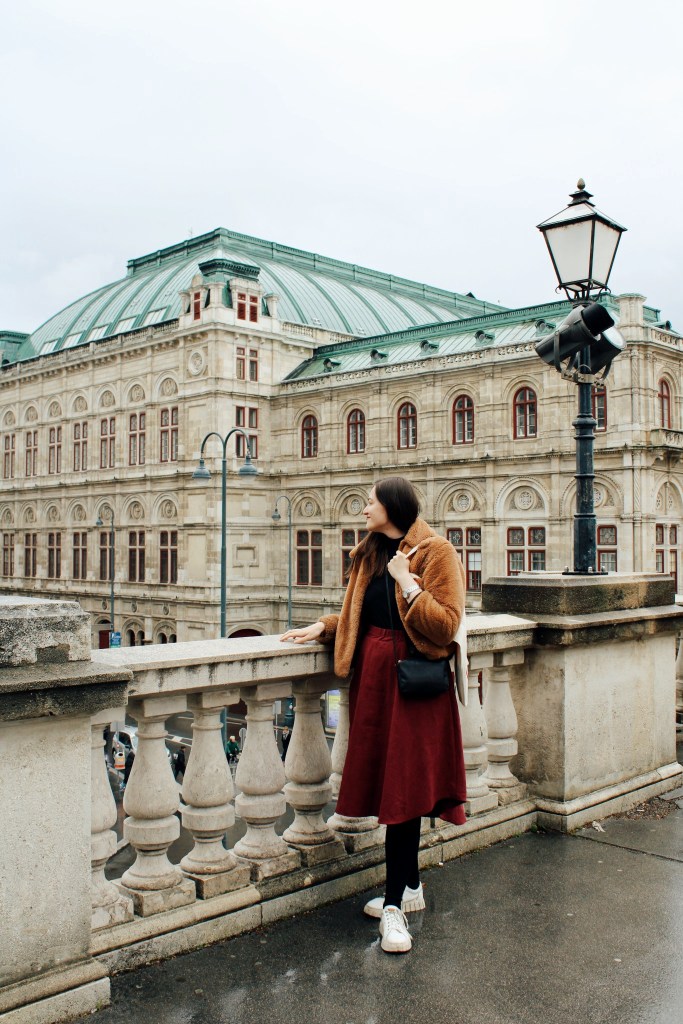
Approaching the building of the Opera House, I think it’s probably the best time to get introduced to the famous Viennese Ringstrasse (or the Ring Street) that has been declared the most beautiful city ring in the world and thus, it has been listed as part of the UNESCO World Heritage.
However, what is now a stunning avenue paving the way along the most prominent architectural landmarks of historical Vienna, was once a hollow piece of land where any buildings and even trees were strictly forbidden.
This was due to the city’s defense mechanisms that utilized a so-called ‘donut structure’ with thick walls on the outer edge of the donut, wide ring of well-monitored hollow land and then, the inner circle of the city centre which was this way protected from Ottoman attacks in the best possible way. Yet, after the end of Ottoman war, this donut structure soon became an obstacle to the growth of the city.
This was only solved by Emperor Franz Joseph I. in 1857, by his – at that time – quite bold decision which set the premise for (according to evidence) one of the most extensive and expensive city renewal projects in history.
The most essential part of the re-build project was to establish the Ringstrasse instead of the hollow area between inner city circle and the city walls.
Interestingly, the Viennese Staatsoper was the first building that was opened at the Ringstrasse. Now, it remains a fully functioning institution for over 150 years, bringing the best theatrical performances to life for the numerous visitors.
St. Stephen’s Dome and the story of the Toothache Lord
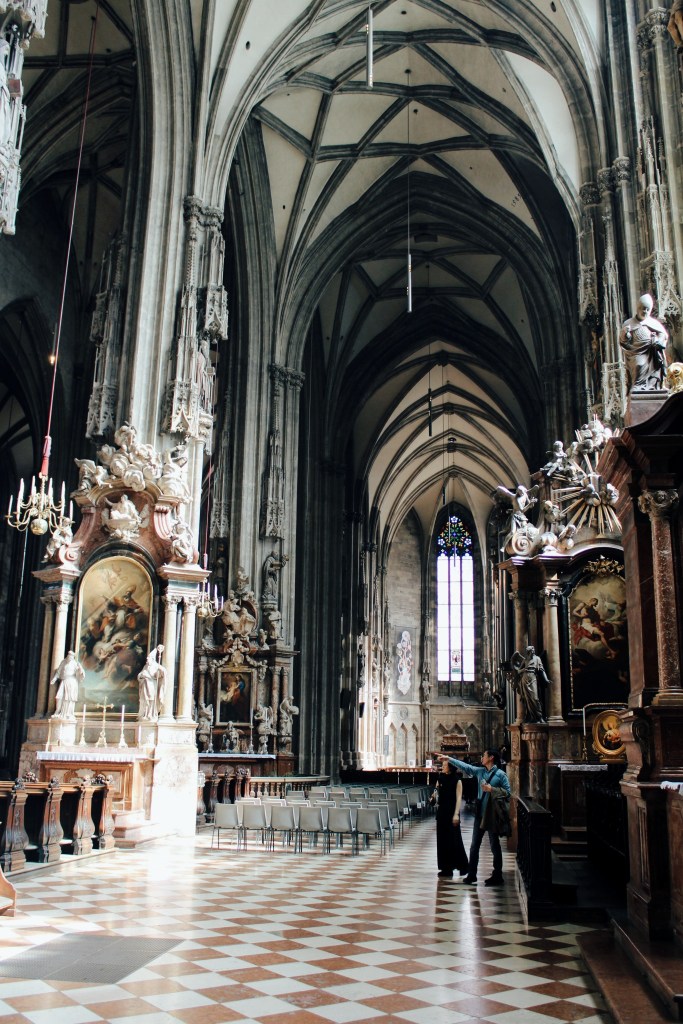
Turning right near the Opera House and walking down the Kärtner Strasse will lead you to another must-see place in Vienna, the Stephansdom (or the St. Stephen’s Dome in translation). First opened in 1137 and later renewed multiple times, this Gothic masterpiece is probably the most significant landmark and a true symbol of Viennese city centre.
What’s fantastic information for the visitors is the fact, that the self-guided tour of the St. Stephen’s Dome is for free. Thus, you can comfortably (and in your own pace) explore the magical interior of the cathedral.
There are many stories connected to various historical relicts hidden within this church, but one and – at least from my point of view – the most interesting is the legend of Zahnwehherrgott, or the Lord of the Toothache.
This story addresses us to the statue of Jesus Christ in the rear – and more peaceful – part of the cathedral. According to the legend, there were once two young rascalls who saw an elderly woman place a wreath on the neck of the statue and laughed that the statue of Christ looks as if it was suffering a really bad toothache.

The legend says the wheels of destiny did not leave this daring act unpunished, as that very night, both of the young boys started suffering from a swift, piercing toothache that did not leave them alone for the rest of their lives.
Since then, people believe that the statue has the ability to relieve the ache of sore teeth and come from near and far to pray to this statue. The legend connected to the Lord of the Toothache happened to be stronger than the wheel of time and thus, it lives on for centuries now.
And the statue of Jesus Christ with crucifix still stands in the rear part of St. Stephen’s Dome, ready to unleash its healing powers. You can go and try it out, if you will. Or you can just go and see the rest of the cathedral and enjoy its nice and even a bit mystical atmosphere.
Also, make sure not to miss out on the views from the belfry (which btw hosts the second largest free-swinging bell in Europe – after the bell in People’s Salvation Cathedral in Bucharest, Romania) and the catacombs that form a large maze underneath the church and the surrounding area.


Mozart’s House and some of the stories of a musical genius
In proximity of the St. Stephen’s Dome, there is the street called Domgasse. This street is famous mainly because at the address Domgasse 5, there used to be the residence of a world-famous musical genius, Woflgang Amadeus Mozart.
According to historical evidence, Mozart spent only 3 years of his life at this residence. Despite this, along with the fact that Domgasse 5 was one out of 12 Mozart’s residences in Vienna, it is the only building (out of those he lived in) that still stands today.
Moreover, it was also Mozart’s residence during a period of his life that was extremely productive, as he was able to compose over 60 pieces including some of his famous operas like The Marriage of Figaro and Don Giovanni while living at this place.
Nowadays, the Mozarthaus at Domgasse 5 functions as a museum summarizing Mozart’s life and work and welcomes visitors from all around the world.
Danube River and the legend of the Danube siren
Walking a bit east from the Stephansplatz will lead you to the side of the majestic Danube, the second longest river in Europe that connects the multiple countries from Germany all the way to Romania (where it flows into the Black Sea) and thus, it historically provided an important trade route that contributed to the historical wealth of the (nowadays) Austrian capital city.
Vienna is one of the biggest cities that stand on the side of Danube and even though the historical centre was formed a bit aside from the majestic river, Danube riverside is definitely an irreplaceable location very much beloved by many locals.
It is a very enjoyable location for walks, chatting with friends and during hot summer days even for swimming in the dead end of the river (which is important, as the flow of Danube is very strong and too dangerous to swim in).
Of course, such popular location in Vienna truly has its stories. The most famous one is the legend of a Danube siren, an irresistibly charming young woman – a mermaid – who from time to time reveals her existence to help fishermen by warning them about upcoming danger.
However, as much as she is a friend, she can become a foe. It is said that many young fishermen found death rushing into her arms as she was calling their names with her sweet voice. The legend got so well known among locals, that a so-called Danube Mermaid Fountain now stands near Ferstel Passage to remind people about the story of this mysterious being.
Café Demel and stories of love letters and violet sorbet
After our short detour to the riverside of Danube, let’s return to the heart of the city centre. Getting closer to Hofburg, we shall not miss out on one of the oldest and the most beautiful confiseries in Vienna, Café Demel.
Established in 1786, Café Demel soon became a gastronomical phenomenon of Vienna and thus a frequently seeked place by high society already in times of the Austro-Hungarian Empire.
Visiting Café Demel during those days, you might find there many of the Viennese artists, like for example Helmut Qualtinger who even addressed to the Demelinerinnen (the nickname for the waitresses at Demel) during his cabaret performances.
But the artists were not the only visitors of Café Demel in those days. The place also served for meetings of aristocrats including the members of the reigning Habsburg dynasty. In case you decide to sit in one of the top floors of Café Demel, you might find out the interior still keeps its historical appearance.
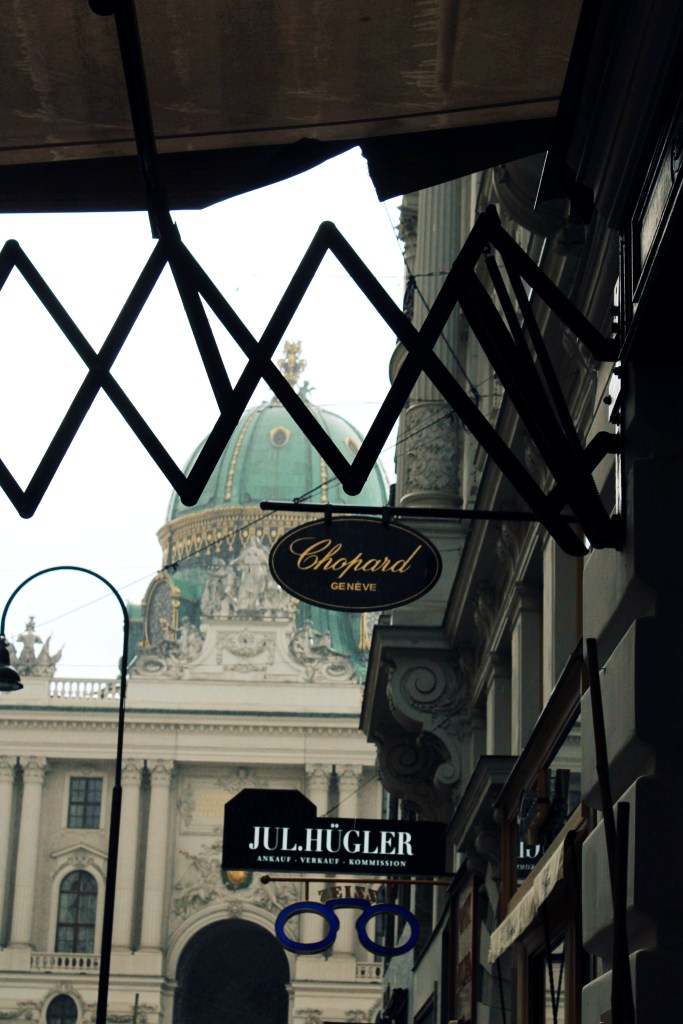
Thus, it might not be that hard to imagine the Emperor Franz Joseph I. seated at one of the neighboring tables, finally having peace from diplomatic negotiations, writing a letter to his beloved wife, Sissi.
Or imagine Sissi herself, seated at the table next to you, as she cheerfully takes some of the Demel’s famous violet sorbet. Because in reality, the Empress Sissi used to love the violet sorbet served at Café Demel. So what better recommendation could there be for you to try the violet sorbet of Café Demel, too?
Of course, it would be a grave mistake to sit and absorb the atmosphere of the historical confiserie without some delicious cake on the plate. Besides the famous sorbet, Café Demel has a wide portfolio of traditional desserts of all colours and flavours.
They also serve good coffee, just a small warning for the specialty coffee lovers – you will only find traditional Viennese coffee at Café Demel (which is of course good for experiencing an authentic Viennese coffee), so for a lightly roasted specialty coffee with rich flavour profile filtered through a V60, you will need to search for some other place (like some of those listed at the end of this post).
Still, for me as a specialty coffee lover, Café Demel is a great place to see, especially for its elegant historical design, delicious desserts and the cosy and peaceful atmosphere this place offers. So definitely consider visiting, if you have the opportunity to do so.

Hofburg and the stories of ghosts and secret passages
Another great thing about Café Demel is that it’s located only a couple metres away from the royal Hofburg Palace which can also be classified as one of the main landmarks of Vienna. Hofburg Palace is absolutely giant and due to its immense dome, it also can only very hardly be missed on your wanders through the historical centre of Vienna.
Nowadays, the Hofburg Palace is home to a museum which pays hommage to one of the most beloved royals in history, the wife of Emperor Franz Joseph I., Empress Elisabeth of Austria, also known as Sissi.
Truly, the Sissi Museum provides many information about the life of Sissi who was in her time definitely the most progressive ruler worldwide.
Some even say that Hofburg is haunted till this day, as the ghost of Sissi wanders its halls trying to find peace after her tragic death due to assassination in Geneva.
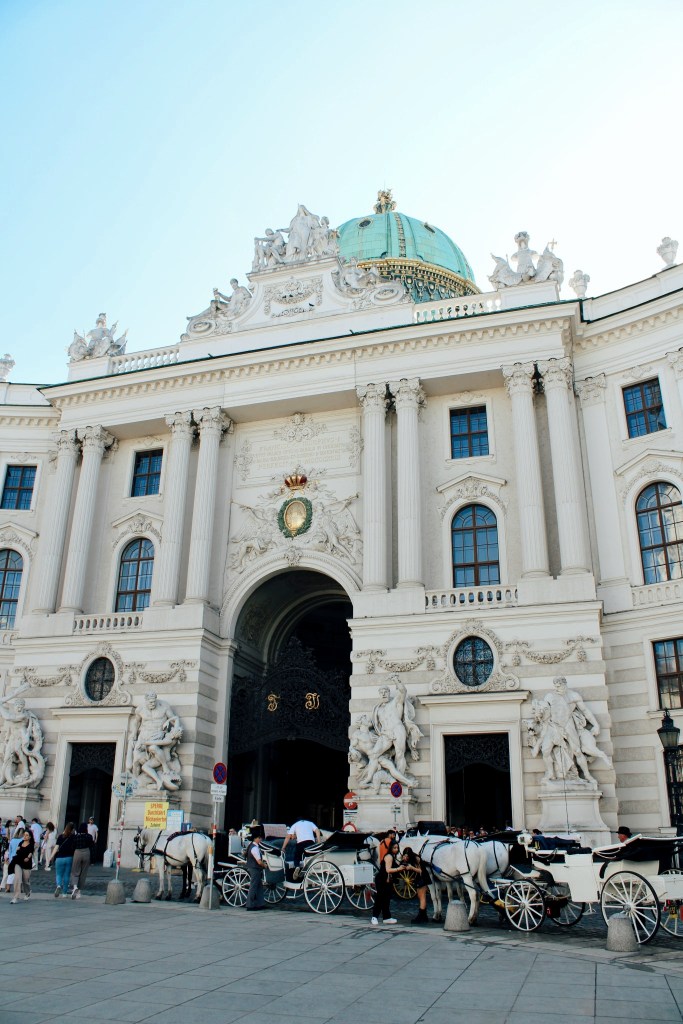
From time to time, she appears and then disappears again, probably walking through the plethora of secret tunnels, that the Hofburg Palace is interwoven with.
Schweizerhof and the story behind its name
Hofburg Palace is stunning both in its interior and exterior. So even if you decide not to see the Sissi Museum within the walls of the palace, the area of Hofburg still has a lot to offer. One of the most remarkable places is the vast square in the middle of the Hofburg area named Schweizerhof (meaning the Swiss Court in translation), which is actually the oldest part of the Hofburg Palace complex.
Now, if you wonder how did a Swiss Court end up in the middle of royal palace in Austria, there is a story explaining the name of this place.
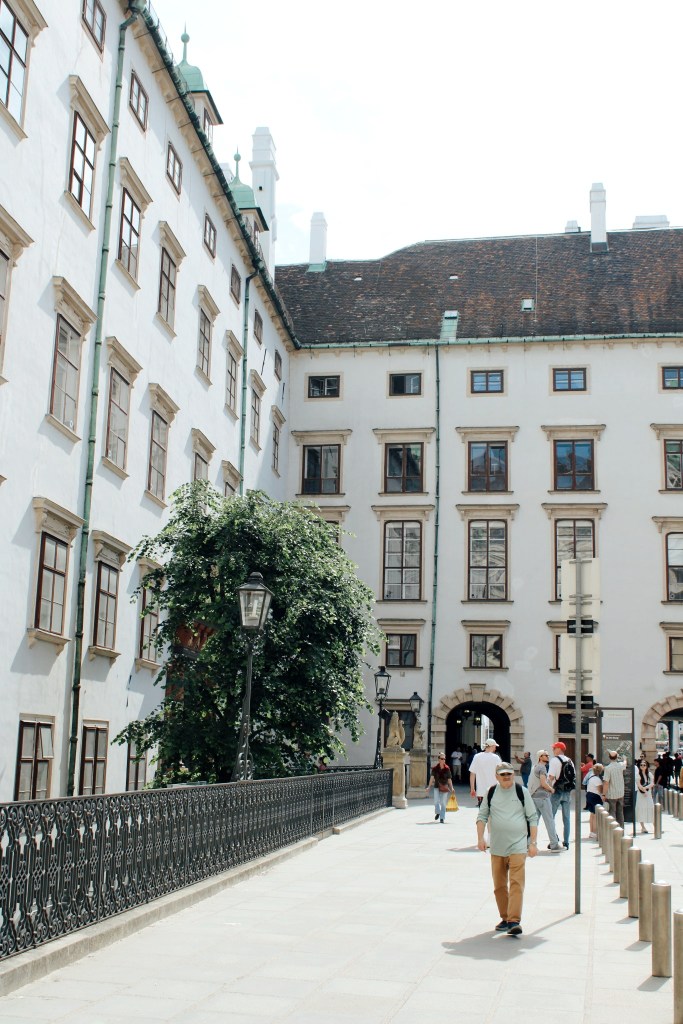
This story brings us back to the 18th century when the vast Hungarian Empire was under reign of Empress Maria Theresia.
In those times, the Swiss soldiers were without a doubt the most loyal and reliable military force in Europe and thus, the Habsburgs invited them to guard their imperial possessions.
You might have seen historical traces of the Swiss guard’s good reputation in other places in Europe (e.g. in Vatican where La Garde Suisse Pontificale is still a prestigious institution protecting the pope estate).
In case of the Hofburg Palace, the period of the Swiss guard protecting the Habsburgs was quite short (it lasted only 22 years), yet the name of the court got so deeply linked to the Swiss military force that the name Schweizerhof got preserved until today.
National Library and the story of the legends from paper and ink
For me personally, the best part of Hofburg Palace complex is the National Library of Austria. I absolutely love books and their power to create space for healing, amusement, tension, relief and basically any emotion I can possibly imagine.
The Habsburg dynasty also knew about the priceless value of books, especially as the sources of information. Thus, in 1368, the Habsburgs expanded and maintained this collection which now has more than 11 million books and is the largest collection of books in today’s Austria.
Interestingly, this institution (in the old times known by the name Imperial Court Library) was the largest book collection worldwide for as long as until the end of the World War I.
As indicated in the title, some of the books in this library are true legends, as they are the only copy either produced or still preserved till this day. An example of such unique books in the National Library of Austria comprise for example the Golden Bull Manuscript – the key document of Holy Roman Empire, or Tabula Peutingeriana – the map of the road network in the Ancient Rome).
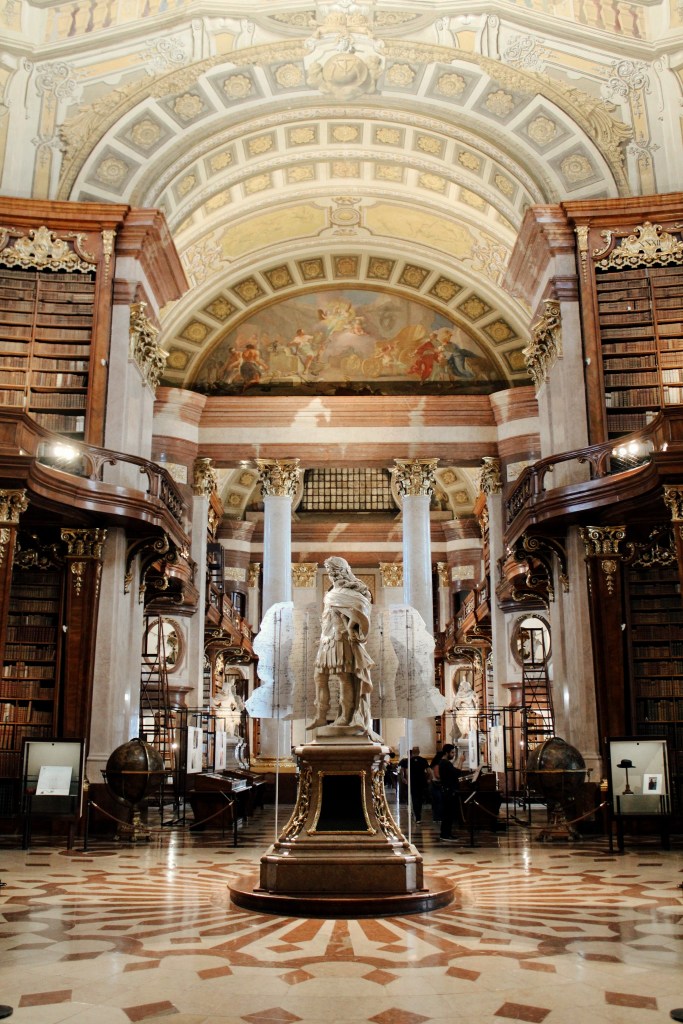
Furthermore, the library hosts a unique collection of terestrial and celestial globes that are displayed in the Globe Museum (currently the only Globe Museum in the world) and the Papyrus Museum that holds a collection of papyri, some of which are even 3000 years old.
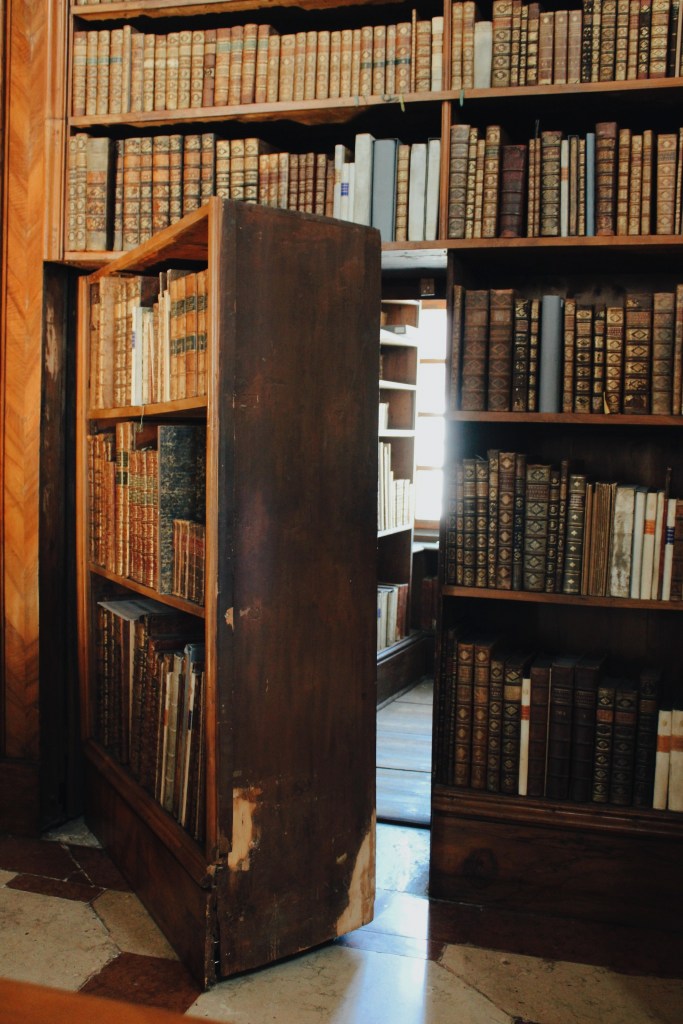

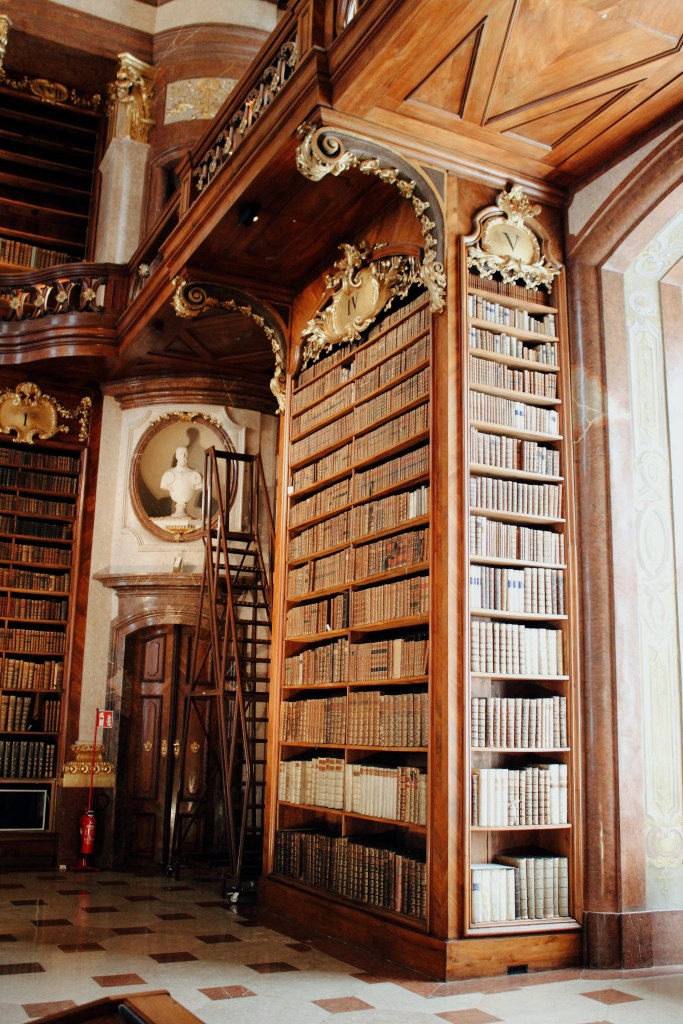
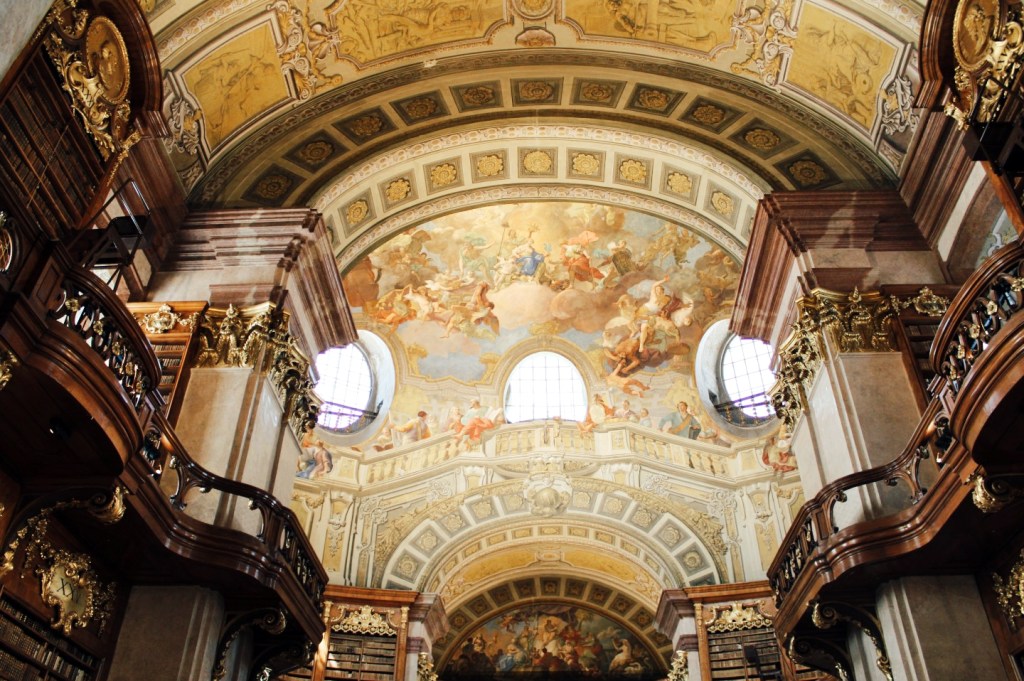
Importantly, you also have a chance to have a copy of your book in this beautiful Baroque library. Since the National Library of Austria collects every manuscript and dissertation published in Austria, the Ph.D. students that get their doctoral degree in any of the Austrian universities get a copy of their thesis stored in this library.
What an amazing satisfaction for the exhausted Ph.D. alumni, isn’t it?
Schmetterlinghaus and the story of the butterfly arrival
Walking from the National Library through one of the marvellous passageways in the Hofburg Palace complex will lead us to another highly seeked place in the historical centre of Vienna, the famous Burggarten that was once private park of the emperor but after the fall of the Habsburg monarchy, it was opened to general public. Nowadays (as you can see in one of the pictures), the Burggarten is a very popular venue among locals, either for walks or picnics on the grass.
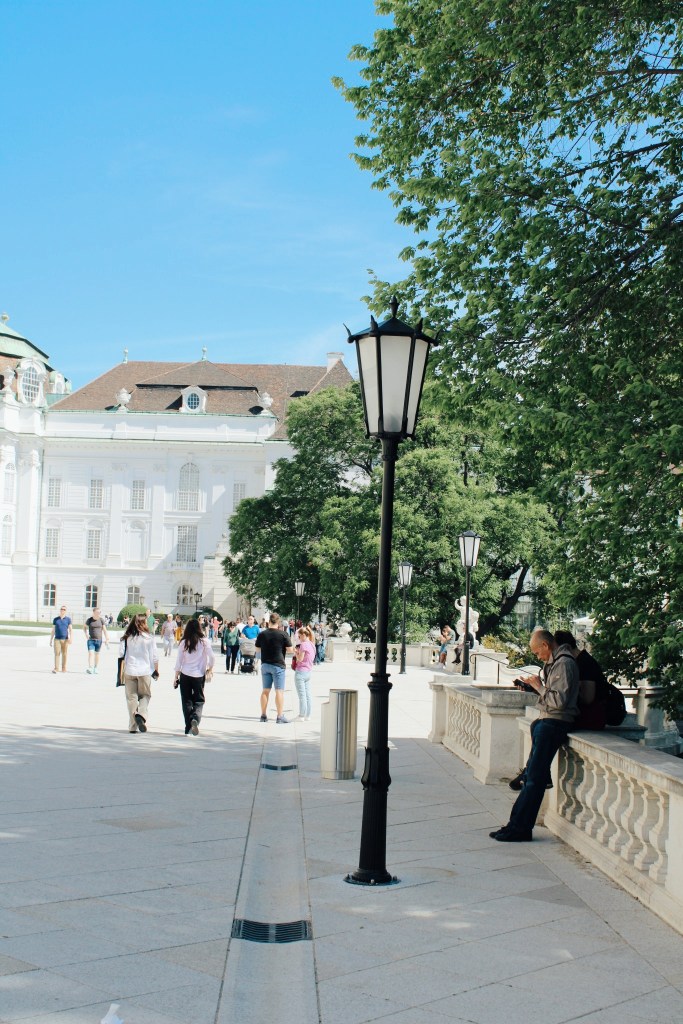

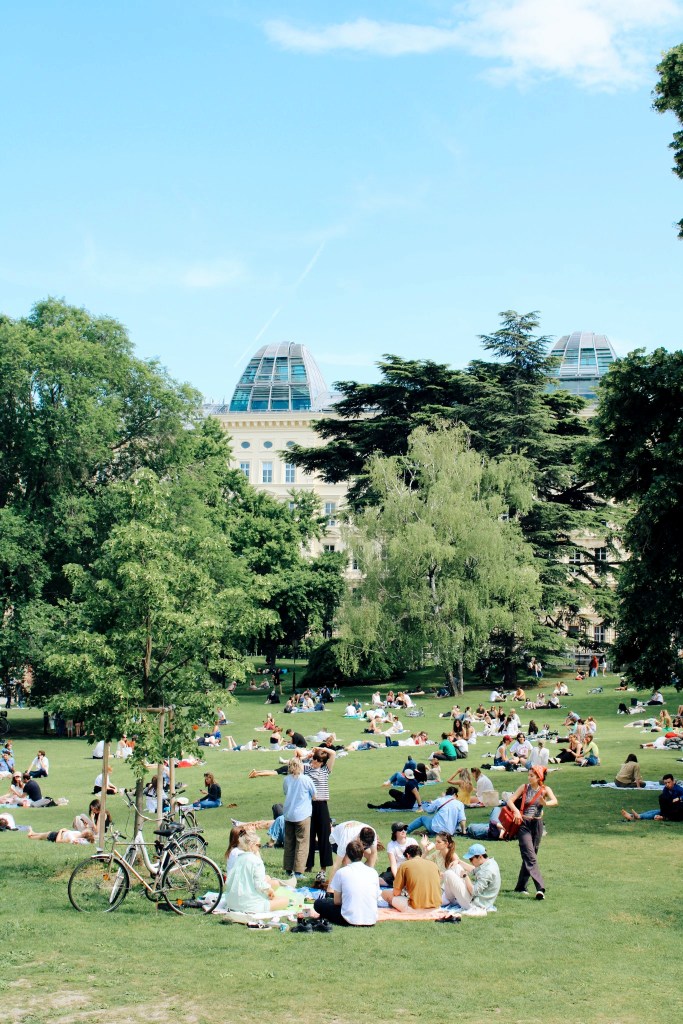
Moreover, Burggarten is also the location of sunny Schmetterlinghaus (or the Butterfly House in translation) which is stably one of the most frequently visited tourist attractions in the Vienna city centre.
Originally, the Schmetterlinghaus was established as a classic greenhouse, bearing the name Palmenhaus (or Palm House in translation) according to the wishes of the royal family.
Its main purpose was to store and grow exotic plants that were one of the emperor’s great passions. It is known that specifically Emperor Franz Joseph I. and his wife Sissi used to spend long hours in the Palmenhaus, as it was their absolutely favourite location for recreation.
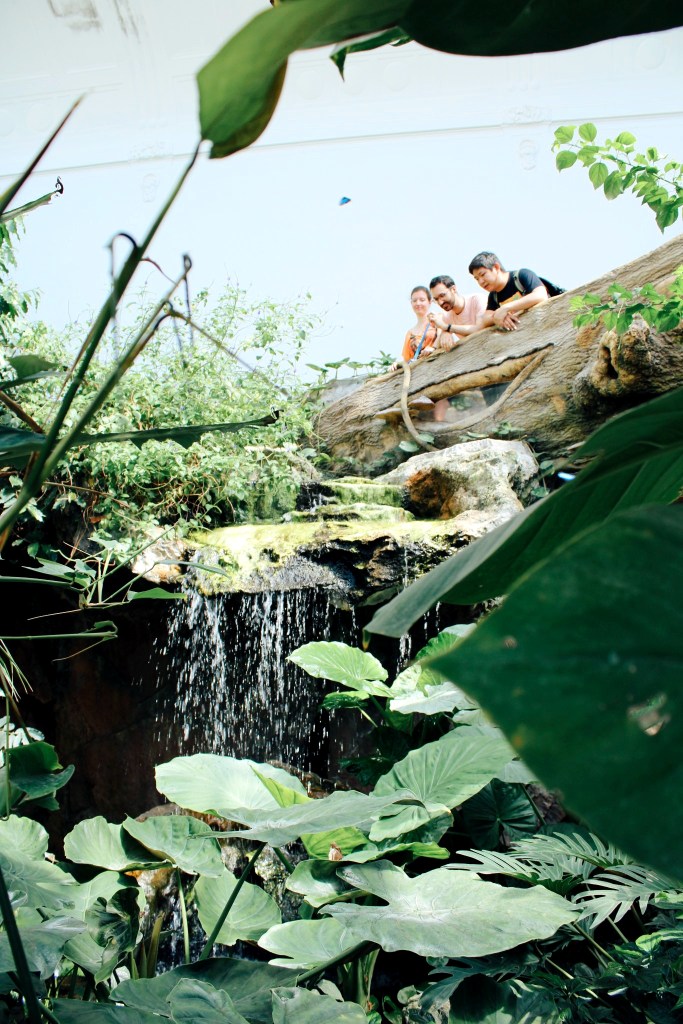
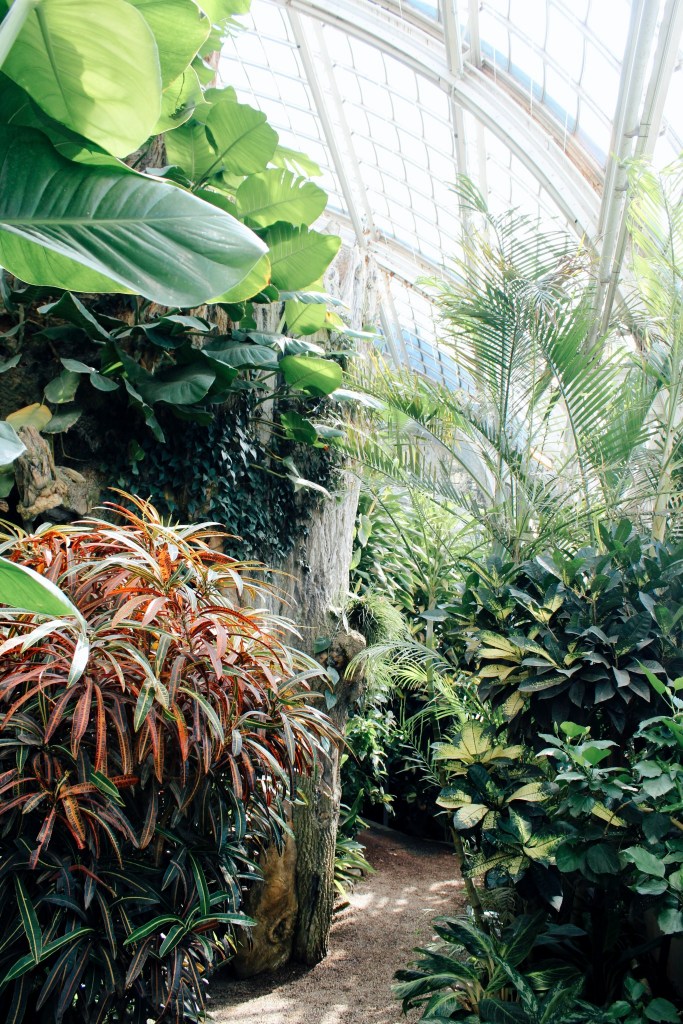

However, the arrival of butterflies (that are now a stable part of the greenhouse, much beloved by people of all age categories) was something that the Habsburg dynasty never experienced.
The idea about creating a butterfly collection in the area of Palmenhaus came up more than 70 years after the fall of Austro-Hungarian Empire. Yet, Hofburg Palmenhaus was not the very first location of the butterfly collection in Vienna.
First version of Schmetterlinghaus was actually established in the Sonnenuhrenhaus (nowadays the Palmenhaus), one of the greenhouses in the gardens of Schönbrunn, where it resided until the massive restoration of the Schönbrunn Palace in 1997.
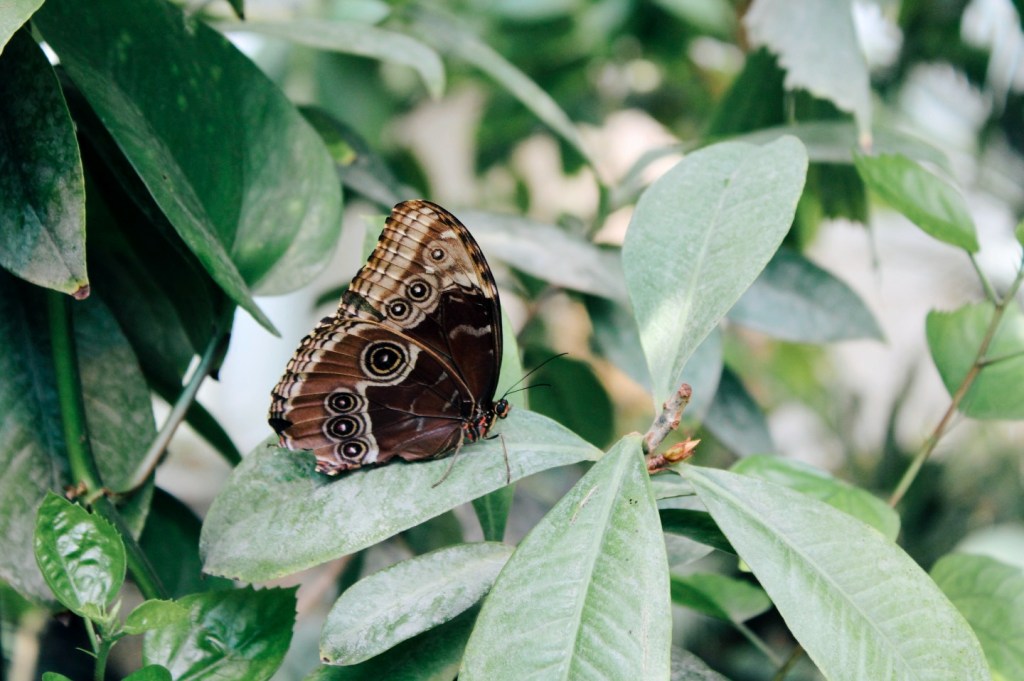
Thus, from 1998, Schmetterlinghaus is stably opened in the former Palmenhaus of Hofburg (now re-designed and supplied with larger trees, more kinds of exotic flora and mulitple sources of fresh clean water) where it creates suitable habitat to approximately 400 butterflies of more than 40 different species.
And believe it or not, this unique attraction has had sufficient power to awake the inner children in most of the people I’ve managed to ask about this. So if you plan to visit the interior of Schmetterlinghaus, besides the cute little butterflies, be prepared for re-encountering also the slightly childish and reckless version of yourself!
Albertina and the story of great love for (not only) art
A few hundred metres away from Burggarten (and you can notice that we are now on our way back to the pompous Ringstrasse), there is the historical building of the prestigious Albertina Gallery which now hosts one of the world’s largest and most diverse graphic art collections comprised from almost a million pieces from the period of renaissance to the present.

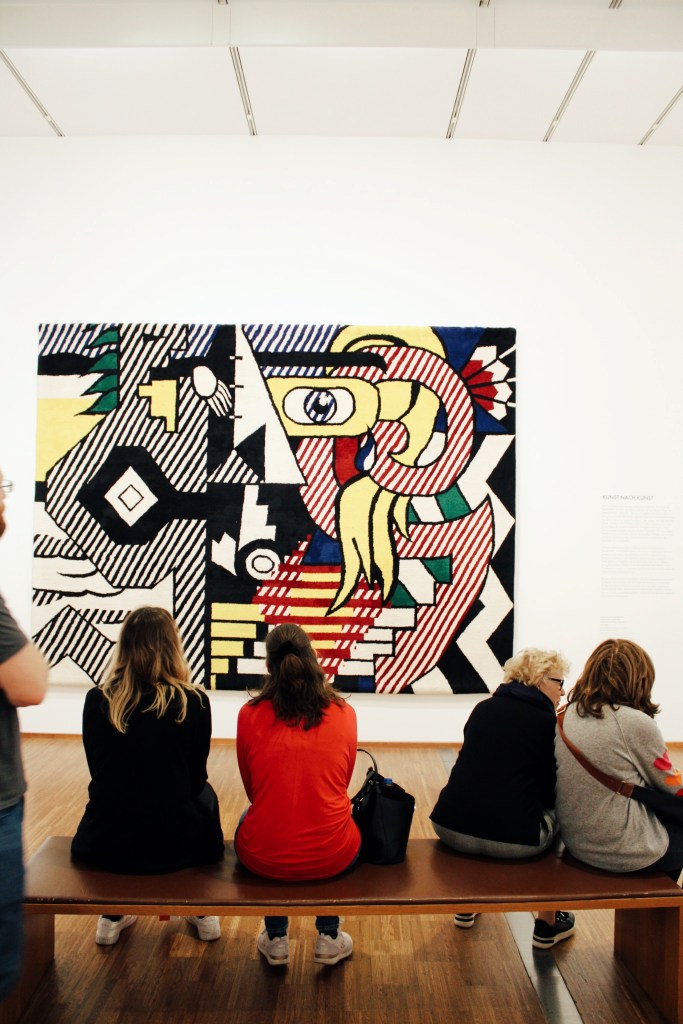

Of course, like the absolute majority of groundbreaking projects, even the Albertina’s art collection started from a great passion – and a lovestory. There were in total 16 children in the family of the Empress Maria Theresa and her husband, Francis I.
And since the main motto of the Habsburgs was: ‘Others solve conflicts with violence, we solve conflicts with marriage…’, you can probably imagine that there was not a lot of space for real love and romance in the lives of their children. Most of them were ‘sold’ to marriage for political reasons.
But in case of one child – Maria Christina, the fifth daughter of the Empress Maria Theresa – there was space for a lovestory. As Maria Christina was lucky enough to be Maria Theresa’s favourite child, she was the one with the privilege to choose who she’d like to marry.
And she seized this chance to choose the man she really loved, and who really loved her. With her husband, Duke Albert of Saxe-Teschen, they spent their entire lives in a happy marriage. Moreover, sharing their deepest passion – the love of art – they have established a rich collection of paintings in the Palais Tarouca, their former residence that is now named after Duke Albert – Albertina.
From a point of view of a great art fan, I must say that Albertina is an absolute must-see in Vienna, as it holds priceless paintings of the most famous artists in history.
However, you should rather keep in mind that the art collection inside Albertina is quite immense, so it’s good to book min. 3 hours for the visit of the gallery. Also, be prepared for the crowds and if you can (and want to enjoy your visit), rather plan it off season or on some random workday, ideally in the morning hours. And don’t be affraid to have high expectations, as this gallery will definitely not let you down.
Volksgarten and the story of war and roses
Heading north from Albertina, we might encounter the Volksgarten (or the Folk’s Garden in translation). This place is like an oasis of peace in the very heart of Vienna, as it’s just a couple metres away from the Ringstrasse but it’s very well set aside from the sounds of the busy metropole.
It’s almost surreal to imagine that this place has known violence. But truly, violence has had a lot of say in the origin of the Volksgarten.
The story takes us to the beginning of the 19th century, to the era of Napoleonic wars across Europe. The self-proclaimed Emperor of France entered Vienna in 1809, forcing Habsburgs to sign the Peace Treaty which made the reigning dynasty Austro-Hungarian Empire give up multiple territories in favour of Napoleon and the French.

Still, the signed Peace Treaty and sense of win did not stop the violence of Napoleonic troops, as they blew up several spots in Vienna as they were exiting.
One of such places was the area of fortifications northwest from the city centre. Though, the Habsburgs took this farewell gift as an opportunity to create more space for recreation and peaceful walks in the centre of Vienna. And just like in the case of Burggarten, also the Volksgarten (as the place originally created for the imperial family) was later transformed into a space for the recreation of the Viennese folk.
Throughout the years, the people of Vienna were utilizing this park for not only relax but also for cultural enrichment. Historically, there were regular concerts being organized in the Volksgarten, where the members of the Strauss family of composers presented their newly composed pieces to the broad public.
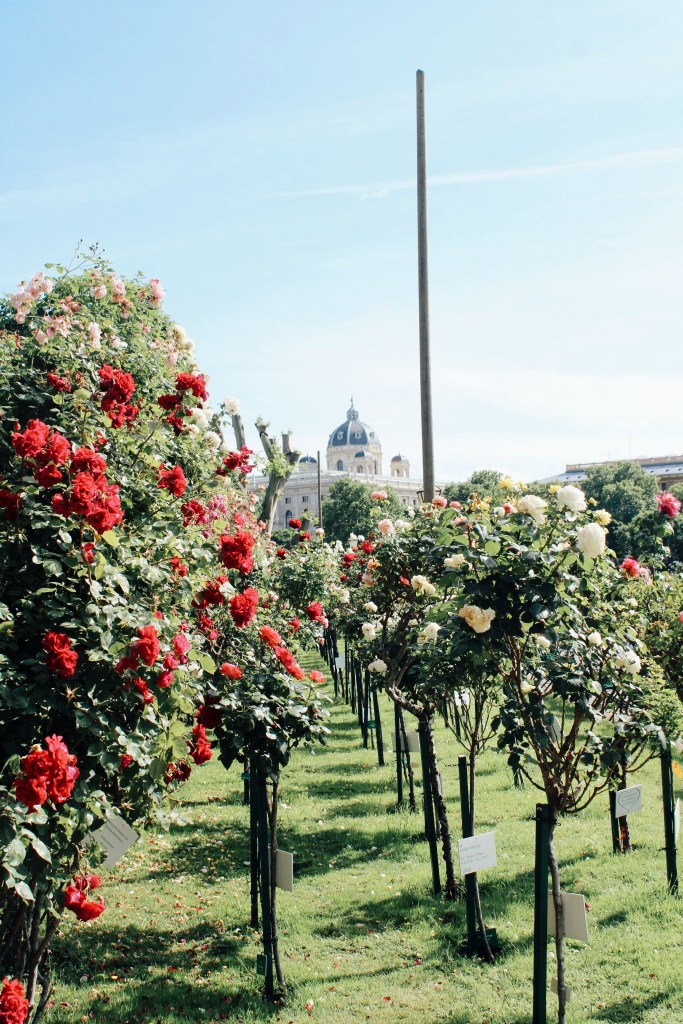
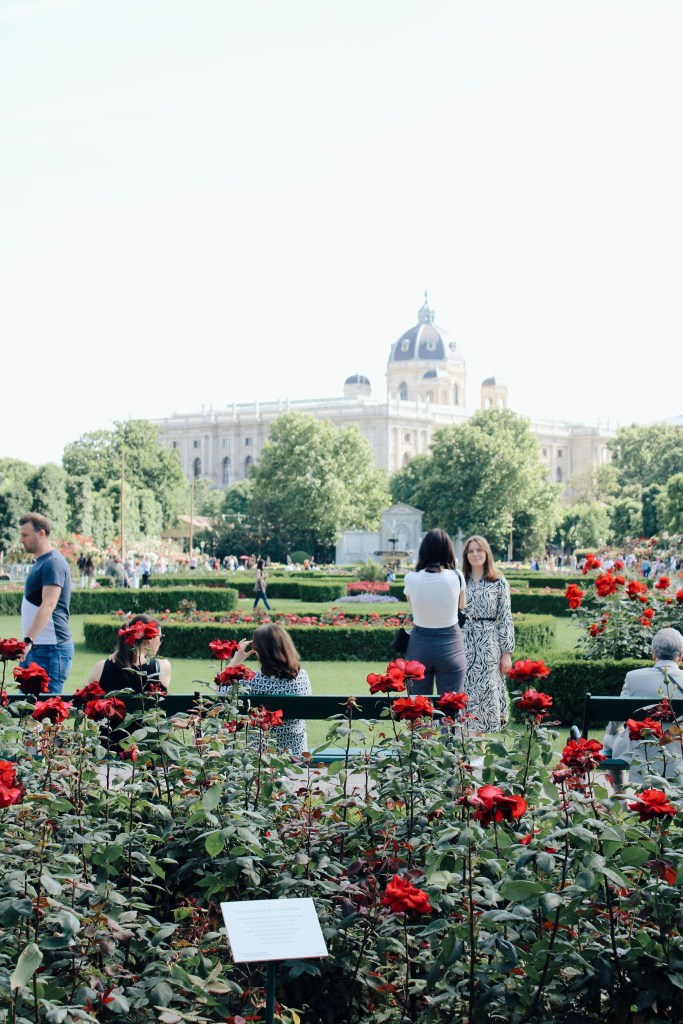
However, nowadays, the garden is notoriously known for another thing – the roses. The Volksgarten is home to seemingly endless lanes of roses, hosting more than 3000 rose bushes of 200 different varieties.
Furthermore, most of the roses were planted with a personal dedication to one’s partner or a close relative. This is also the reason why the garden is the most stunning in the late spring when all these roses start to blossom (as you can see in the pictures from late May).
So if you’re coming to Vienna in spring, make sure not to miss out on this charming spot with lovely views of endless blossomy roses – and 2 grand museums in the background.
The musems and the story of Viennese twins
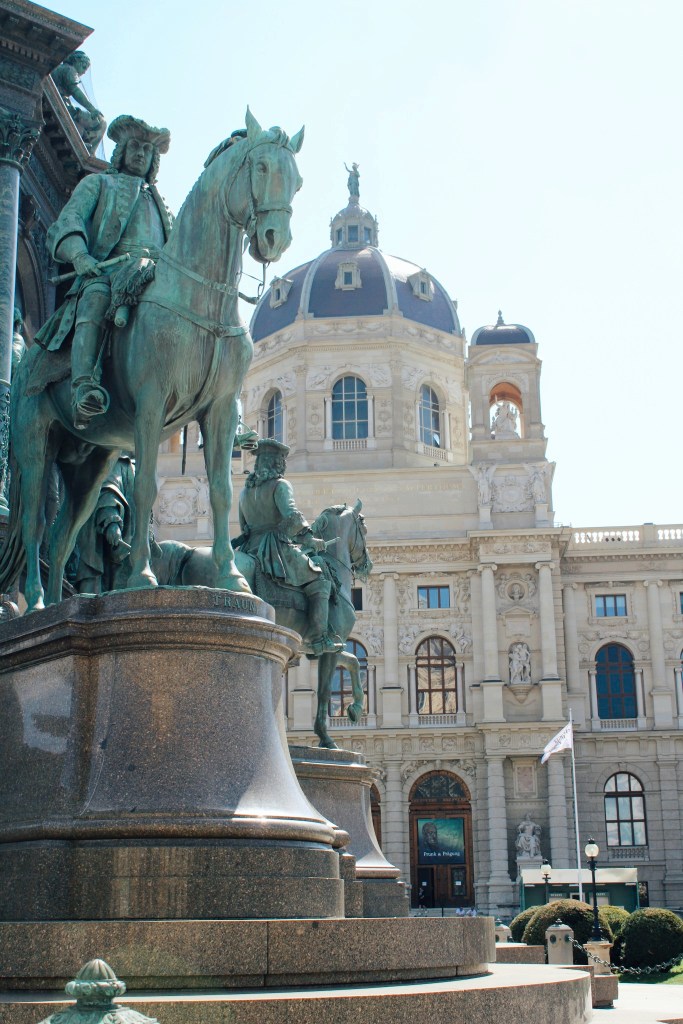
As you might have presumed already, the 2 pompous buildings of the museums are the next stop on our tour of Vienna. The Kunsthistorisches Museum (Art History Museum in translation) and Naturhistorisches Museum (Nature History Museum) are sort of like Viennese twins, both established as part of the same project, designed in a perfectly symmetrical way.
If you stand in the area of Maria-Theresienplatz (the Maria Theresa square) where the museums are located, you might start feeling a bit small – just like I did, due to the overwhelming appearance of the 2 buildings.
Now, it might be surprising for you to find this out, but these 2 buildings were far from everything that the Habsburgs had in plan to build in this area. In fact, the twin museums were just a mere preset of the grand Imperial Forum that was about to stand tall in the centre of Vienna.
Catching up to the international competition – mainly the French – the Habsburgs really had in plan to build an area in the style and format of Versailles at the border of today’s Vienna city centre. Though, due to financial reasons (and most importantly, the unexpected outbreak of the World War I,), the project was ended prematurely.
The only accomplished aims was the establishment of the twin museums (that were used to display the vast collection of artifacts the Habsburgs collected from all around the world) and the Neue Burg (New Castle) which is the extended wing of the Hofburg Palace complex.
Among other aims that never came to life was the establishment of not one, but 2 triumphal arches and the monumental plaza that would connect the area of museums and the Hofburg Palace.

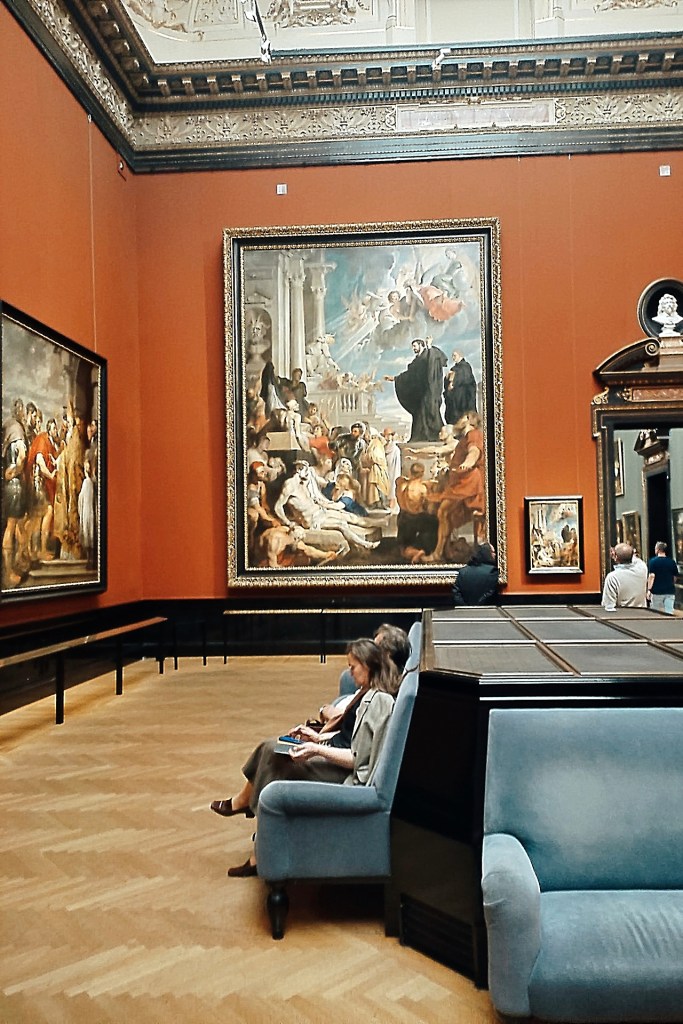

Though the plan never came to a successful close, the plaza in between the museums has always seemed monumental enough, at least to me.
Regarding the museums, I’ve only visited the collection displayed in the Kunsthistorisches Museum but I must say that the visit of the museum left a very good impression on me.
Of course, the same that accounted for Albertina also accounts in this case – it’s better to visit this place off season and in the morning hours. And surely it’s better to book at least 3 hours from your day for the visit, as we tried to see the collection within just 2 hours and it really got us under time pressure in the end.
Parliament Building and the story of a melting pot
Just one house away from the museums, you might find the very centre of Austrian democracy, the Parliament of Austria. It probably won’t take too long for you to notice that the building of the Austrian parliament is just as monumental as the area of the twin museums.
And here’s why – since the Austro-Hungarian Empire was at times of its biggest glory a real melting pot of nations and cultures, it had to be emphasized that the royal family cares about democracy and everybody’s right to express their opinions.
Thus, the Parliament building was designed in the style of Ancient Greece, the cradle of democracy, copying many of its architectural traits, like columns and statues but also symbols and shapes.
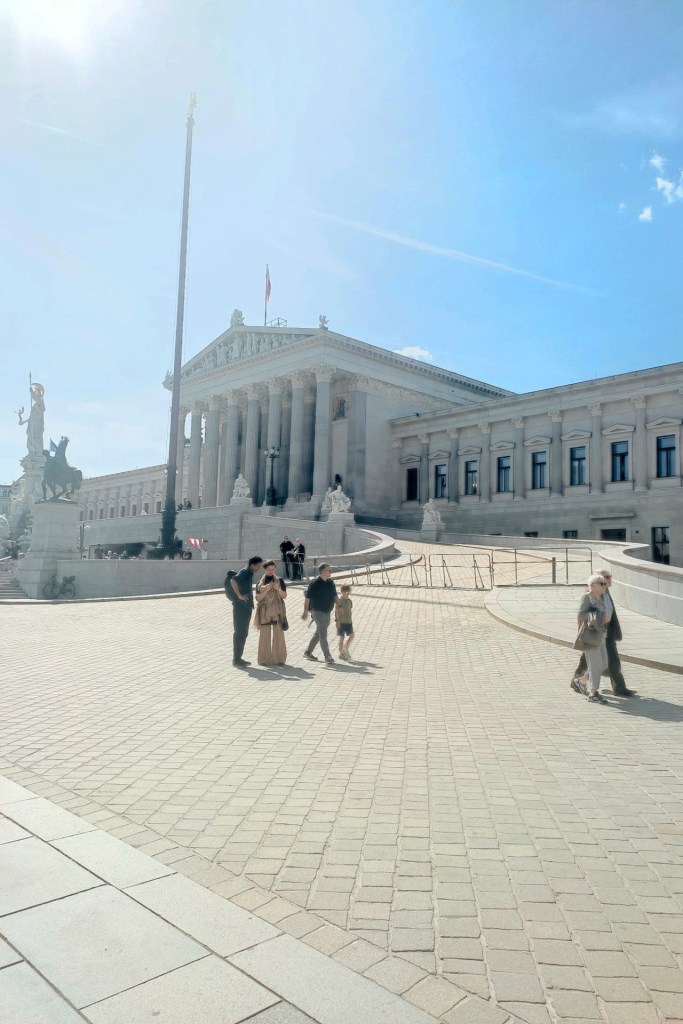
Though, the very pro-democratic visage of the building of course did not fully reflect the state of the government during the times of the Austro-Hungarian Empire, where the melting nations and social classes went through more than one rough moment.
One such dramatic situation was described by Mark Twain who spent several years of his life in Vienna and by the way, participated in the sitting of the Austro-Hungarian government which took place on 28th of October, 1897.
According to his words (published in the Stirring Times in Austria), this parliament sitting was of grave importance, as the contract that held Austria and Hungary together was just about to expire within 2 months, which was a chance that the members of the multi-nation empire wanted to seize for the sake of their freedom.
Thus, the sitting broke 2 records at the time. Firstly, it lasted more than 2 days which made it the longest parliament session ever conducted. Secondly, the sitting comprised a 12 hour long speech of Dr. Otto Lecher, that was – according to the words of Mark Twain – ‘the longest flow of unbroken talk that ever came out of one mouth since the world began’.
In his work Stirring Times in Austria, Mr. Twain describes how essential the content of the speech was for the decision-making process and how bravely the scholar from Brno analyzed the situation to the smallest details.
Meanwhile, he almost lost strength in his legs, so the colleagues had to supply him with 3 glasses of wine, 5 cups of coffee and 1 pint of beer so that he would manage to finish his speech. Funny – if I drank all of this, I would surely be finishing my speech completely drunk. But I guess, those were different days back then, during the stirring times in Austria…
Burgtheater and the story of its secret tunnel
But let’s move on to another place that’s full of drama, and that would be the Viennese Burgtheater. Situated again just a few (hundred) metres away from the Parliament Building, the Burgtheater – or ‘die Burg’, as the locals call it – has been one of the key places of artistic and cultural life in Vienna ever since its doors were opened for the first time in 1748. It is important to mention that it is also the oldest German-speaking theatre in the world.

Originally established for the high society and especially for the imperial family, the Burgtheater has been connected to the Hofburg Palace via a secret tunnel.
This allowed the Habsburgs to always enter their royal box in the Burgtheater unobserved. It must have taken quite a lot of work to create this underground tunnel, as Burgtheater is already quite far from the Hofburg area.
And if you imagine, that the Habsburgs would walk this tunnel on foot, you would also be wrong. The tunnel – which btw, still exists to this day – is big enough for an entire horse carriage that the Habsburgs used to see the performances in the Burgtheater.
Rathaus and the story of Rathausmann the Great
Heading to the northern tip of Viennese historical centre, there’s still 2 more sights that are definitely worth seeing. The first one – which is also just across the street from the Burgtheater – is the historical Rathaus (or the City Hall in translation). The Viennese Rathaus, and the square in front of it, is often quite a busy space in Vienna, as it provides venue for festivals and markets all year long (including its marvellous Christmas markets).
Though the most interesting fact connected to the Rathaus would actually have to take your glance up into the sky – at the 97,9 m high tower of the historical building.
This tower has been a source of certain controversion, as the Emperor Franz Joseph I. demanded that the tower of Rathaus must not surpass 99 m which was the height of nearby Votivkirche (that we’ll get to within a few minutes).
Yet, the architect Friedrich Schmidt had a different plan with his novel building and thus, he set up a ruse. He gave a command to build the tower of Rathaus reaching height of 97,9 m but then, he ordered to place the statue of Rathausmann at the top of it, which made the tower of Rathaus win over the spires of the neighbouring Votivkirche by more than 5 metres.
Final difference of 5 m in height means that the statue of guard has to be immensely tall, you might think. And you’re right – indeed, the statue of famous Rathausmann whose presence outsmarted the royalties in former Austro-Hungarian Empire is 5.4 m tall and 650 kg heavy. What a giant! According to the measurements that were done during the statue restoration, the Rathausmann would have to search for shoes of size 63.
Now, if you find this estimate a little bit too far-fetched, you can go and see for yourself. Luckily, now you do not even need to climb up the tower of Rathaus to see the famous Rathausmann. During the statue restoration, the craftsmen created an exact replica of the strong Rathaus guardian. This replica is now proudly displayed in the park in front of the Rathaus where it guards this unique building just as bravely as his twin at the top of the tower.
Votivkirche and the story of an assassination
As already mentioned, Votivkirche is definitely a landmark that shall not be excluded from the Vienna city tour. Proudly reaching to the sky, this church is very well visible even from distance. And it’s not just stunning from the outside, as its interior offers numerous decorations that might take your breath away.
Moreover, this church does not only look overwhelmingly well, but it also comes with a memorable story.
As some of you might already presume from the word Votivkirche (meaning Votive Church), the very origin of this majestic building is connected to gratitude. In this particular case, the gratitude was bound to miraculous survival of Emperor Franz Joseph I. after an assassination in 1853.

The assassinatioon was very swift and unpredictable, as it happened during emperor’s peaceful walk on the remparts of Vienna. Suddenly, he was attacked with a knife and survived only thanks to his gold-embroidered collar that protected him from being cut by the blade.
After the assassination, the emperor’s brother, Archduke Ferdinand Maximilian, gave a vow to build an immense church as a timeless memory of the great miracle.
For that, he of course did not donate his money, but instead, he established a campaign where everyone from across the empire could donate money for building the Votivkirche.
This might also be the reason why it took more than 20 years to finish the construction of Votivkirche, but in the end, the church was ready exactly on time. It was consecrated in 1879, exactly on the silver wedding of the Emperor Franz Joseph I. and Empress Elisabeth (Sissi).


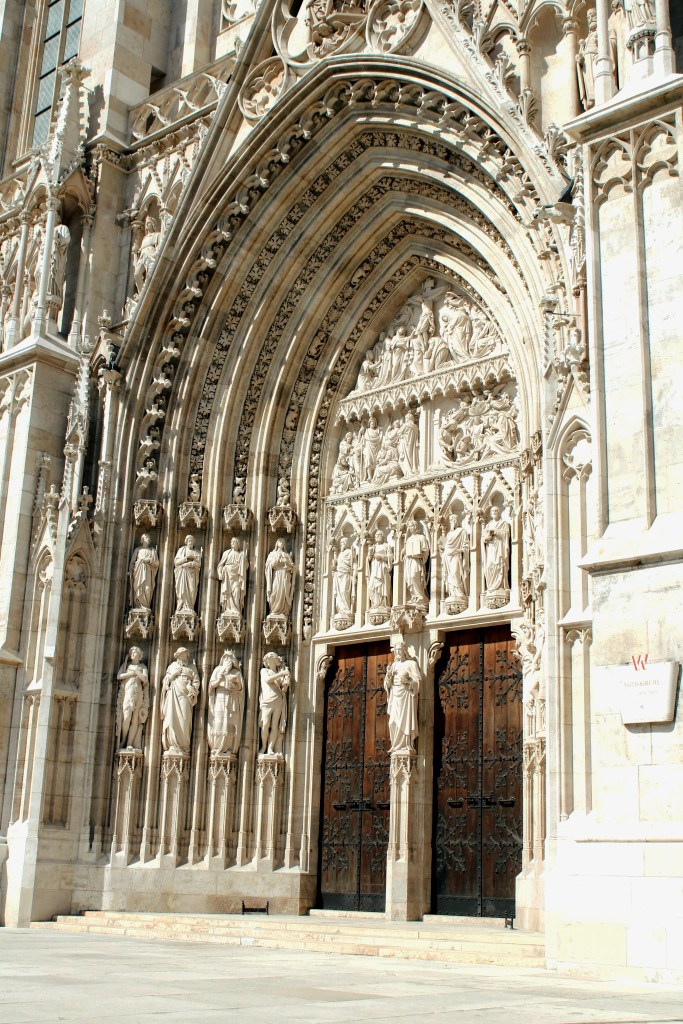
Thus, with the living memory of great love and miracles, I’d like to enclose the part of our tour that has been dedicated to the historical centre of Vienna. Yet, there is much more to Vienna than just its historical centre. And the one thing that no visitor of Vienna should miss, is the Austrian version of Versailles, the mesmerizing Schönbrunn. And this is exactly where we shall head on to next.
~
Schönbrunn
Some people call Schönbrunn the most stunning landmark in the city of Vienna,

Though I’m not absolutely sure I agree with this statement (as my personal preferences might subjectively differ), I can still confirm that Schönbrunn is an absolute must-see place in Vienna. Though set a bit aside from the historical centre, Schönbrunn is very comfortably reachable by subway and thus, planning a visit should not be a problem for most of the travellers.
What I’ve always been very curious about was the origin of the very specific name that Schönbrunn has.
If you were ever wondering the same thing, then without further ado, I’ll disclose that Schönbrunn carries its name from a memorable hunting trip that took place sometime at the beginning of the 17th century.
During this hunt, the area of large meadows of today’s Schönbrunn made a very good impression on Holy Roman Emperor Matthias, who reportedly produced his memorable quote commenting on the idyllic atmosphere of the place.
‘Ei, welch’ schöner Brunn!‘ he said (in English meaning ‘Oh, what a beautiful spring!‘) and thus, the words ‘schöner Brunn’ or ‘beautiful spring’ remained like a label to these lands.
And I can tell you, since I’ve been able to visit Schönbrunn at the peak of spring several years ago: ‘Spring is beautiful in Schönbrunn, just like Schönbrunn is beautiful in spring.’ So come and discover the gentle beauty of Schönbrunn by yourself!
Palace of Schönbrunn and the story of a magical child
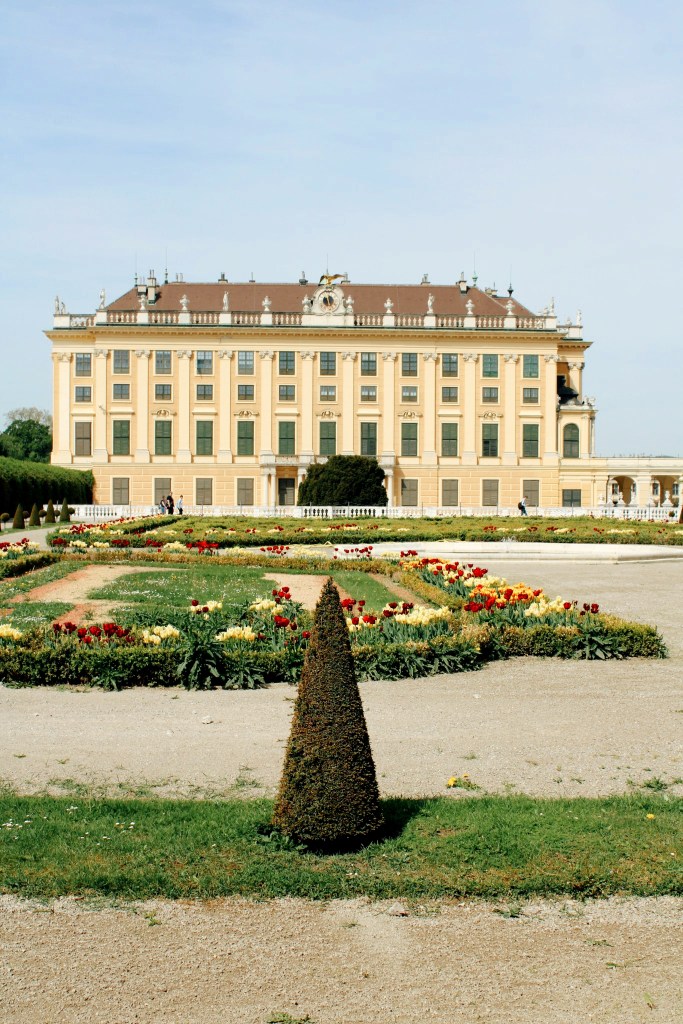
The grand building of Schönbrunn Palace is the part of Schönbrunn complex that is the most seeked by tourists. As the tours of the palace are self-guided and everyone gets to walk the route in their own pace, I would definitely recommend you to book for the earliest timepoint in the morning, as you’ll be entering the royal route as one of the first visitors and you’ll get to see the historical halls and rooms relatively empty.

Of course, there are many stories originating from the events and deeds that happened behind the walls of Schönbrunn Palace. This place was for centuries bound to the imperial dynasty of Habsburgs and thus, it’s irreversibly connected to the lives of monarchs like Empress Maria Theresa (reigning in times of the Hungarian Empire) or her great-great-grandson, Emperor Franz Joseph I. (reigning in times of the Austro-Hungarian Empire) the life of whom was marked by Schönbrunn Palace from the very birth to death that both happened behind its walls.
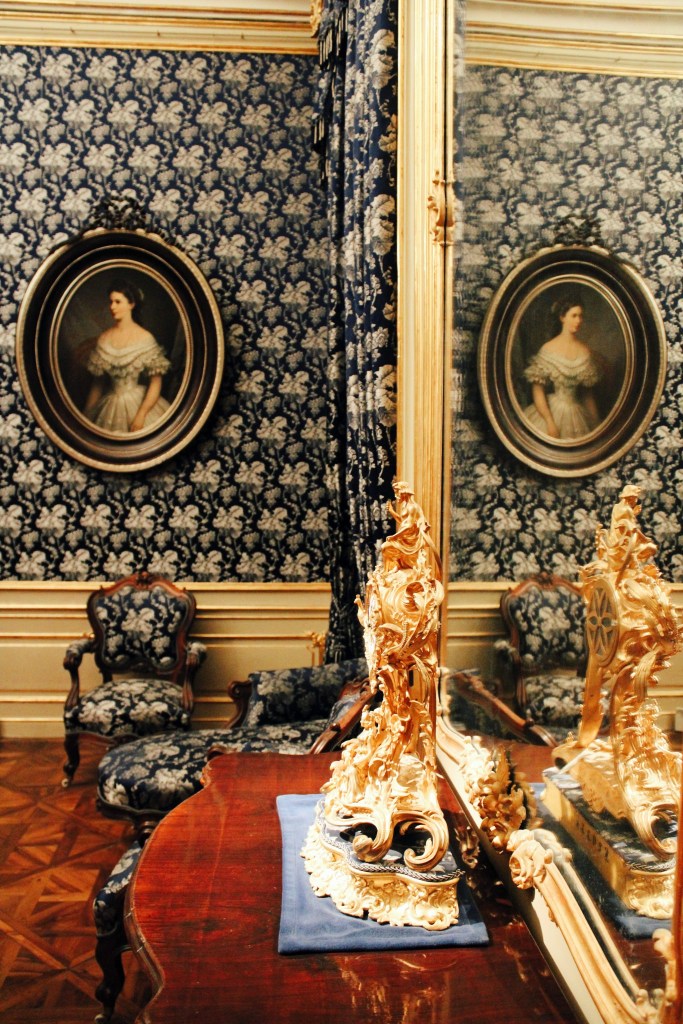


Another memory from Schönbrunn Palace is connected to an already mentioned musical genius, Wolfgang Amadeus Mozart. The discovery of his musical talent of course led to a huge wave of interest that did not bypass the imperial court in Vienna. Thus, in winter of 1762, only 6-year-old Wolfgang Amadeus along with his sister, Maria Anna (Nannerl), played a recital for Empress Maria Theresa.
As part of this recital, Emperor Franz Stephan challenged young Wolfgang Amadeus as he demanded Mozart to play the piano ‘blinded’ by his hands being covered by a curtain.
According to evidence, young Wolfgang Amadeus accepted the challenge and made the royal family absolutely flabbergasted by performing an entire concerto with his hands hidden beneath the curtain.
At the end of the show, Mozart made a very unusual move as he sat on the lap of Empress Maria Theresa and then he hugged her and gave her a kiss on the cheek.
This affectionate behaviour of young Mozart only raised the notability of the whole event which is now one of the most memorable stories from the Schönbrunn Palace.
Gardens of Schönbrunn and stories of their many faces
Believe me when I tell you that the gardens of Schönbrunn will leave you in wordless awe – both by being absolutely beautiful (especially in spring and summer) and by seeming almost endless.
The gardens of Schönbrunn form an astonishingly vast complex that comprises various designs from the perfectly arranged French gardens and Orangery in the front, to the more frivolous-looking English park in the back. But expecting that you would find only these 2 parts in the famous Schönbrunn gardens, you would be terribly mistaken.
It’s because Schönbrunn has many aces in the hole, hidden all across the garden area. And to discover them without having to constantly run around the place with a checklist in your hand, you would need at least 4 – 6 hrs to save only for the Schönbrunn gardens.
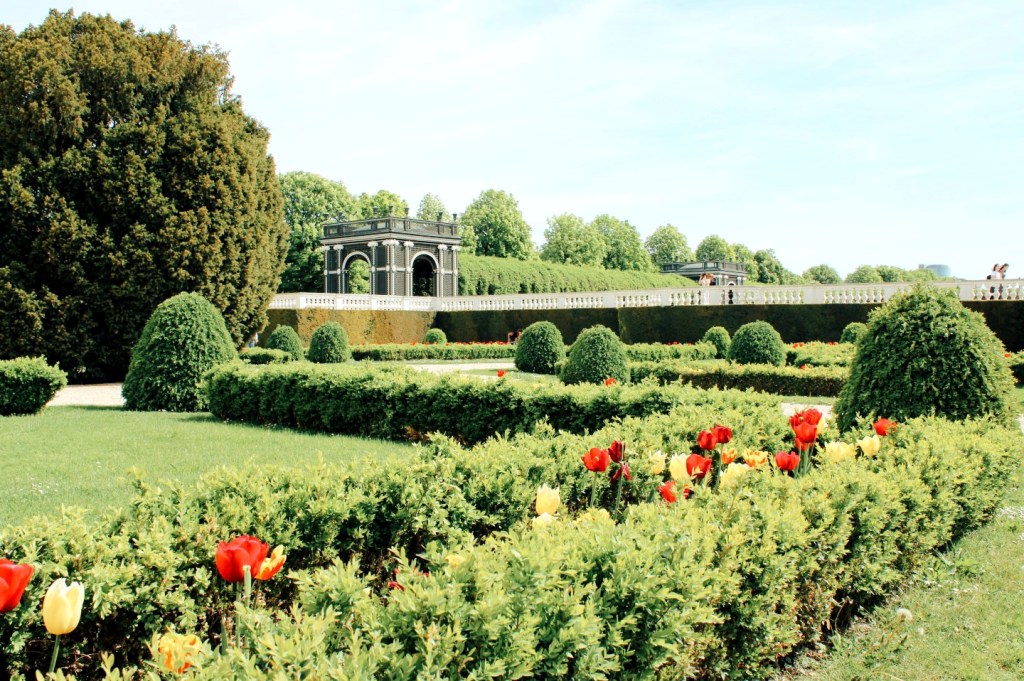
If you give yourself enough time for exploring, you will of course run into a hidden Japanese garden, secret maze of Schönbrunn, several viewpoints, greenhouses, fountains, aviaries and even an entire ZOO. Some of these parts of the gardens have been dedicated an own subchapter in this blog post with focus on its story of origin or another interesting story related to the place.
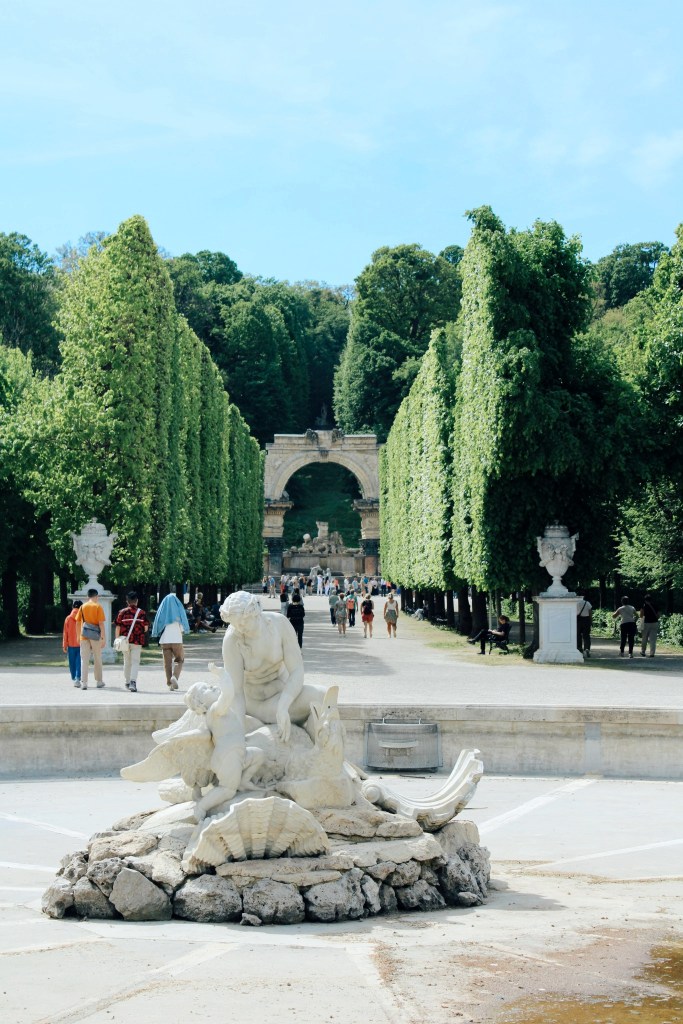

But before we head on to the more peripheral parts of the gardens, let’s stop for a moment at the very centre of the English park, right in front of the element that dominates the lower part of Schönbrunn gardens – the famous Neptune fountain.
This fountain is actually the last architectural feature implemented to the English park of Schönbrunn on word of Empress Maria Theresa that she saw finished shortly before her death in 1780.
It might as well be one of the crowning features of her reign, as the depicted scene carries a great deal of symbolism related to the centralization of power over – at that time – Hungarian Empire that Maria Theresa put a lot of effort into. So this interpretation is – according to the sources – the correct thing to search for when seeing the depiction of Neptune ruling over the seas in the design of Schönbrunn’s Neptune fountain.
Maze of Schönbrunn and the story of secret encounters
With our next stop in the gardens of Schönbrunn, I openly invite you to get lost. You might be surprised, but the truth is that the (some of the) labyrinths of Schönbrunn are definitely not a child’s play.

Especially in the largest of the 3 labyrinths, taking the long way to the viewpoint meant walking around the area of the maze for approx. 15 min. No wonder, why they made them so tricky…
Historically, the maze of Schönbrunn was the place of secret, even disreputable encounters among the nobility. Though some noblemen benefited from it for a long time, eventually these encounters became a real thorn in the side and thus, the Habsburgs opted for total demolition of the Schönbrunn maze in 1892.
It was not until 1999 that Schönbrunn had its maze again, this time not for noblemen, but for all the visitors who fancy getting lost and found again – or to see where the secret encounters of the Viennese high society from 18th century took place. The largest of the 3 labyrinths of Schönbrunn is actually almost exact replica of the original maze from the 18th century.
Greenhouses of Schönbrunn and the story of the biggest glass house in the world
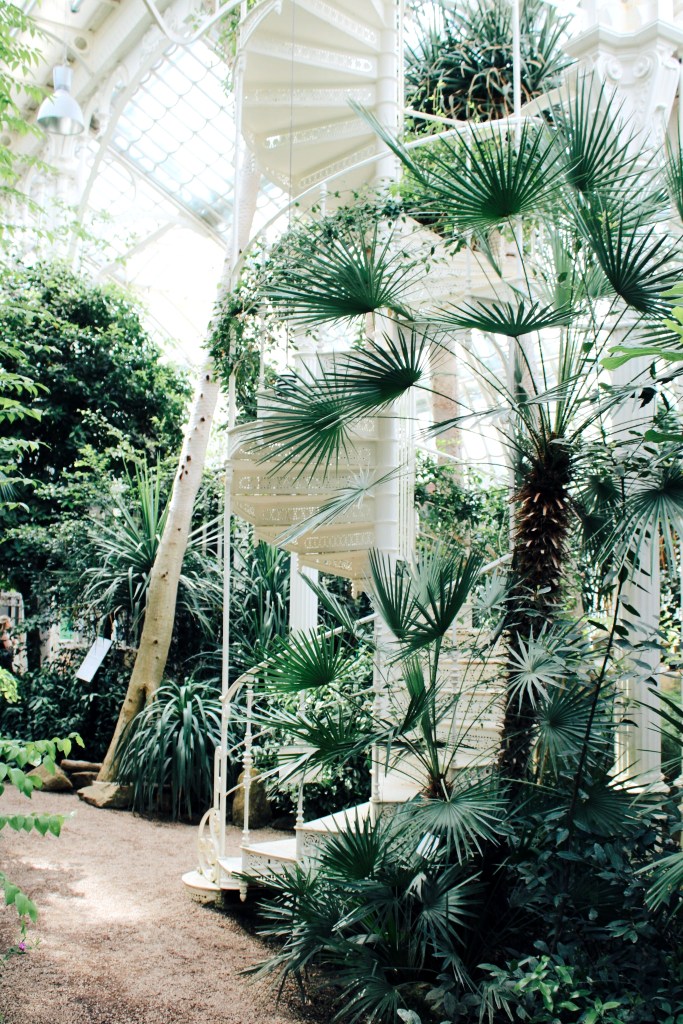
Not far away from the maze, there’s the area of Schönbrunn’s greenhouses. Herein, I would like to emphasize that this was my absolute highlight of the tour around Schönbrunn.
Another great feature of the greenhouses is that they cannot disappoint in any season of the year, as the flora displayed in their interior is immune against the changes of the weather outside.
Interestingly, the main greenhouse – Palmenhaus (or the Palm House in translation) was actually the largest greenhouse in the world at the time of its opening in 1882.

The Palm House has retained this title for quite some time. Nowadays, it’s already outcompeted by the Eden Project developed in Cornwall, UK. However, the Palmenhaus of Schönbrunn still remains the biggest greenhouse of its type in continental Europe, hosting over 5000 plant species in 3 separate temperature zones. Moreover, its steam heating system provides optimal conditions for cultivation of any plant species from any ecosystem on our planet.
Yet, the Palm House is definitely not the only star from the greenhouses of Schönbrunn. Another building definitely worth visiting (especially if you’re a fan of succulents) is Wüstenhaus (or the Desert House in translation) which exhibits a large collection of exotic flora – and even fauna.
The tour of the Wüstenhaus does not extend your tour of the Schönbrunn gardens that much but it definitely a whole bundle of stunning moments, as it can completely reset the atmosphere and make you jump from English park into the middle of Texas or Atacama Desert.


ZOO of Schönbrunn and the story of the giraffe mania
In the proximity of the greenhouses and the Neptune fountain, there is another unexpected marvel of the Schönbrunn garden complex – the ZOO of Schönbrunn. Formerly established as a menagerie, the ZOO of Schönbrunn is functioning from 1752 which also crowns it as the oldest ZOO in the world.
At the very beginning of its history, the ZOO provided habitat to 13 animal species. Though the range of animal species was broadened by frequent expeditions of the Habsburgs to the wilderness, due to the poor conditions kept in the ZOO, there were also frequent losses of the animals. Luckily, in these days, ZOO of Schönbrunn provides top quality conditions to the 4500 animal inhabitants (of approx. 700 species).
However, I’ve mentioned the giraffe mania in the title of this subchapter and I’m definitely gonna get to this interesting story. The story takes us back to 1828 when a giraffe was gifted to Habsburgs from the Egyptian viceroy. This was a great thing, because most of the Viennese have never before seen a live giraffe.
Thus, displaying the first live giraffe in the collection of the Schönbrunn’s ZOO led to nothing less than a real frenzy among the people. This has touched many aspects of everyday life in Vienna – from the giraffe-inspired hairstyles and giraffe patterns on dresses or accessories to establishing an event called the ‘Giraffe Fête’ – or a giraffe-style party hosted at the Black Grape in the Penzing District.
The most tragic aspect of the story however is the story of the giraffe itself. Though it’s been kept in the best possible conditions, the giraffe star only managed to survive for 10 months in the ZOO of Schönbrunn.
After the passing, the Viennese ZOO did not manage to get a new giraffe that quickly – actually, the second live giraffe arrived to the ZOO of Schönbrunn as late as 23 years after the passing of the first one and even her story was not that much luckier as the story of the previous giraffe.
Luckily, nowadays the giraffes of the Schönbrunn’s ZOO live much longer lives in much better conditions than the ones in the 18th century.
Actually, the latest giraffe mania in the ZOO of Schönbrunn is connected to the giraffe baby boom, as the ZOO was able to welcome 2 new giraffe babies in the last 2 years.
This is celebrated as a great success in the conservation of endagered species that the ZOO of Schönbrunn is greatly engaged in, functioning as major partner in multiple breeding programs worldwide.
Gloriette of Schönbrunn and the story of many victories
Now, let’s lead our steps up the hill, right to the majestic Gloriette of Schönbrunn.

This architectural element of the gardens, titled also the Temple of Renown, was built on word of Empress Maria Theresa after the victory in the Seven Years War.
Gaining inspiration from the times of Holy Roman Empire, the Gloriette of Schönbrunn symbolizes the wealth, prestige and impact of the Habsburgs.
Funny as it might sound, this place displaying the glory of Habsburgs mostly served as a dining hall. Just imagine eating your scrambled eggs at a place that showcases the glory of your personna. Sounds a bit too pompous, maybe…
But another thing is for sure – the view from Gloriette is beyond all other views in Schönbrunn. Unfortunately, approaching Schönbrunn’s Gloriette was the very moment when the battery on my camera went dead so I cannot provide a nice picture from this place. But on the other hand, maybe it’s for the best, so that you have the opportunity to discover one of the most spectacular views of Vienna all by your own.

Now, with this stunning bird’s eye view of Vienna and the Schönbrunn Palace, it’s the right time to end of our tour around this marvellous city. I hope I’ve managed to convince you that Vienna has a lot to offer to a large spectre of visitors, from the fans of architecture and art to the lovers of parks and leisure activities, like the ones at the riverside of Danube.
In case you’ve already been visiting Vienna live, I hope that you’ve enjoyed your visit almost as much as I enjoyed my time there. And in case, you were visiting Vienna only virtually so far, I really hope that this tour has sparked excitement for all the places and stories that Vienna offers to discover, so that this excitement leads your way to explore this beautiful city in real life, as well. And hopefully, see you again soon in some other ‘Love Letters’ tour guide.
Love,
Antonia
~
Annex: The best restaurants & cafés in Vienna
P.S.: As usual, I also wanted to provide some of my tips on restaurants and cafés that I very much enjoyed visiting during my stay in Vienna. So last but not least, here’s my list of the top Viennese restaurants and cafés to visit:
- TAKUMI Yakisoba & Ramen Alservorstadt – the best ramen place in Vienna
- Ramen Makotoya – also a great ramen place, closer to the city centre
- Gorilla Kitchen – tasty burritos
- Café Hildenbrandt – great for brunches
- Café Demel – traditional coffee place with traditional cakes
- Café LIEBEN WIR (Coffee Concept Store) – amazing specialty coffee place in the city centre
- CoffeePirates – in my opinion, the best specialty coffee place in Vienna (but a bit further away from the city centre)
- The Pelican Coffee Company – another amazing specialty coffee place (also a bit further away from the city centre)
 Love Letters to the World