

A crown jewel of Czech Republic and without a doubt one of the most beautiful European towns – this is an adequate introduction for Český Krumlov. Tangled in meanders of famous Vltava river, this town has during its long history been inspiring many artists and stealing hearts of travellers from around the world. Nowadays, it’s rightfully a member of the UNESCO World Heritage and a true must-see place for anyone who travels to Czechia.
Thus, with no further ado, let’s get lost in Český Krumlov together. Because without getting lost, we can never discover anything new for ourselves. This love letter will be dedicated to the most iconic places in Český Krumlov, as well as to their most secret stories and legends. So stick around for this adventurous journey and let yourself fall in love with Český Krumlov.
Before we start our tour of the magnificent town of Český Krumlov, here’s a list of places and stories covered as part of this love letter:
- Latrán district and the story of the origin of Český Krumlov
- Krumlov Castle and the story of the Pale Lady
- Cloak Bridge and the story behind its name
- Castle Theatre and the story of a tragic play
- Castle park and the story of its enchanted inhabitants
- Summerhouse Bellarie and the story of mysterious wedding guest
- Monastery of Clares and the story of magical nurse
- Monastery of Minorites and the story of forbidden love
- Church of Corpus Christi and the story of a hidden passage
- Craftsmen’s Street and the story of thousand skills
- Church of St. Vitus and the story of the mass of the dead
- Egon Schiele Gallery and the story of misunderstood genius
- Atelier Seidel and the stories frozen in time
- Old Synagogue and the history of Jewish community in Krumlov
Latrán district and the story of the origin of Český Krumlov
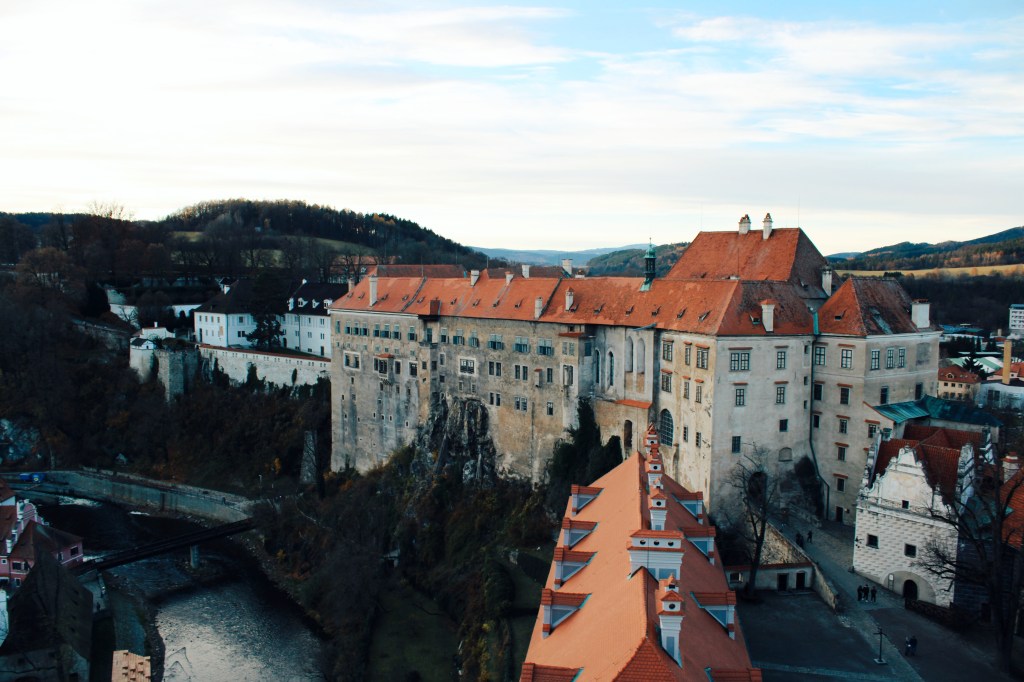
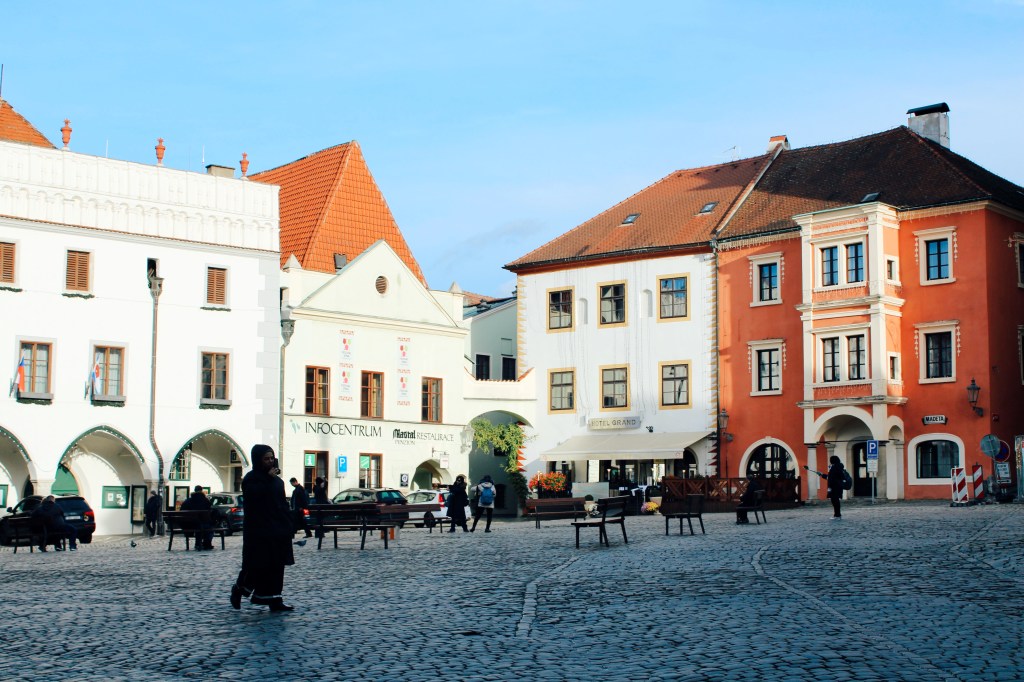
Probably, one of the first (of the many) stunning views that Český Krumlov will offer you upon your arrival, will be dominated by the iconic Krumlov castle. Below, you’ll be able to spot the Latrán district – the area of cosy cobbled streets and lovely historical houses with richly decorated facades where it’s truly deligthful to get lost (even though you cannot get lost here for long, as the area of the district is pretty small).
Importantly, Latrán district along with the Krumlov castle represents the first area historically recognized as Český Krumlov.
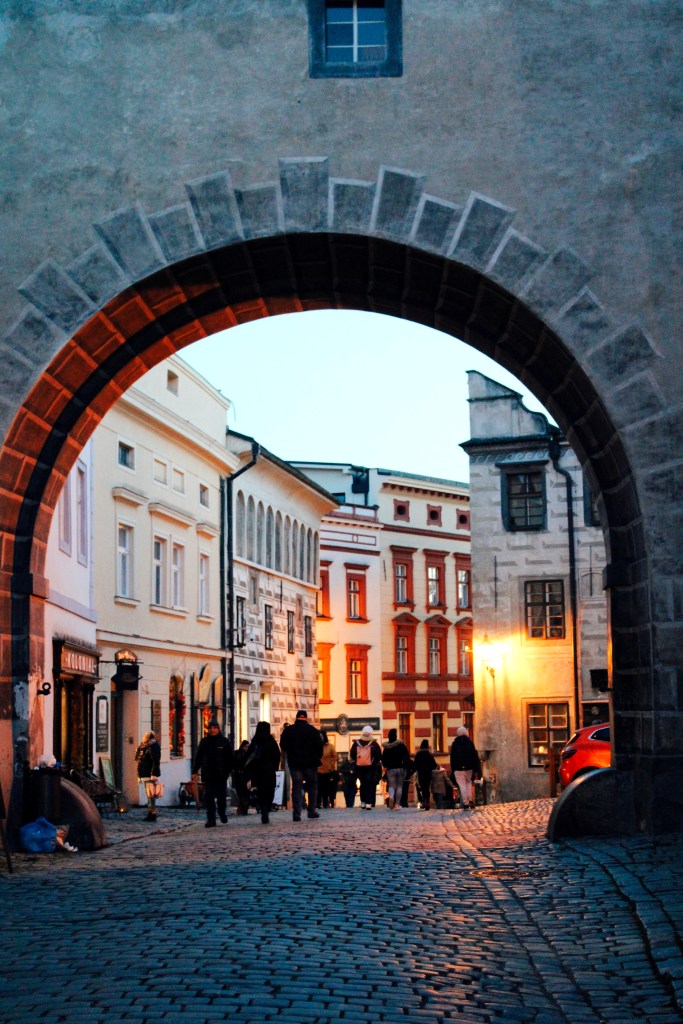
And what’s even more interesting is the fact that the name of Latrán district itself has a lot to do with the origin of the entire town. This story takes us back hundreds and hundreds of years, back to the dark ages.
In those days, no town of Český Krumlov existed, though the area where it now lies was of high importance due to the international trade route. Particularly, the area of now Český Krumlov was at that time covered by woods.
The woods, in combination with the meanders of Vltava and several steep hills created an ideal spot for the gangs of robbers, that were lurking for their victims – merchants travelling on the trade route – in the trees and bushes. According to the records, the common folk was scared of these lands at that time, as the attacks of the robbers were swift and fierce and as these woods were their lair, there was nowhere to run or hide.
Luckily, one day there came a brave knight named Vítek who put on a fight with the robbers, or scoundrels as he called them. He came up with a plan to set the lair of the robbers on fire and he succeeded, finally freeing these lands from the curtain of fear.
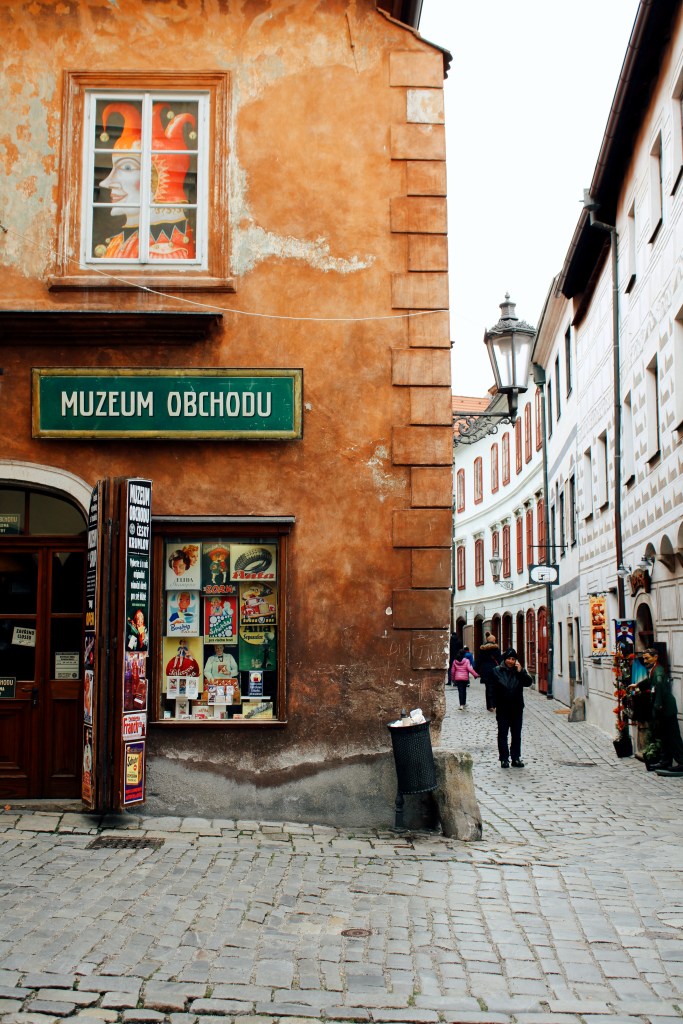

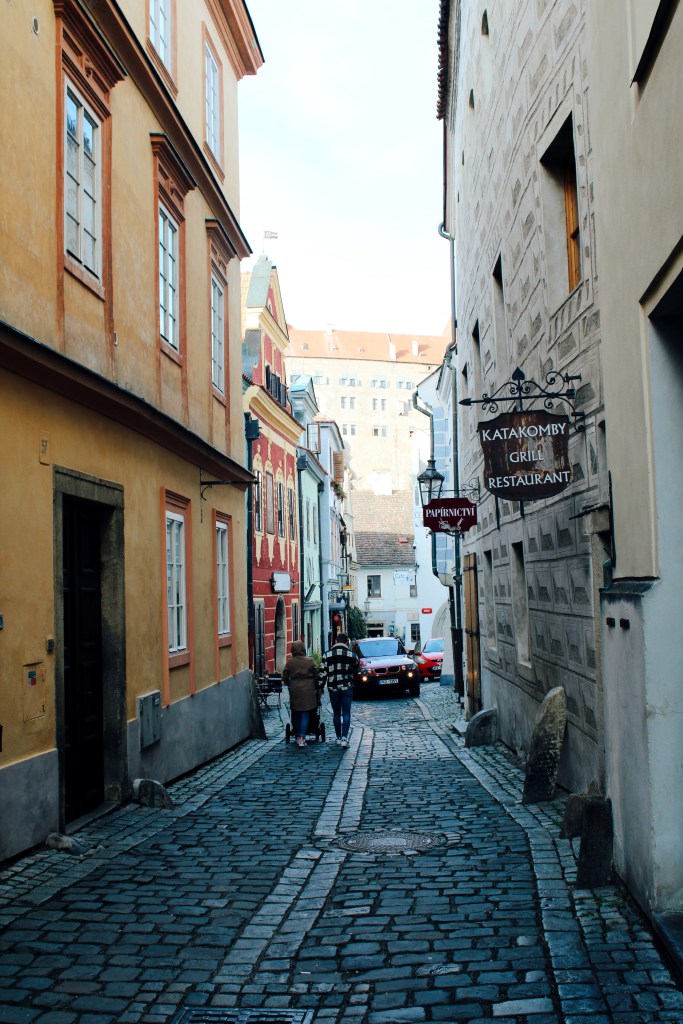
To ensure that the area will be safe once and for all, the brave knight Vítek gave an order to build a massive castle on the top of the hill, overlooking the woods on the meanders in order to keep a watchful eye on the safety of these lands. And to emphasize the effort to keep this area safe, Vítek named the neighbourhood of the Krumlov fortress Latrán after the scoundrels (or lotři in Czech).
Alternatively, there is another story that explains the name of the Latrán district. This story says that the reason for naming the district Latrán comes from Latin word ‘latus’ which means ‘side’ and was used in order to label the street that goes sideways from the Krumlov castle.
Krumlov Castle and the story of the Pale Lady
The Krumlov Castle, as already mentioned, was built by lord Vítek and dates to the era when medieval town of Český Krumlov was still in process of building (around 1250). However, the times of the biggest prosperity of both the town and the castle are to this day being linked to era between 1302 and 1602, when the entire area was under reign of the Rožmberk lords.
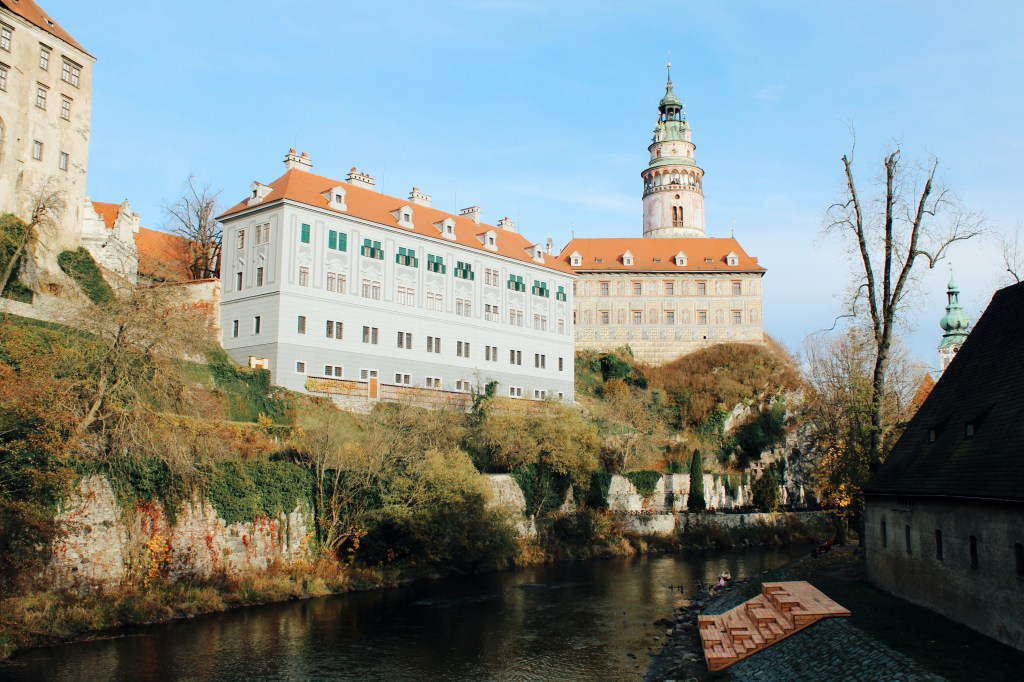
The reign of Rožmberk lords is not only considered prosperous due to their vast outreach among the society of Czech noblemen which brought the forming town of Český Krumlov under the spotlight.
Another reason for this link was that the lords Rožmberk were described as passionate mercenaries who funded the expansion of the castle but also put money into art and culture which was overall increasing the quality of life of Krumlov inhabitants.
However, the reign of their dynasty is also connected to some darker stories and probably the most famous one is the story of the Pale Lady. This name, or title, is formerly assigned to Lady Perchta from Rožmberk who was living in Krumlov castle during the 15th century.
Yet, even though she spent her whole life living in the high society, her life was far from idyllic. Due to the stubbornness of her father, Lady Perchta was forced to a marriage with a man she did not love. Even worse, she had to marry a man who oppressed her for the rest of her life, never showing any mercy.
Only on his dead bed, this tyrant regretted the cruel deeds he committed during his life and so, he called his wife, Lady Perchta, to his bedside and begged her for forgiveness. Yet, Lady Perchta, hurt from the lifetime of pain and sorrow, refused to forgive her husband. Desperate and angry, the tyrant sent a curse upon her, saying her soul must never find rest.

Thus, after the death of Lady Perchta, the ghost of the Pale Lady started to appear from time to time in the Krumlov castle and other castles of the Rožmberk family.
According to the legend, she will forever be wandering through the Rožmberk castles during dark nights and that visions of her shall carry the prophecy of significant events in near future. It is said that if she is spotted with white gloves, then the events of the near future shall be good. In case she is spotted with black gloves, unfortunate events are about to happen.
Till this day, the legends of the Pale Lady are being told on many castles all around Czechia and the visions of her were already implemented into multiple movies and tales for kids. It is fascinating that now such a widespread legend originated right here, in Český Krumlov.


Cloak Bridge and the story behind its name
One of the most iconic parts of the Krumlov castle, and one of the most stunning places in entire town of Český Krumlov is the massive Cloak Bridge which interconnects the fourth and the fifth courtyard of the castle.
Though the bridge which consists of long outdoor and indoor passages on multiple levels indeed seems like as if it was covered by its own cloak, the name Cloak Bridge actually origins from different notion.
Historically, the Krumlov castle of course had to form a system of defense against invaders. One of the precausive arrangements was excavation of a huge ditch and building of a long drawbridge which was the only way how to pass through the castle walls. The walls were designed in such a way, that they formed a tight cloak of the castle. Thus, the bridge that later on replaced former drawbridge eventually got the name „Bridge on the Cloak“ or the more popular „Cloak Bridge“.
The bridge itself was firstly just the outdoor passage that is nowadays accessible to tourists for free. Only years later, other rearrangements were made, comprising the addition of the upper indoor passage that leads from the castle park all the way to the Krumlov monasteries, and the lower indoor passage which paves the way from the Masquerade Hall to the Castle Theatre. And that’s exactly the place where we’re about to head on next.


Castle Theatre and the story of a tragic play
In my opinion, the Castle Theatre is a true must-see part of the Krumlov castle tour. Built in baroque style, this architectural jewel truly takes you back in time.
The big investments into culture that the theatre benefited from during the reign of the lords of Rožmberk led to spread of its good reputation. This then led to even more significant investments into the decorations of the interior that of what is now (according to my opinion) the most beautiful hall in entire Krumlov.
However, even this astonishing hall has one beauty flaw and that is a large red speck on the stage. As you might have already guessed, the red speck on the floor of the stage comes from blood.
This blood was spilled at the end of one tragic play, where a desperate lady Evelyna – who had fallen in love with a man that did not reciprocate her feelings – stabbed herself with a dagger right into her chest, in front of everyone. The story says that for a long time, people were trying to get the blood out of the wooden stage but the blood wouldn’t let go. Thus, it still reminds the visitors of this tragic event and of how badly can desperate love end.
Castle park and the story of its enchanted inhabitants
Krumlov castle has an absolutely stunning park and gardens that create vast oasis of peace and quiet that is right next to the usually busy (and touristy) centre of the town. Of course, this park is the most enjoyable during full blossom in spring and summer months, but even in autumn and winter, it can offer a nice calm break on your tour and many lovely views of Český Krumlov along with the meanders of the Vltava river.
As you might have already expected, such a magical park surely has its own secrets and one of them is connected to the small lake at the very end of the park. People used to say that somewhere at the tiny island in the middle of the lake, there is an enormous treasure.
However, this treasure is not so easy to grab a hold of, as it’s protected by the creatures from fairytales, such as dwarfs and fairies. However, the legend says that in case the beings see someone behaving nicely, they are willing to give the person part of their treasure.
Nobody really knows what the treasure is, but I think this legend is nice especially for the lesson it teaches us: Those who are nice to other people shall be rewarded by the love of the others. And love is the biggest treasure of all, isn’t it?
Summerhouse Bellarie and the story of mysterious wedding guest
Another secret of the park that’s belonging to Krumlov castle is linked to the Summerhouse Bellarie, the colorful building standing in the middle of the park. The main function of this summerhouse was (and still is) providing the space for events such as weddings, concerts or celebrations.
However, according to the legend, a dark secret lies upon this house, as right during the first celebration that took place there, one of the guests felt very sick during the celebration. As the guaranteed way how to treat the lady’s headache, someone made her drink a full glass of red wine that night.
After that, the lady lied down on a sofa, fell asleep and she never woke up again. Nowadays, it’s believed that this lady – or her ghost – shows up at the celebrations in the Summerhouse Bellarie. She always wears dark red dress and every time, she disappears mysteriously before the end of the event. That’s why she is now commonly known as the “mysterious rococo lady”.
Monastery of Clares and the story of magical nurse
Right next to the Krumlov castle, there is a historical area of Krumlov monasteries. Formerly, this area belonged to the male Monastery of Minorites and the female Monastery of Clares, each of them located in separate halls.
The area of Krumlov monasteries is of course bound to several interesting legends.
First of them is connected to sister Margaret, a magical nurse, who lived in the monastery during the 16th century and who devoted her life to help curing patients with wide range of diseases and injuries.
During her life, she was very successful in curing even the most tricky health issues and thus, she was very much valued by the common folk. It was said that later on, even her presence itself was bringing the patients relief.
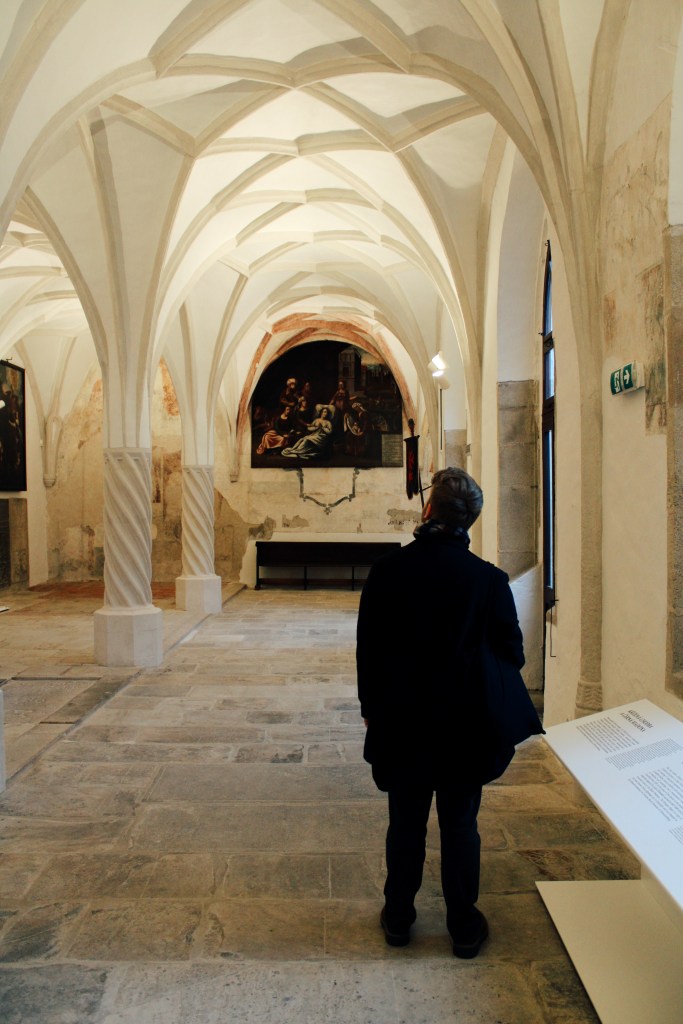
According to the legend, shortly before her death, sister Margaret swore to keep on helping patients even after her life ends. And based on the legend, she really keeps her promise, as her ghost still appears now and then by the bedside of the patients. Her presence is believed to carry a comforting message, as it is a sign that the patient will get better soon.
Monastery of Minorites and the story of forbidden love
Another story describes love and devotion of one very unlucky man. This man used to be a monk at the Monastery of Minorites, who during his life fell for one of the nuns at the Monastery of Clares. These two were never meant to meet, but as they were both in charge of food supply management, they happened to see each other daily.
Hopelessly devoted monk thus lived a conflicted life, loving a woman that he knew he could never be with. Though, he fell into even bigger despair after he learnt one day, that his beloved nun died.
Completely devastated from the message, the monk hid in the attic where he hung himself. According to the legend, his ghost is every now and then spotted in the area of the monastery till this day, as he wanders the halls of the monastery with a rope around his neck and searches for his beloved nun.
Church of Corpus Christi and the story of a hidden passage
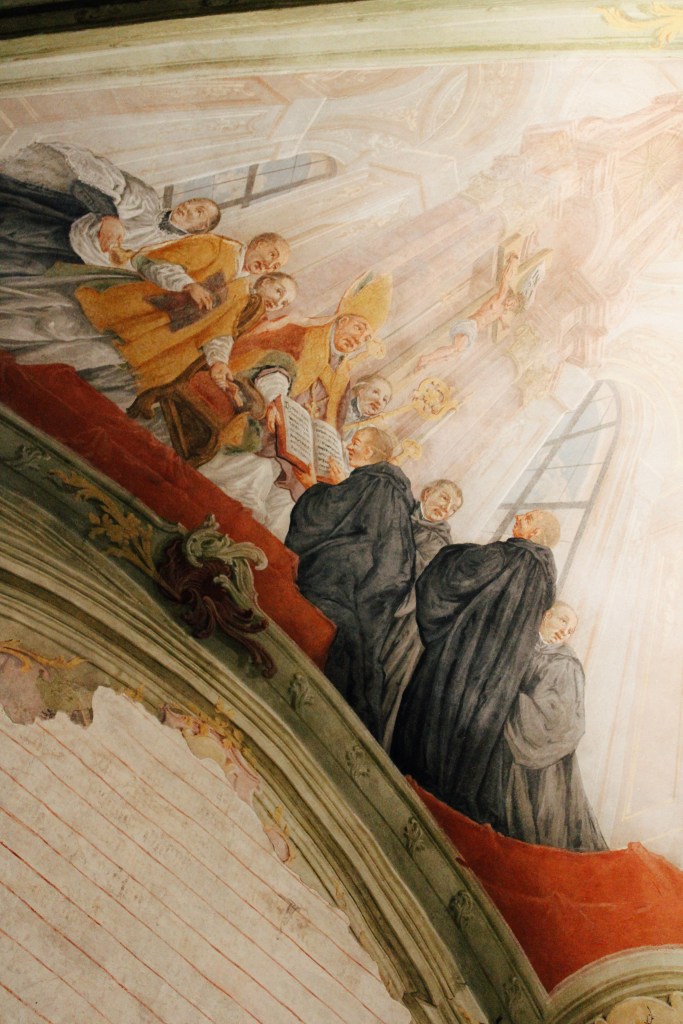
The Church of Corpus Christi is definitely the most remarkable part of the monastery area that is now accessible to the visitors. This church still serves as the location of masses and other religious events, so in the specific times of the masses, it is not really available to tourists. Thus, looking up the schedule of the masses in advance is recommended.
Interestingly, this church is directly connected to the area of the castle with a long passage leading above the ground. The reason for building this hall was quite simple: the noblemen did not want to walk outdoors during bad weather, so that they could keep their feet dry.


Craftsmen’s Street and the story of thousand skills
In the proximity of the monastery area, there is a very remarkable street that I would love to draw your attention to. The mentioned street is called the Craftsmen’s Street and as you might already have guessed, its main feature is the presence of multiple small shops that focus on craftwork.
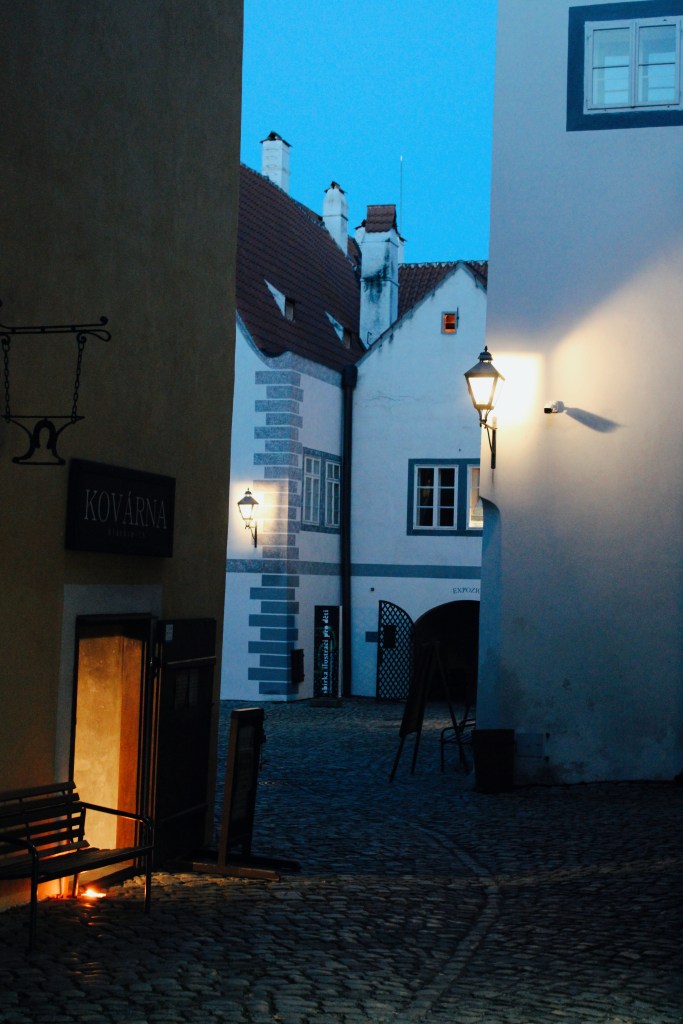
For example, in this street, you can visit the shops of herbalist, basket maker or blacksmith and you can not only buy some nice handmade products, but you can even look at the craftsmen and their skills while they are making their products in real time.
It can be a really nice way how to make your Krumlov experience even more special and moreover, it can be a lovely adventure especially if you’re visiting Krumlov with kids.
Church of St. Vitus and the story of the mass of the dead
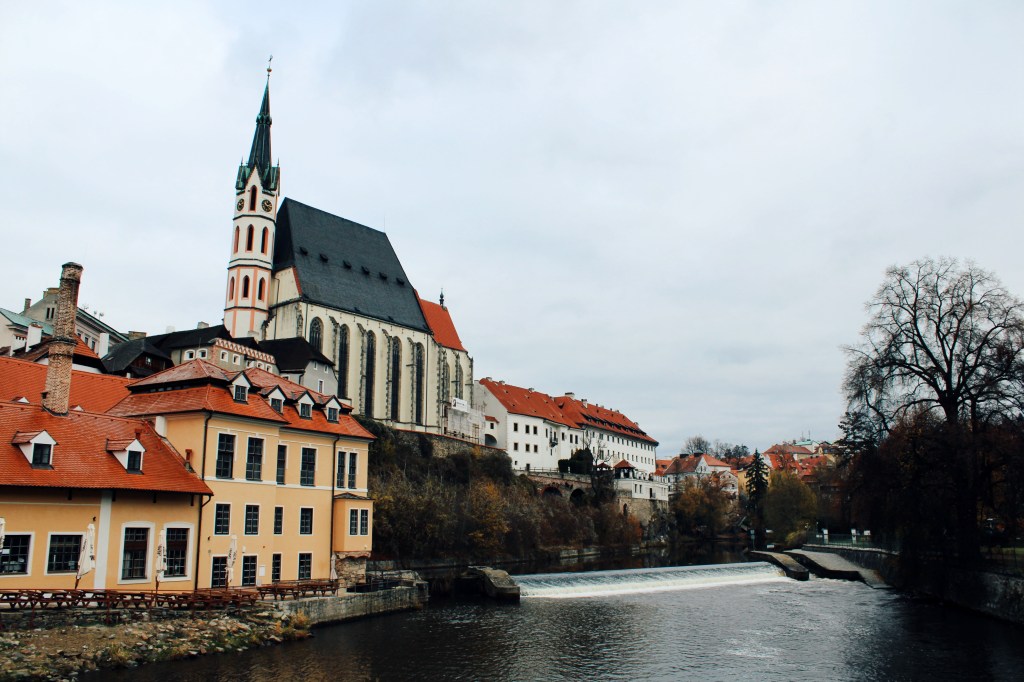
Walking towards the very heart of Český Krumlov, we are slowly leaving Latrán and moving across the river Vltava to another of its Krumlov meanders. In this part of the town, you can again enjoy the maze of the cosy narrow streets that are paving our way to the dominant of this part of the town – the Church of St. Vitus.
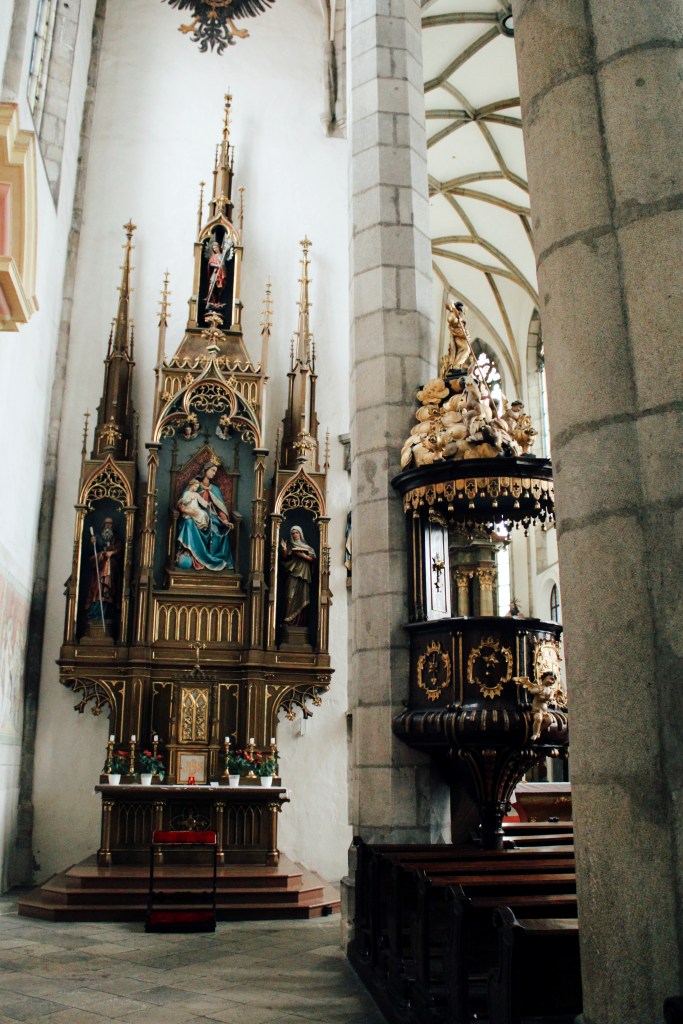

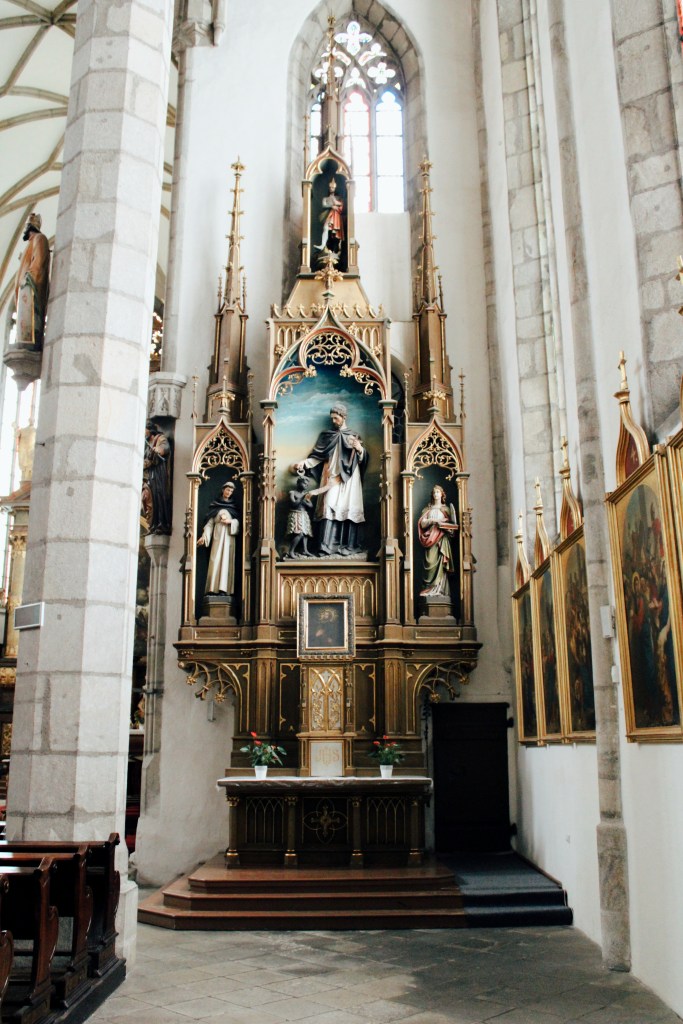
The Church of St. Vitus was built during the 15th century and it’s been designed in gothic style and with its three parallel naves, it is the most immense church in Český Krumlov. The top floor of the church was built 400 years later, in the 19th century and thus, it is also designed in the pseudogothic style.
This church is connected to a very peculiar story of a chaplain who was once found in the church in the morning with hair completely white, even though it was dark the day before.
He was in deep shock because – according to his words – he fell asleep in the confessional and when he woke up at midnight and crawled out of the confessional, he found himself in a completely full church where the midnight mass was taking place. According to his words, the mass was attended by the deceased people from the neighbourhood. As he stood in horror, his hair turned completely white. According to the legend, the horrified chaplain then died within a year from this peculiar event.
Egon Schiele Gallery and the story of misunderstood genius
The small city of Český Krumlov will forever be bound to one of the best artists of secessionism, Egon Schiele. Though he was born in Austria, his mother was born in Český Krumlov and this is probably the reason that led him to moving to South Bohemia at the age of 17 years.
He spent 10 years living in Český Krumlov and furthermore, he implemented the city into his series of paintings „Dead City“.
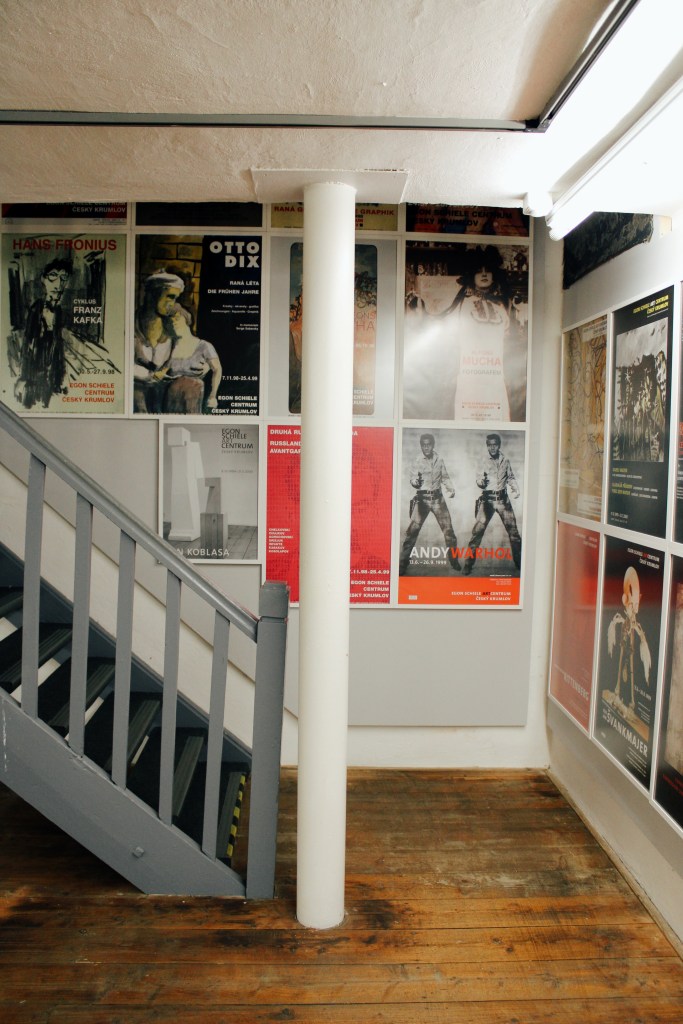
This series, interpreting the nihilist feelings of the author is now available at the Egon Schiele Gallery in the centre of Český Krumlov, where you can also see the depicted places on the map and visit them later on, knowing they served as an inspiration to this talented painter.
However, even though Egon Schiele produced great pieces of art during his time in Český Krumlov, he struggled from the beginning, facing frequent misunderstandings of the neighbourhood.
Ignoring his talent, people of Krumlov despised his bohemian lifestyle and frequent visits of young ladies whom he used to paint and were literally „frightened that this young man might be a serious moral threat to the town of Český Krumlov, especially its female population“.
These unfortunate prejudices indeed forced the painter to leave the city in 1917. It is also sad to conclude that he never returned to Krumlov again, as he died only one year after his departure from Krumlov (at the age of 28 years) due to the Spanish flu.
Even though he died so young, he managed to create more than 2000 pieces of art, large part of which is now displayed at the Egon Schiele Gallery which is proudly displaying even other pieces of contemporary art.
Atelier Seidel and the stories frozen in time
I must admit that I consider the photo atelier of Josef Seidel the most amazing surprise of our tour of Český Krumlov. The museum is situated in Mr. Seidel’s house and offers a very interesting overview of his career and all the nice pictures he took during his life, but also guides you through the process of how photos were made before the computers came up.

Maybe you’re not yet aware of this, but Mr. Josef Seidel spent most of his life photographing and documenting the culture, people, cities but also nature. He took a lot of pictures even during his numerous travels but the majority of pictures in his collection come from Český Krumlov and the region of South Bohemia.
It is also known that during his life, he fell in love with national park of Šumava and as he took so many beautiful historical photographs of Šumava, he is now considered a king of Šumava photographers.
Herein, it is important to emphasize the historical and cultural value of the photographs produced by Mr. Seidel, as he was the one documenting people, culture and traditions during times when it was very rare to take pictures. Thanks to him, we can now learn much more about the culture in South Bohemia from turn of 19th and 20th century. And thanks to his son, František Seidel, we can now admire the beautiful photo atelier as well as large part of the photo collection in very well preserved state.
What’s even more, you can even now still get a picture of you and your family or friends produced by the Photo atelier Seidel. For that occasion, you can even choose an outfit from their historical collection of clothes, to make yourself feel like someone from the Roaring Twenties.
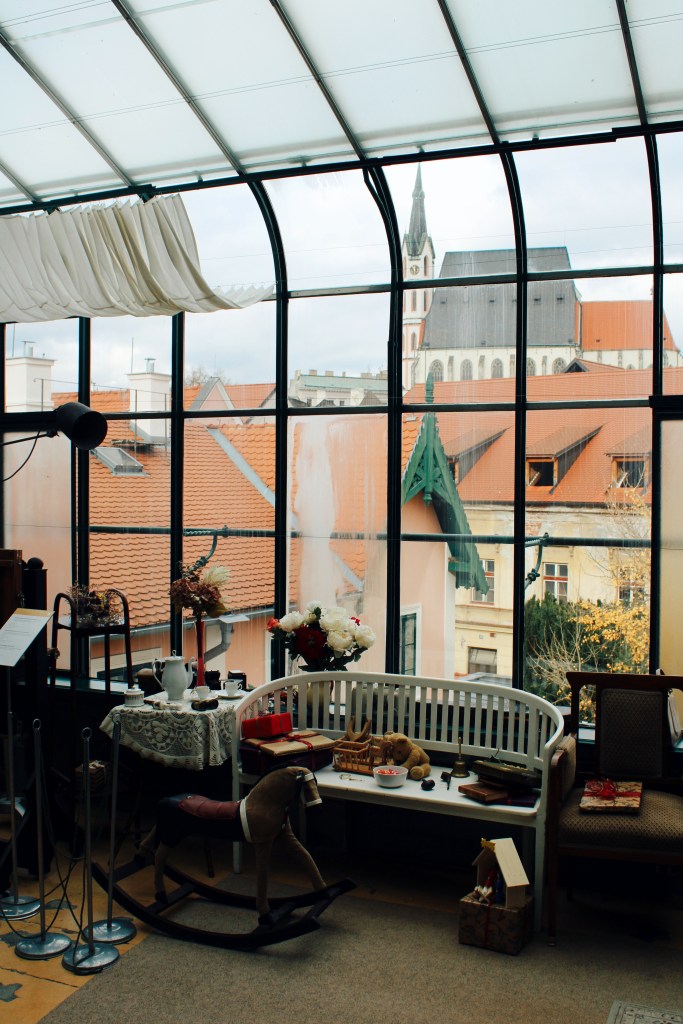
But even if you choose not to get a photoshoot at the Photo atelier Seidel, you can enjoy a very interesting tour of the museum and finally, you can take a few moments and admire the absolutely stunning room with glass rooftop (for natural lighting) that Mr. Seidel had at disposal to produce the best quality pictures.


Old Synagogue and the history of Jewish community in Krumlov
With our last place and story, I’m just gonna take you a little bit further away from the historical centre of Český Krumlov. On a hill, just a few hundred metres away from the Atelier Seidel, you can find the Old Synagogue of Český Krumlov. Though this tabernacle is built in more simplistic design, I still think it is a very interesting place to see, especially in case you’re interested in the history of Jewish community in Krumlov.
The story of this synagogue, just as the story of the entire Jewish community, is definitely not smooth and easy. For hundreds of years, there were very strict regulations for the number of Jewish households that were allowed to exist in Krumlov (in 14th century, only 4 Jewish families could live there).
This changed in 1848, which resulted in increase of Jewish households in the neighbourhood. Unfortunately, the Jewish citizens of Krumlov did not have a tabernacle and for quite a long time, they did not even have a rabbi.
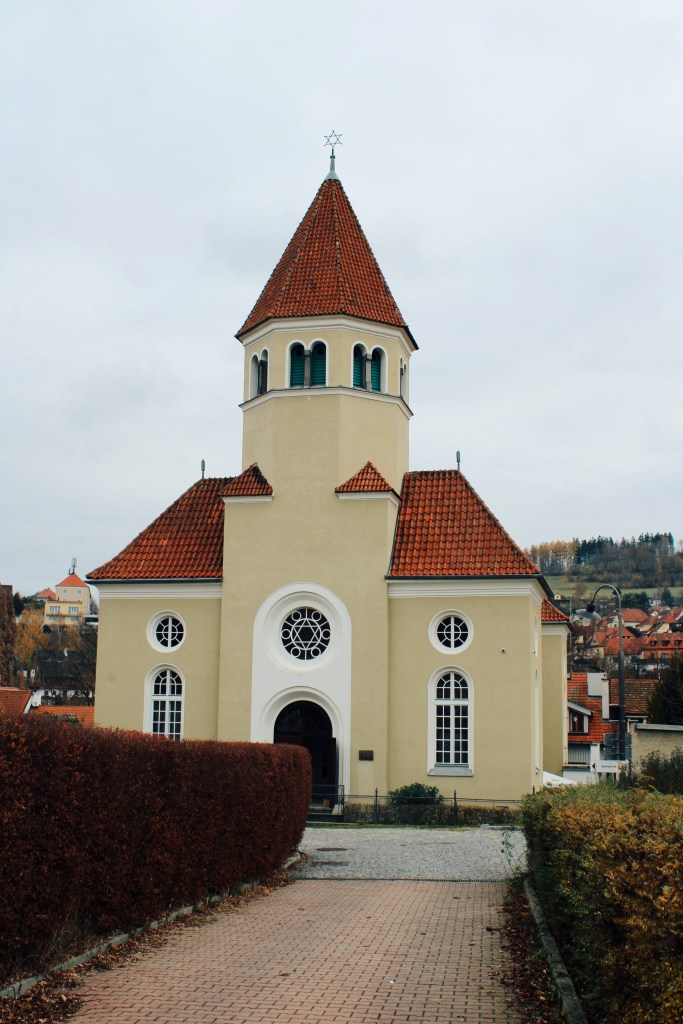

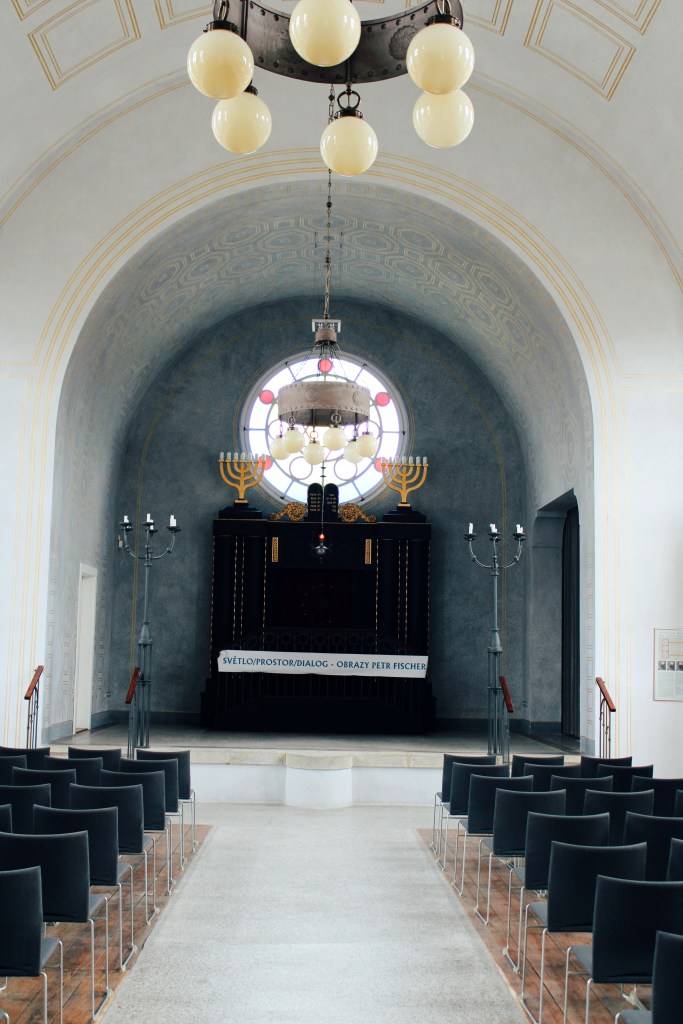
This changed in early 20th century with the initiative of the people and funding originating from one of the most influential local entrepreneurs in the printing industry, Ignác Spiro, who provided majority of budget necessary for building the synagogue.
Again, unfortunately, the synagogue served as a tabernacle only for 30 years – until the WWII when it was confiscated. After the WWII, it served as the Hussite Church and then as the warehouse for coulisses from the Castle theatre, until it was returned to the Jewish community in 1990, after the Velvet revolution which brought the socialist regime in former Czechoslovakia to an end.
Finally, standing in front of the synagogue brings a view that really made me feel I could wrap the panorama of Český Krumlov into my hand. I definitely recommend taking a few moments here to enjoy the lovely views that this place provides.
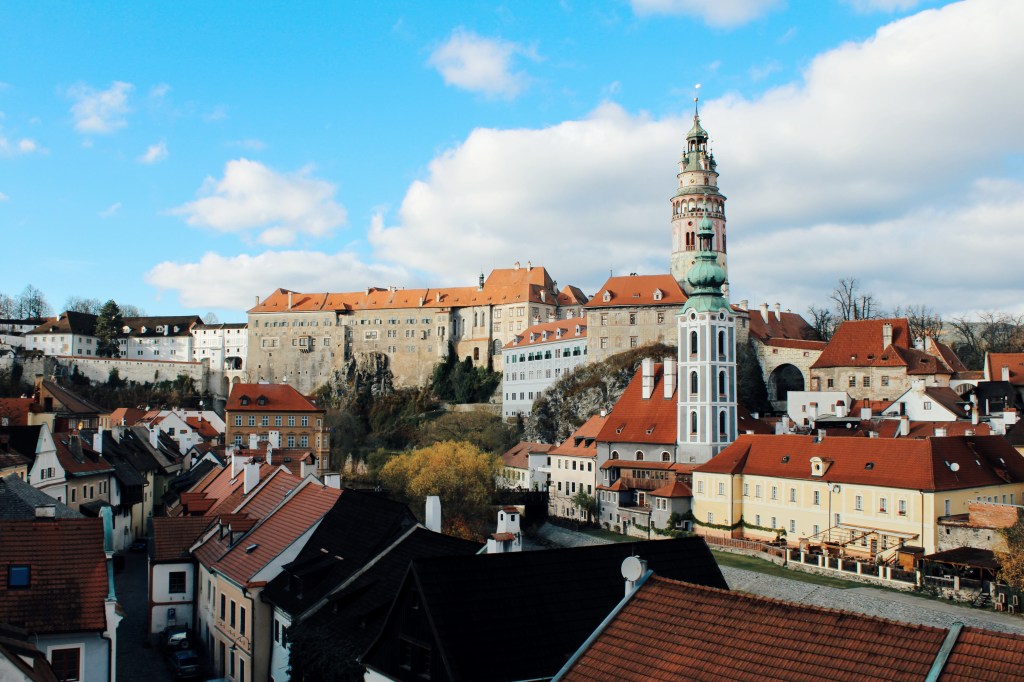
And here’s also a nice place to end our tour of Český Krumlov and its stories, as well as my love letter to this stunning town. I hope you enjoyed the places and stories that Krumlov offers. Last but not least, I hope my letter convinced you that this seemingly small town is in reality very rich in terms of views, cosy places and hidden gems that make your stay feel just as special, as I felt it when I was wandering these streets for the first time.
Love,
Antónia
P.S. Here’s just my summary of great restaurants and cafés in Český Krumlov:
- Cikánská jizba – traditional cuisine
- Papa’s Living Restaurant – traditional cuisine
- Nonna Gina – Italian cuisine, great pizza
- Kolektiv café & wine bar – good coffee & delicious desserts
- Bistro Topinka – amazing coffee & brunches
 Love Letters to the World