

Many cities I’ve ever written about were cities I’ve visited or had the opportunity to spend a few days in. However, the city of Brno has become a lot more to me as I’ve been proudly calling Brno my home for many years now.
The first time I got acquainted to Brno, I was a 17-year-old student who came to test her skills at the entrance exams at Masaryk University. I must admit I felt really insecure about the results of the test I was about to take but the first look at the city washed all my nervousness away. It happened within a blink of an eye as I first saw the Masaryk street leading its way from the main train station in Brno right to the Liberty Square – the very heart of Brno city centre. It may sound a bit cheesy because this particular street isn’t the most beautiful street in Brno (as I was about to find out later) but at that moment in the past, it left me astonished.
I immediately knew that the city of Brno could really become something special for me. And now, after more than 8 years of living in Brno, I must admit this gut feeling that I had during my first visit of this lovely city was right. During the years, I created a lot of stories of my own in Brno.
However, I was really surprised at first, that even a city with such cosy city centre has so many historical stories to tell the visitors. So let me now guide you through the most memorable places in Brno and help you get acquainted to not only history, but also the foodie and café scene of Brno which has developed into an absolute hip extravaganza.
In the contents of this post, you can find following places along with some of their stories:
- Historical centre
- Cathedral of St. Peter and Paul and the story of the siege of Brno
- Cabbage Market and the story of the royal treasure
- Old Town Hall and the story of the crooked tower
- Famous dragon of Brno and the story about its downfall
- Liberty Square and the story of fun game with time
- Dominican Square and the story of the haunted city council
- Česká and the stories of the narrowest hotel in Czechia and a crying fountain
- Clocks on Česká and the story of thousand reunions
- St. Jacob’s Church and the story of a rebellious angel
- Moravia Square and the theatres
- The Red Church and why is Brno called the suburbs of Vienna
- Špilberk castle and the story of misery under lock and key
- Augustinian Abbey and the story of the birthplace of genetics
- Gardens and parks of Brno
- Villa Tugendhat and its complicated (hi)story
- Brno Water Tanks and the stories of the Yellow Hill
- Brno Dam and Veveří Castle
Historical centre
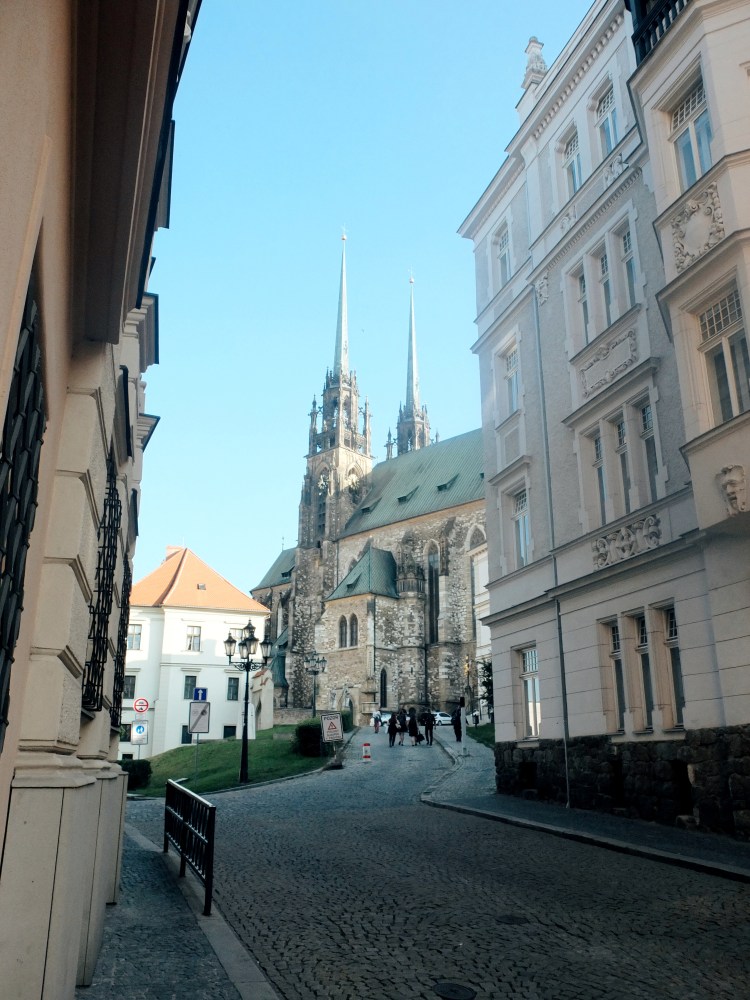
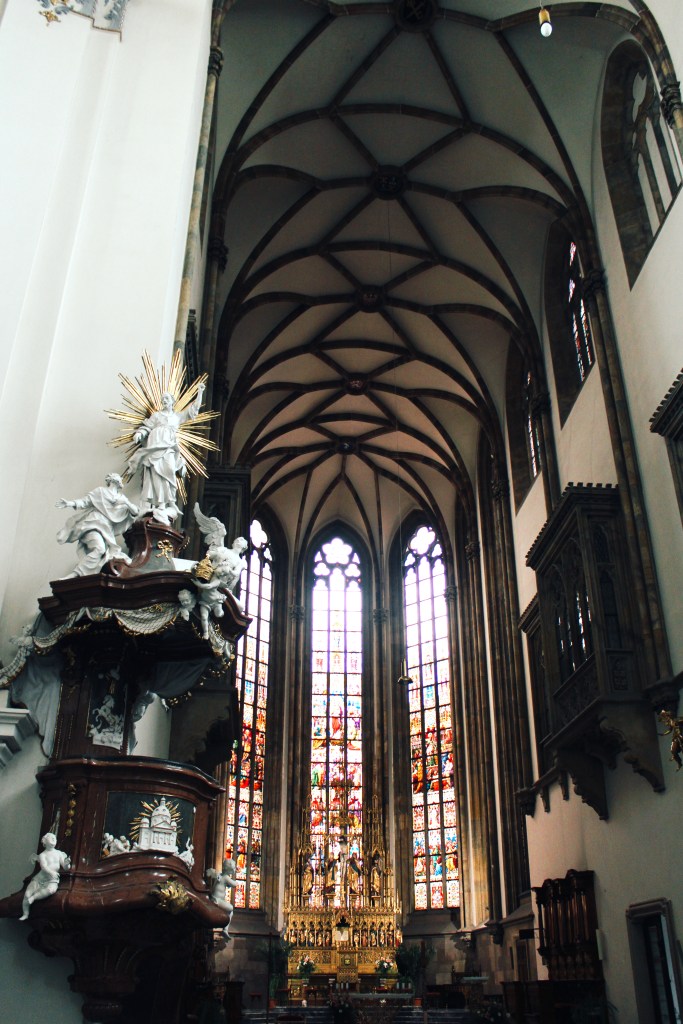
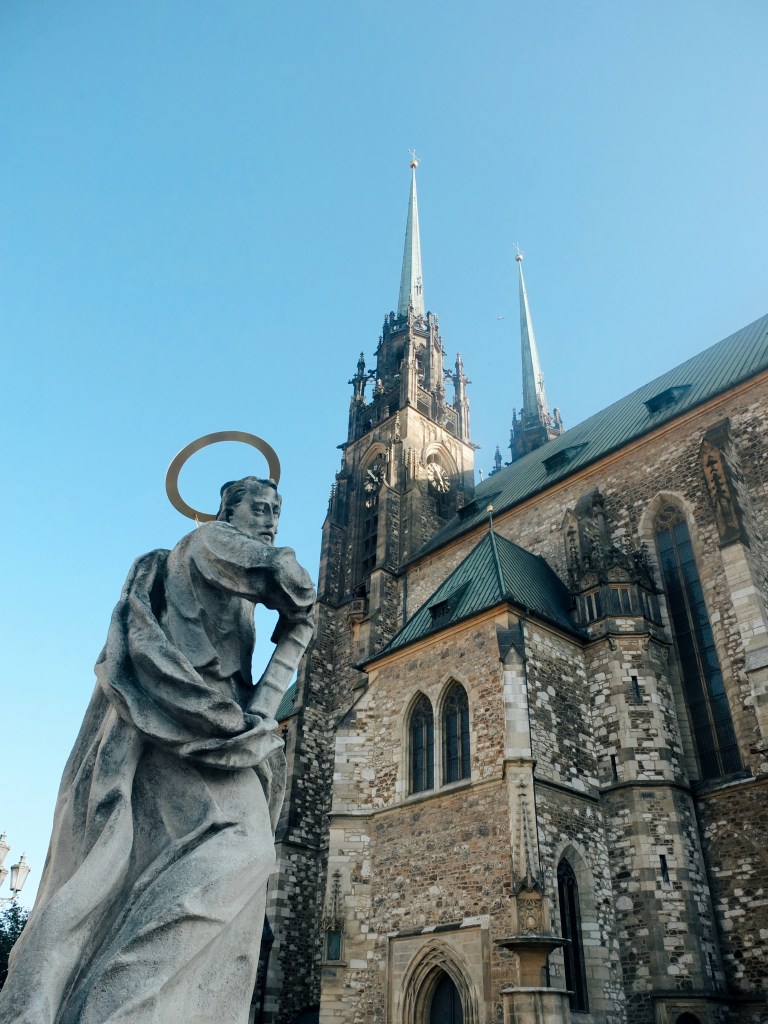
Cathedral of St. Peter and Paul and the story of the siege of Brno
As the first stop, I’d like to forward you to the highest of towers in the historical centre of Brno. These towers belong to none other than the Cathedral of St. Peter and Paul, one of the dominants of Brno.
It is a very important symbol of historical Brno since it was one of the last places where people took refuge during the siege of Brno by Swedes during the 30-year war.
Brno was at that time the last outpost before reaching Vienna, but the people of Brno were defending the city very bravely and they held on for almost 4 months. On the last day of the siege, Swedish general Lennart Torstensson announced one last attack of the city which he aimed to start at noon.
However, people from Brno found out what the Swedes were planning and thus, they made up a ruse. They rang the bells of the Cathedral of St. Peter and Paul at 11 am instead of noon and used this element of surprise to defeat the Swedes that fell back after this last battle. Ever since, the bells of Cathedral of St. Peter and Paul ring at 11 am every day as a memory of this heroic victory.
Cabbage Market and the story of the royal treasure
Now, let’s go downhill from the cathedral, towards the Cabbage Market square. Unlike many other places in Brno, even this square has its myths and legends – mostly connected to the vast maze of paths and cellars located just a few metres under your feet. There is a legend about a treasure hidden in one of the cellars under the Cabbage Market.

It’s connected to none other than the empress Maria Theresa who has visited Brno multiple times during her life.
Each time she visited Brno, she was accommodated in house no. 9 on the Cabbage Market square. This house is known for having the 2-storey cellars with treasure lying hidden in the deepest of them all.
However, there is a curse lying upon the treasure. Anyone who tries to find it will pay for it with their life. And there has been people who tried to find the treasure.
It’s been said that most of them never returned from the cursed cellar, and those few who managed to find their way back from the underground labyrinth, returned completely speechless.
And thus, the legendary treasure of empress Maria Theresa remains one of the biggest mysteries of the old Cabbage Market square.
Old Town Hall and the story of the crooked tower
We will now continue our journey to the Old Town Hall. The Old Town Hall is famous mostly because of its design which has been created by Anton Pilgram, a well-renowned architect of the 16th century who even contributed to works on the famous St. Stephen’s Dome in Vienna.


There is a legend connected to the times when Pilgram was invited to Brno by the city council that wanted a town hall the like of which you would not find anywhere else.
Brno city council then made a deal promising Pilgram approx. 750 g of silver for himself and decent salaries for his workers. After some time, Pilgram approached his employers to ask for a deposit. However, he wouldn’t get any money from the council before the town hall was finished.
Upset and angry, Pilgram told his workers to make the tallest of the towers above the entrance to the town hall crooked. It didn’t take long for the entire Brno to know about the crooked tower and to go to look at it right in front of the town hall.
The city council then scheduled a meeting with Pilgram, asking him to repair the crooked tower. But angry Pilgram replied only: ‘Dear gentlemen, your words and promises were just as crooked as the tower above the portal and that’s why nobody will ever make it straight again. It will always show to the world what are the manners of Brno city council.’
Next up, Pilgram set off to Vienna and never returned to Brno again.
Famous dragon of Brno and the story about its downfall
It is very important to say that the Old Town Hall of Brno has one famous inhabitant. When you look down and enter through the portal, you should be able to see the famous dragon of Brno, hanging from the ceiling.
It is known that this “dragon” has been shipped to Brno as a gift from Turkish sultan.
However, people from Brno still like to believe that this “dragon” actually used to live near the river, where he used to spread fear eating everything and everyone who came near.
However, once there came a witty wanderer who asked the people to get him an ox skin and a huge bunch of limestone. Then, he stuffed the ox skin with the limestone and put it somewhere where the “dragon” could easily find it. And truly, a few days later, dead body of the dragon was found near the river.
Since that time, people from Brno never had to fear any other monster again. As you can see, the form of Brno dragon is absolutely unexpected. And its appearance was for long time (when the rumours about him being hidden somewhere near the river spread around Brno) covered by a curtain of mystery.
Liberty Square and the story of fun game with time
Next, let’s aim our steps to the Masaryk Street and take you to the main square of Brno’s historical centre – the Liberty Square.
Once you get to the Liberty Square, probably the first thing you notice is the not-so-much-historical but still famous Brno Clockwork.
Here we will just remind you of the fact that the bells in the Cathedral of St. Peter and Paul on Petrov ring each day at 11 am instead of the noon. This is also the time when Brno Clockwork releases a small metal ball that tourists from near and far wait for each day.
The point to this is that there are multiple holes in the clocks and you never know which one will release the ball. So it’s like a fun game – you never know if you’ll be lucky or not. But it’s nice not to stop trying.

Dominican Square and the story of the haunted city council

The place where I would like to lead you now is the Dominican Square, where the New Town Hall is located (along with weird little fountains). It’s probably no surprise that the New Town Hall also has its secrets and legends.
These legends are saying that the building is haunted. And why is that? Maybe because of the bright lights shining in the halls on the first floor on some evenings – people say that through the windows, you can see some strangely clothed people who are believed to be the old lords of Moravia who just walk around and wring their hands regretting their decision about uprising against the emperor.
Another legend says that you must not open the gate that is further away from the church. According to the legend, you’ll otherwise be punished.
Finally, some employees used to say that in November, you must not stay in the office after 6 pm, otherwise you will get chased by an invisible entity that will also mess up with the documents on your table. A strange way how to maintain your work life balance but is seemed to have worked out for them those days.
Česká and the stories of the narrowest hotel in Czechia and a crying fountain
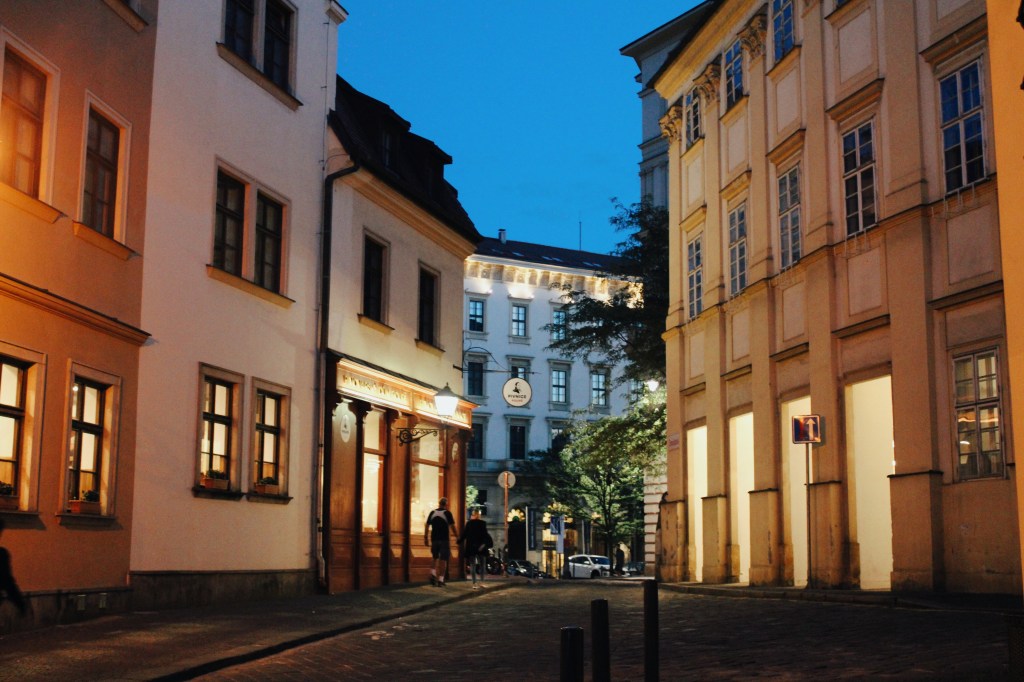
Next up, we’ll be heading towards the street called Česká which is Brno’s main shopping street. In this street, you’ll be able to find Hotel Avion which is not interesting because of any legend but by pure fact that it’s the narrowest hotel in the entire Czechia and with its width of only 8 meters it belongs among the narrowest buildings in the entire Europe. Hotel Avion was designed by Bohuslav Fuchs in 1926-1927 and its construction was finished in 1928.
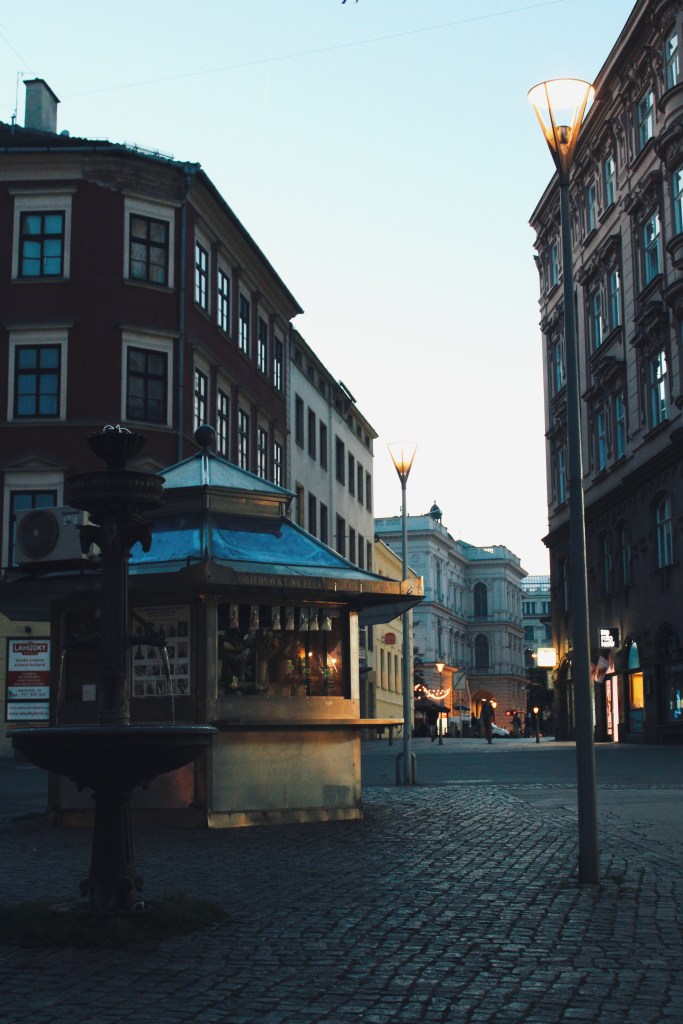
However, not to get you bored by pure facts, I’d also like to give you another legend connected to the street of Česká.
In proximity of the hotel, you can find a small fountain. This small fountain is bound to a legend which says that sometimes, you can hear a silent cry coming from the depths of the fountain.
People say that long ago, a mother drowned her newborn in this fountain. This is also the reason why this fountain is called Kašna Karolínka (or the Fountain of Carolina).
Clocks on Česká and the story of thousand reunions
Another quite interesting point about this street is that it leads to a cosy square with a church (St. Thomas Church) and the university cinema called Scala. It is of note that this square also serves as one of the major meet-up points in the centre of Brno.
What is interesting is that the Slovak students who come to live in Brno and don’t know the traditions usually meet up underneath the horse, meaning the statue depicting Jošt of Luxembourg.
On the other hand, the Czechs (and mainly the ones from Brno) usually set up their meetings underneath the clocks that are on the crossroads of the Česká with the street called Joštova. These clocks are definitely worth seeing as you can also see the smallest statue in Brno (a tiny little man) sitting on their metal construction.
St. Jacob’s Church and the story of a rebellious angel
While still on Česká street, let us point you towards another historical dominant of the city centre – the Church of St. Jacob which is a subject of another legend.
The legend says that back in the days of old, the lords on Petrov and those in downtown never really got on very well.
Thus, when both teams started building their churches (meaning the Cathedral of St. Peter and Paul and the Church of St. Jacob) at approximately the same time, a real race began.
And for a long time, it was an even race. Whereas on Petrov, the lords had more money, downtown, the council had a more skilled architect.
The legend also says that the architect leading works on Church of St. Jacob was a great prankster and that he was often making fun of people on Petrov, saying that the Church of St. Jacob will be already in use for a long time before they open the gates of their cathedral for the first time.
And for a long time, this was a valid point because the construction works on Church of St. Jacob were going much faster than the works on the cathedral.

However, lords on Petrov were very annoyed by the pranks and losing the race and thus, they made sure that the people downtown had to fire the architect of St. Jacob’s Church.
The architect took it surprisingly well, but he asked for one thing. ‘Before firing me, please let me finish just this one window that I’m currently working on,’ he said to the lords, and they agreed.
But they later really regretted this decision as when the architect finished and uncovered the window, everybody stood in shock. Above the window, the architect created a sculpture of a small man showing his naked butt which is oriented towards Petrov. This was the last act of the architect in Brno and an ultimate revenge to the people who banished him from the city.
Moravia Square and the theatres
Nearby Česká and the St. Thomas Church, there is another small square which has recently undergone a significant transformation. Nowadays, Moravia Square offers not only a bunch of nice views of the city centre, but it provides a comfy space to sit or lie down and chill out.
In summer, this square has its own shallow pool where you can refresh yourself by walking around with your feet underwater (which is very popular especially among the youngsters and families with kids).
On the contrary, in winter (and not only during the Christmas markets), this square has its own ice-skating rink and a ferris wheel that offers stunning views of the city centre from above.
Not that far away from Moravia square, you can also take a walk in the park that goes along two biggest theatres in Brno, named after a famous composer Leoš Janáček and a famous poet Jiří Mahen.

During the walk, you can also notice the architectural differences of these theatres.
Mahen theatre is more historical from the two. Its origin dates back to 1882 when after the fire in Brno’s main theatre at that time – theatre Reduta at the Cabbage Market square – there was need to build a new theatre.
Janáček theatre on the contrary was finished in 1965, during the socialist era in Czechia, which can be deduced even from the exterior of the building. However, the interior of the theatre is richly-decorated mainly by umpire elements which creates very elegant style.
Nowadays, both theatres are still used for theatrical performances with classic plays being organized in Mahen theatre, whereas ballets and operas are taking place in the building of Janáček theatre.
The Red Church and why is Brno called the suburbs of Vienna
Passing by Česká all the way to the Comenius square, you can find the famous Church of Jan Amos Comenius. The church is better known in Brno as the Red Church due to the red brick facade.
The church was built based on a design by H. Ferstel, who also contributed to the construction of Vienna’s Ringstrasse. As this architectural monument is far from the only building constructed in Viennese style, it is no big surprise that Brno has been historically very frequently titled the ‘suburbs of Vienna’.
The church became the first large Christian non-Catholic place of worship in Brno and due to its excellent acoustics it’s often used as space for concerts till this day.

Moreover, in the Comenius square, you can also see a lot of artsy places such as Janáček Academy of Musical Arts, the house of State Philharmonic or the gallery in Pražák Palace.
Špilberk castle and the story of misery under lock and key
Now, let’s turn our attention to the fortress on the hill, named Špilberk castle. Creating an absolute dominant of Brno, this historical fortress has served multiple functions throughout history. Once a castle, in other times a prison or even headquarters of Gestapo.
Nowadays, along with the nice park surrounding it, the fortress has its own museum and also serves as the venue for multiple cultural events including the summer Shakespeare festival or simply as a place to walk or relax in.
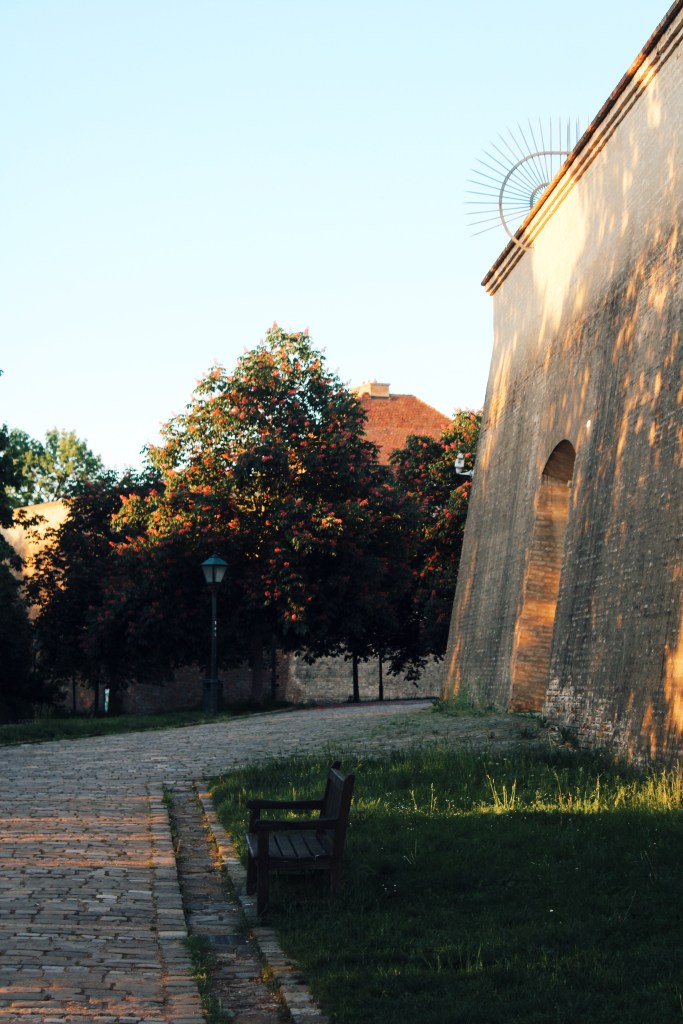


And of course, even about this place, there is a (less known) legend being told. This legend says that young Joseph II., son of Maria Theresa, once visited Brno disguised as a poor man.
What was formerly meant to be just a prank, dressing a random beggar as the emperor and putting himself in his shoes costed young emperor an hour-long stay in Špilberk’s casemates. When the Špilberk guards realised their mistake, they came to apologise to young emperor and set him free.
Absolutely shocked from the discomfort of the casemates, Joseph II. gave an order to find the Misery herself and imprison her in the dark casemates forever. And thus, the guards of Špilberk indeed went to the streets among the poor people’s houses, found Misery and tied her up in the casemates.
Soon, the ordinary folk in the streets of Brno felt much better as all the people were left of the misery and finally were living prosperous lives. The emperor said to keep an eye on the casemates at all times and gave a similar piece of advice to his brother, Leopold.
And thus, Leopold gave the same order during his reign, providing Brno and the entire south Moravia by very prosperous times. However, after his death, the noblemen of Brno said to themselves that after all, the wealthy should have their wealth and the poor their poverty and thus, they gave an order to set the Misery free.
Soon after that, the Misery regained her strength and found a secure refuge in the houses of the poor folk, where she has remained till these days. However, the story about locking her up in the casemates of well-guarded fortress gives ordinary people hope that one day, Misery will again disappear from their households and good times will come again.

Augustinian Abbey and the story of the birthplace of genetics

If you walk downhill towards the Mendel square, you’ll be able to see the very birthplace of genetics. Right at the square that is the busiest traffic point in Brno, the Augustinian Abbey seems incredibly peaceful.
It is dominated by the Basilica of the Assumption of the Virgin Mary which is – I believe – the most beautifully decorated church in the entire Brno. So in case you have a chance to look at the interior of this tabernacle, I strongly recommend it to you.
It’s worth wandering a few hundred metres from the city centre. However, it’s open only for a short time during the day, so looking up its opening hours in advance is highly favourable.
The entire area of the Augustinian Abbey is also bound to one of the most important stories in the development of biology – and genetics in particular.
This abbey was for several decades home to Johann Gregor Mendel who is now known as the founder of genetics, all thanks to his long and thorough research on multiple traits in development of peas that he cultivated in the walled garden of the abbey.
During almost 5 years, he cultivated and inspected more than 1000 plants which helped him formulate the three universal laws of genetics that are still fully acknowledged and accepted by the geneticist community worldwide.
However, when he first presented his results (summarized in his thesis called ’Die Versuche über Pflanzen-Hybriden‘) in 1851, nobody considered his work significant for the scientific community. Thus, his work was forgotten for 50 years, until it was re-discovered (unfortunately, long after his death) independently by 3 different biologists in 1900.

Nowadays, Brno is acknowledged as the cradle of genetics with Johann Gregor Mendel recognized as a revolutionary scientist who contributed the progress in terms of biology.
Johann Gregor Mendel and his work is now commemorated in this place by multiple things or symbols, including Hrachovina – the statue of peas in the middle of the square, or the entire museum summarizing his life and research. Finally, Masaryk University in Brno organizes regular lecture series of world-famous scientists (and even the Nobel Prize laureates) that is called the Mendel Lectures.

Gardens and parks of Brno
Getting further and further away from the city centre, you can find a bunch of great places to chill in the shade which is in the mid of hot summer pretty desirable thing to find. Taking you on a quick detour across various parks in Brno, I would like to mention several cosy parks and gardens that I always really enjoy walking through.
The first such place is the park at Obilní trh (in translation the Cereal Market) which offers a nice view on the Špilberk castle. Especially in summer, this place is full of families with kids on roller-skates or bicycles which give this park a wonderful lively atmosphere.
If you’re looking for a more peaceful place, nearby is the so-called Open Garden which is a very interesting concept. In this garden, you can not only find the examples for sustainable solutions in terms of planting, but you can also get stunned by lovely rabbits or sheep they keep there.
Moreover, this garden concept offers workshops for children and even seminars for the adults which focus on topics related to sustainability and dealing with environmental issues. Thus, you can learn a lot about ecology in this place – but in case you wish to just chill out, you can take a seat on a peaceful terrace or in the open-air café where you can get delicious specialty coffee.
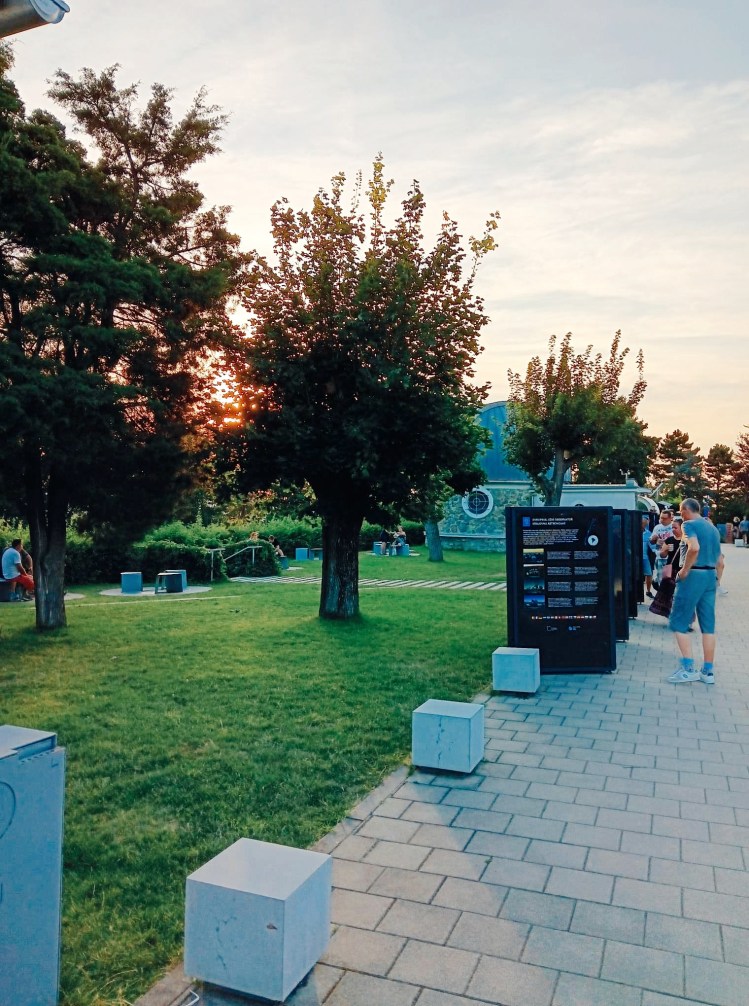
Just a few hundred metres up the hill, you can get to another park that has amazing views of the city centre. This hill is called Kraví hora (in translation Cow Hill) and besides the ideal space for picnic, it also offers nice experience from an observatory that is located at the very top of the hill.
Furthermore, you can find a swimming pool with its own wellness in this place. The entire area offers the best views of Špilberk castle in the entire Brno.
Finally, Kraví hora is also the location of a restaurant that serves some of the best steaks in Brno – Monte Bu.
Another nice and peaceful place in Brno is the Botanical Garden of Masaryk University that can be found a few hundred metres north from the city centre. Apart from a cosy garden with many types of plants that is nicely separated from the busy street just across the fence, you can also find here a series of immense greenhouses.
And if you’re lucky, you might also end up in one of the temporary expositions that the Botanical Gardens organize, usually with focus on succulents or the carnivorous plants. In that case, make sure you also visit the bazaar with plants that is always taking place during these temporary expositions and that offers even very special types of plants for great prices.
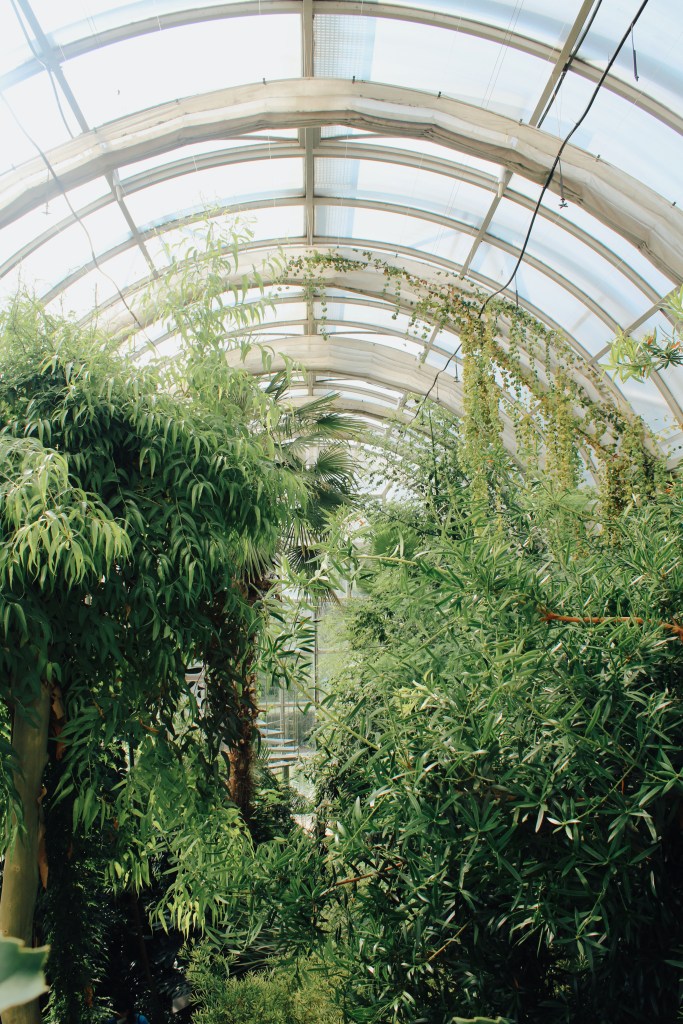


Next up, let’s visit Tyršův sad (Tyrš orchard) which is almost unusually cosy and quiet place in the middle of Brno. Again, it’s a great choice for families with kids, as it has its own small farm with hen and goats that the kids can visit. It has many nice corners which make it ideal for sitting down peacefully and reading a book. You might not be the only one doing so, as this park is very popular among the citizens of Brno, too.
Finally, let me lead you to the largest park in Brno, Lužánky. Here, you can find multiple nice spots where you can enjoy specialty coffee or beer or good time doing sports like tennis or volleyball. In my opinion, the best are vast meadows where you can have a picnic with friends or family, just like many locals do. Or you can enjoy most of the park on a stroll or a short jogging route, since the park offers many of these nice and enjoyable routes for a walk or jogging.
Villa Tugendhat and its complicated (hi)story
Not far away from the park of Lužánky, there is a real jewel of the modern architecture that rightfully belongs on the list of UNESCO World Heritage. Villa Tugendhat is rightfully the most iconic villa in Brno. Built in functionalist style, it is also recognized as one of the significant works of modern architecture worldwide.
The construction of this villa was on demand of Greta Tugendhat who was daughter to owner of one of the most prosperous textile companies in Brno. The budget to build the house was given to Greta as her wedding gift from her father and according to one of the letters from Fritz, her husband, it was adequate to building 40 normal houses at the time.
No wonder the house is so fascinating, since the architect that Tugendhats employed for design of their villa was Mies van der Rohe, also known as the father of modern architecture.
Even though the villa was designed in 1928, it already had fully functioning air-condition system or the connection of the living room with the garden below the house.
However, according to words of the owners, the architect was very protective of his work even after they started living there. Thus, Mies van der Rohe never allowed the family to make any changes in the placement of the furniture in the house. The only exception (for which they had to negotiate for really long) was placing the piano into the main hall.
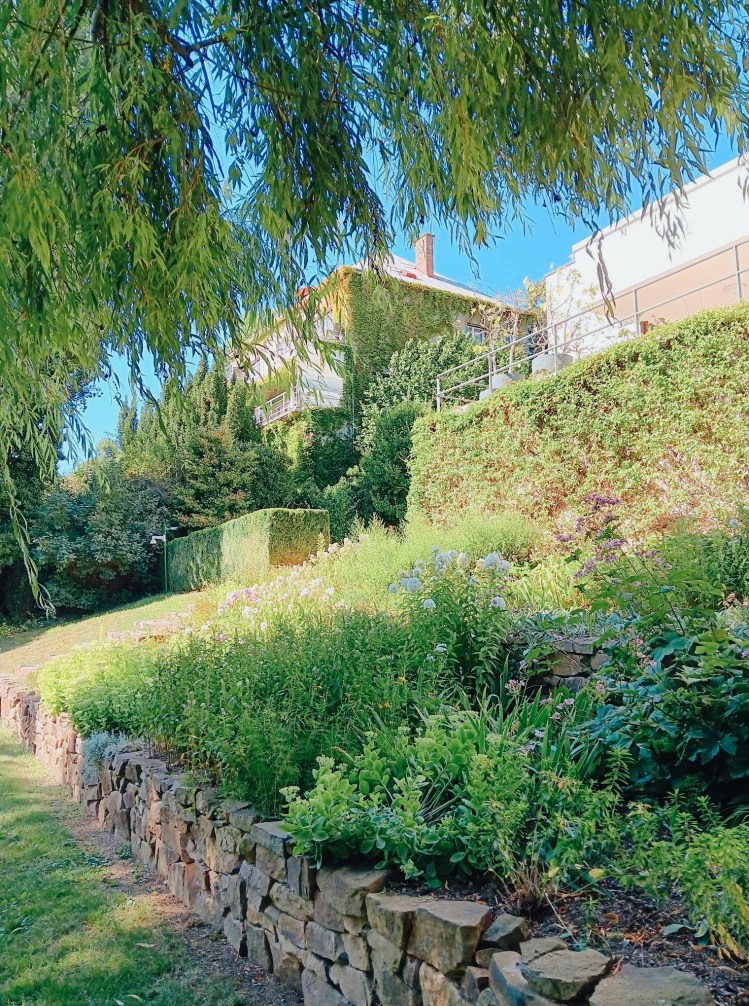
Unfortunately, the family Tugendhat could enjoy their villa only for a couple years. After the beginning of WWII, they all had to flee to America due to their Jewish origin.
After that, the villa was confiscated by Gestapo and many of the unique elements decorating the house were stolen (e.g. the wooden panels covering the walls in the living room were found decades later, in the cantine of the Faculty of Law which served as the office of Gestapo during WWII).
After the WWII, Tugendhats tried to get back home, but as the socialism spread to Czechia, they were not very welcome to Brno due to the regime. Thus again, the house was confiscated by the state and as the main parts of its interior were largely damaged, the Soviet soldiers used the living room of the villa as the horse stable.
Only after the Velvet revolution in 1989, the efforts to reconstruct the villa were initiated, as the importance of this architectural jewel was acknowledged both by the authorities and the society.
Its importance was even emphasized in 1992, when the political representatives of Czechia and Slovakia signed the contract about the separation of Czechoslovakia into two independent states. This historical and political significance only underlined the importance of the villa in general context.
Now, thanks to thorough reconstruction, we can admire the villa in its almost original state. I also recommend visiting this place since it has one of the most beautiful views of Petrov and Špilberk castle, both in one. However, in case you wish to see the interior of the vila (and believe me – it’s worth seeing), you need to pre-book the guided tour even 3 months in advance, due to high popularity of the place.
Brno Water Tanks and the stories of the Yellow Hill
One of the newest members of Brno cultural heritage collection is the series of water tanks located just a couple of blocks away from the historical centre, at the Yellow Hill.
And apparently, even the name of the Yellow Hill itself is directly connected to the work on the water tanks. Why is that so? It’s linked to the time when the newest water tank was being built. After the vast pit for the water tank was created, the workers found out that the lower layers consist of a rock called Helgoland which is characteristic by its yellowish color. It is probably the color of this rock basis that gave name to the Yellow Hill.
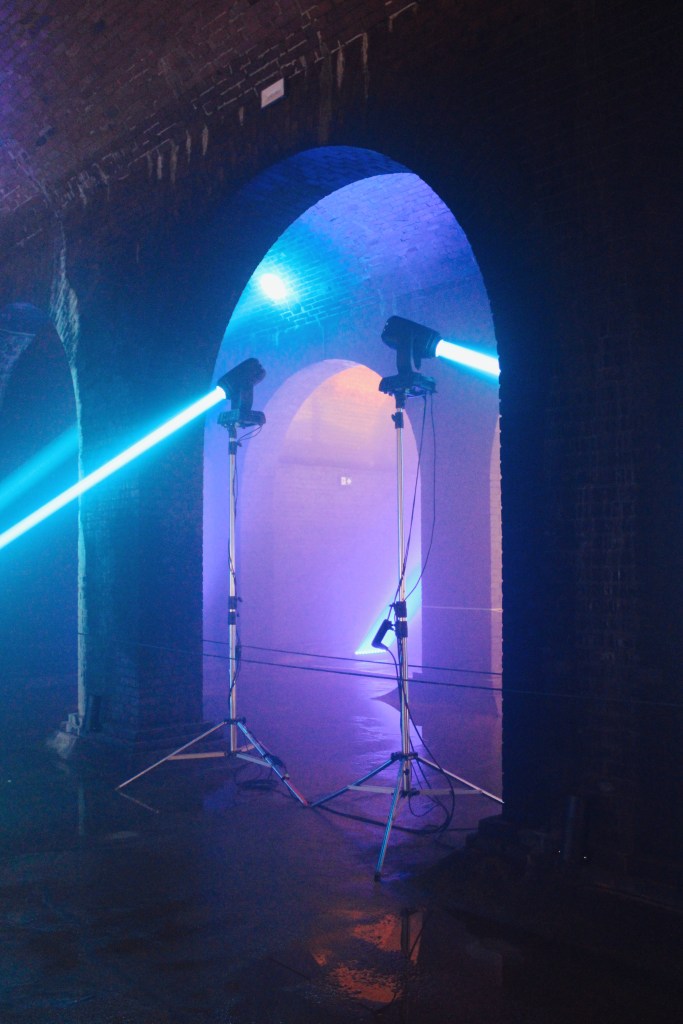
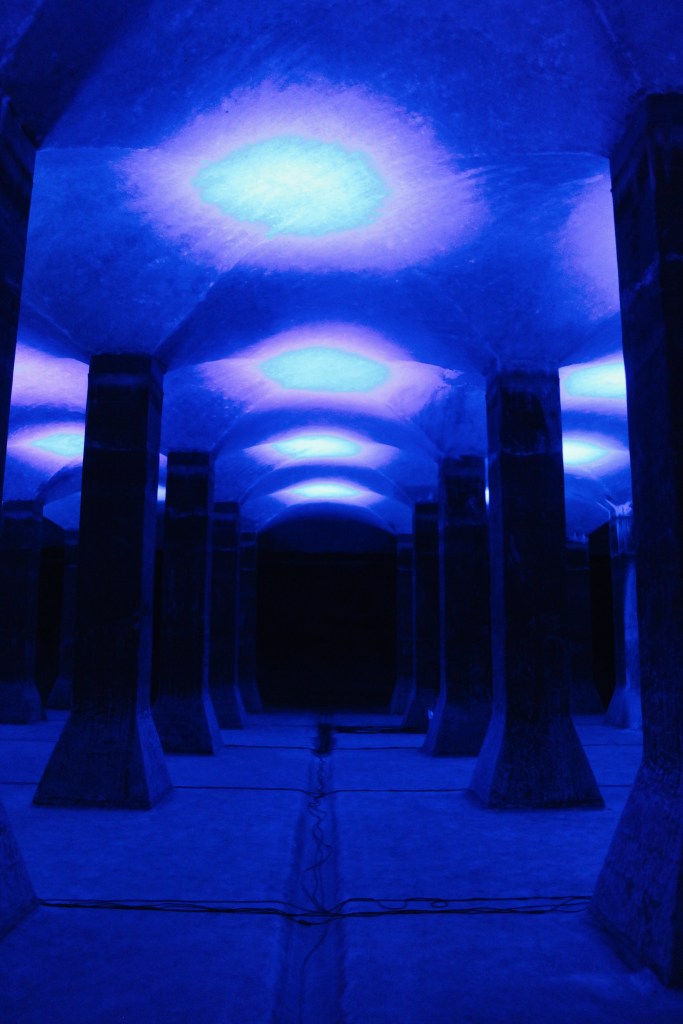
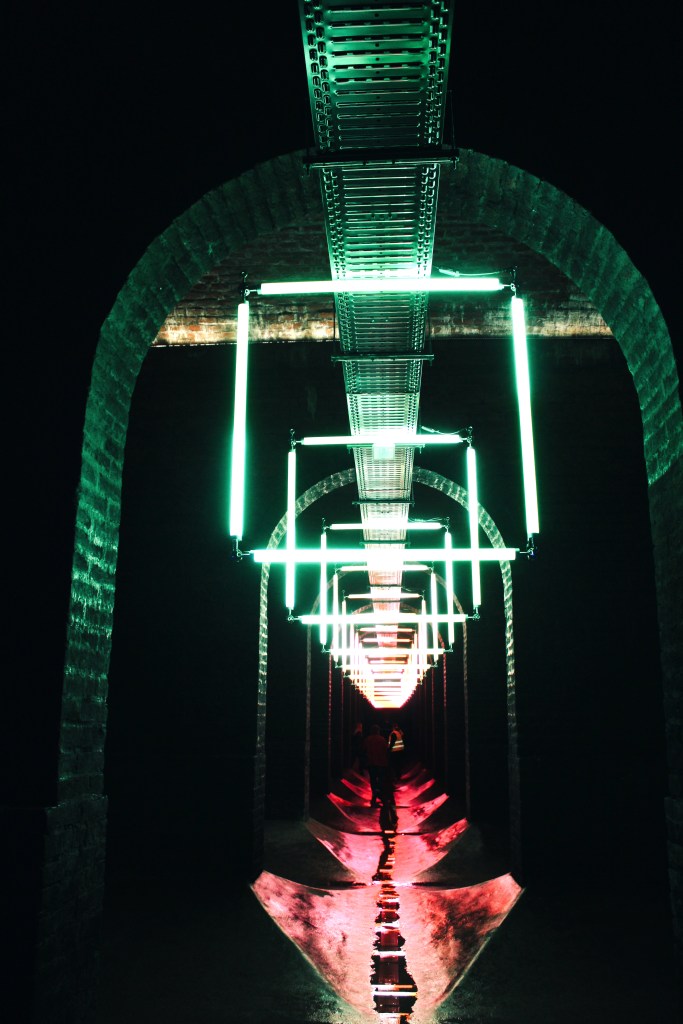
As you can see in the pictures, Brno Water Tanks represent an impressive series of architectural monuments that despite their purely pragmatic function feel like underground cathedrals. Built in order to satisfy the growing needs of the expanding city of Brno, the water tanks have been constructed one-by-one between years 1874 – 1917. Currently, there is in total 3 tanks located at (or more like in) the Yellow Hill.
However, these tanks almost stopped existing in 2014, after their functioning had been interrupted for more than 16 years, with very low chance of their usage re-establishment. Luckily, before the demolition, several pictures from the water tanks ‘leaked’ to the public as well as to the experts. These pictures triggered enormous interest of people which was followed by the inclusion of the water tanks on the list of Czech cultural heritage.
Due to an enormous amount of effort, the detailed reconstruction of all 3 water tanks led to gradual opening of all of these architectural monuments, which in combination with a very cosy park built above them provides a nice surroundings for a walk or relax outside. Moreover, the overall vibe of the tanks which really resemble even locations from sci-fi or fantasy movies (e. g. the kingdom of Moria known from the Lord of the Rings trilogy) attracts the broad public including tourists from abroad.
Furthermore, the appearance and atmosphere of the water tanks also attract the movie producers. During our tour of the first built water tank, we’ve been told it had almost been chosen as one of the locations in one of the new Spider-Man movies. The only reason why the filming did not happen was the (at that time) poor accessibility of the water tank (which was problematic especially due to necessity to get the cameras and other aparature into the water tank). Nowadays, the poor accessibility of the water tanks is no longer the case, as all of them are accessible by comfy staircases or even with an elevator.
Apart from filming, the water tanks often serve as the location of concerts (due to their breath-taking acoustics) and festivals (e. g. regular festival of light, Prototype, that the pictures in this post originate from). During the time of the festival, you can literally take a look at the water tanks in different light and enjoy multiple pieces of (mostly contemporary) art in the area of the tanks. But no matter if you visit during the festival or not, the Brno Water Tanks provide an unforgettable experience and thus, I can only conclude that they are definitely a must-see place in Brno.
Brno Dam and Veveří Castle
The last stop that I would like to mention here is almost at the periphery of Brno, but it’s definitely worth the travel (by tram no. 10). Brno Dam again offers many nice spots to sit down and unwind while reading a book or having a picnic with friends or family. Moreover, in the area around the dam, there’s multiple grills that you can pre-book for your own party.
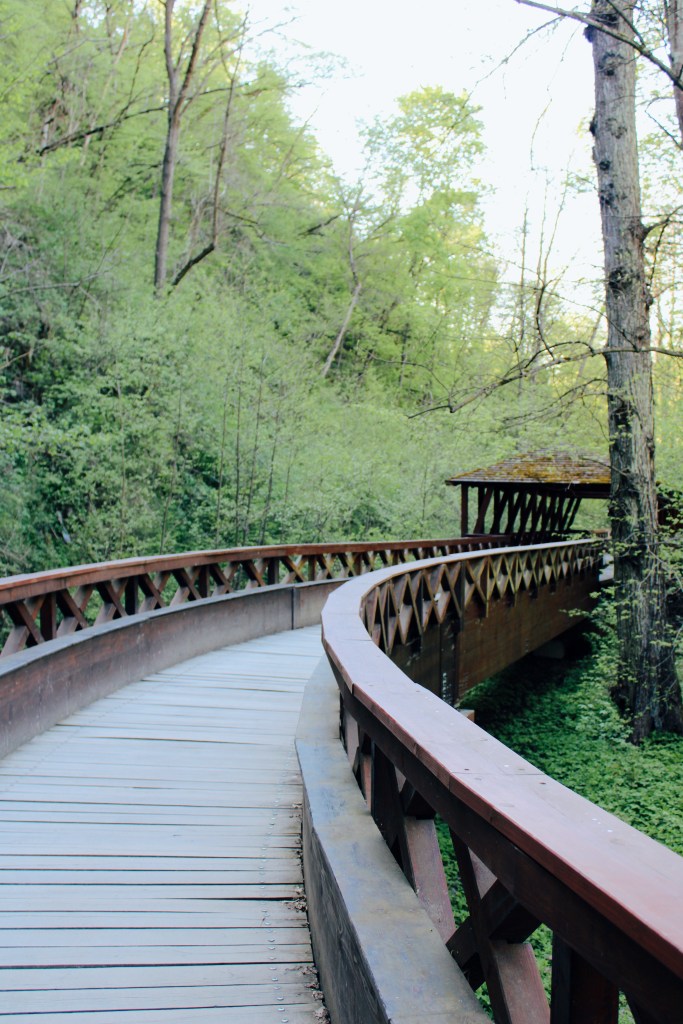


Furthermore, you can take a ship departing from the dock every half an hour and go visit the Veveří castle that is just 30 min away (by the ship). Though the castle itself does not have its interior accessible, it has been recently reconstructed and is now in a very good shape.
Combined with the trip by the ship, it can be a nice experience especially for families with kids or tourists that enjoy a bit of nature besides sightseeing in rush city centre. Or it can be a nice way how to wrap up a long (and often in a way exhausting) city tour, giving yourself a peaceful moment next to the dam, with lángos or chimney cake in your hand.

And in this moment, I would also like to end my storytelling about Brno. I believe I’ve managed to express my love and admiration for this vibrant and lively city and to persuade you that it is worth visiting.
As the person who lives in this city, this love letter has become even more personal to me than the rest of the love letters I’ve written so far. I know that a lot from my impression about Brno has been formed by the endless kindness of the friends I’ve found here but also by the huge number of kinds deeds of strangers I’ve never expected to be so nice and welcoming during everyday interactions in the shops or cafés.
So I really hope that once you come over to visit Brno, you’ll encounter the Moravian hospitability and kindness that will only emphasize the positive impressions from the appearance of the city. And that once you’re leaving, you’ll feel the urge to come back one day, just like I did when I was leaving Brno after my first visit as a 17-year-old applicant for studies at the Masaryk University.
Love,
Antonia
Last but definitely not least, here’s my list of the top restaurants, cafés and bars that I’ve managed to try out during years of living in Brno…
Restaurants:
- Pivnice U Čápa – traditional Czech cuisine + great beer
- Garden Food Concept – traditional Czech cuisine, eating outside (garden open even in winter)
- Potrefená Husa – traditional Czech cuisine
- Nok-Nok – traditional Czech cuisine but in a bit more experimental way
- Soul Bistro – traditional cuisine in healthy variations
- Immigrant Pub – great burgers
- Parodie (Parody) – great burgers
- Esco Bar – delicious meals and good cocktails
- Úvozna – great burgers
- Monte Bu – amazing steaks and ribs
- Dough Boy – really good pizza
- Jean Paul Restaurant – Italian and Alpine cuisine, great pasta (but no pizza)
- La Famiglia – Italian cuisine, really cosy, amazing pasta and pizza
- COSMOPOLIS GRILL – Greek cuisine, very authentic
- Ca Phé Co – Vietnamese cuisine, lovely atmosphere of the place, delicious meals
- Eden – Vietnamese cuisine, the best pho bo in Brno
- Go Brno – Vietnamese cuisine
- Ramen Re – Asian, really good ramen
- Toppu Ramen – in my opinion, this is the best ramen in Brno
- Bango – great brunches
- Mulgogi – Korean cuisine, cosy place, great concept with grills on tables
- Panksy – delicious pancakes, both sweet and salty
- Konoha – Japanese cuisine, great sushi
- New Era Restaurant – Chinese cuisine, tasty sushi
- Bastardo – Mexican cuisine, the best burritos in Brno
- Blue Demon Bistro – Mexican cuisine
- Everest – Indian cuisine
- Padagali – Indian cuisine
- SKØG Urban Hub – great coffee and delicious seasonal brunches
- Poppy Beans Coffee – delicious brunches
- Café Podnebí (Climate) – great brunches
- Bavard Café – very nice brunches
- Večerka – amazing waffles
- Kafec – also great waffles (rather try the one on Čápkova, the one in the city centre is always full)
- Coffee Trail – great coffee and delicious brunches
- MARINÁDA – tasty salads and brunches
- Vegalité – vegan restaurant
Cafés:
- SKØG Urban Hub – great coffee and delicious seasonal brunches
- Punkt. – further away from the city centre but definitely worth a visit
- SORRY – patisserie with innovative ideas in terms of cakes
- Pelíšek – café with cats
- Anoda
- Café Friedrich
- Café Kimono
- Coffee Trail
- Čarokavárna (Wiz-Café) – in Harry Potter style
- Café Placzek – great cakes (right next to it is the beautiful Church of St. John)
- Café Mitte
- Café Momenta – lovely views of the Cabbage Market square
- Buchta B
- Cukrové nebe (Sugar Heaven)
- Melounový cukr (Watermelon Sugar)
- Někde jinde (Somewhere else)
- Pikola Espresso Bar
- Café Morgal – artsy style café
- KLÁRA BÁRA WINE/CAFÉ
- KOFI KOFI – good coffee to go, served from trails placed all around the city
Bars/pubs:
- Zastávka – pub with beers from small breweries, really good atmosphere and beers
- Malt Worm – pub with craft beers
- Lucky Bastard Beerhouse – craftbeer place
- Immigrant Pub
- Pivní Kult (Beer Cult) – craftbeer pub that makes their own beer
- Pivní burza – pub with interesting concept, prices of beers are flexible just like at stock market
- Wild Thing – karaoke bar
- Esco Bar
- Bar, který neexistuje (Bar that doesn’t exist)
- Slast (Delight) – bar with really good cocktails and great rooftop views
- 7 hříchů (7 sins) – really tasty cocktails
- 4 pokoje (4 rooms) – very good cocktails and tasty brunches during the day
- Aloha – exotic cocktails + music and place for dancing
- Super Panda Circus – interesting bar with great cocktails and seasonal concepts based on certain topic or story (no reservations can be made, you need to ring a bell as if entering someone’s house)
Moreover, I shall not forget to mention that the surroundings of Brno is full of other great places (some of those are/will be discussed in detail in other love letters) that you should not miss out on.
Here’s my list of top locations in surroundings of Brno:
- Quarry of Hády
- Babí lom area
- Moravian Karst and the Punkva caves – Macocha cave with tour on boats
- Almond Walk in Hustopeče
- Lednice-Valtice castle area
- Pernštejn Castle
- Mikulov
- Třebíč
- Kroměříž
 Love Letters to the World