

In the second part of our Krakowian tour, let’s move on south from the historical centre to catch some cosy and hip vibes of two very important districts, Kazimierz and Podgórze.
In the contents of this post, you can find the following places along with some of their stories:
- Kazimierz
- Old Synagogue and the story of Kazimierz origin
- Market Place and the story of the David star
- Szeroka 12 and the story of the first female entrepreneur
- Synagogue Popper and the guide on how to know a synagogue
- Old Jewish cemetery and the story of the enchanted tomb of Remuh
- Mrs. Dresner’s courtyard and story of the most famous staircase in Poland
- Synagogue Tempel and the story of its progressivism
- Plac Nowy and the story of thousand bars
- Podgórze
- St. Joseph’s Church and the story of the dominant of Podgórze
- Park of Adalbert Bednarski and the story of its athmosphere
- Jewish Ghetto Memorial and the story of empty chairs
- Pharmacy Under the Eagle and the story of secret messages
- Oskar Schindler’s Enamel Factory and the story of the saved lives
- Krakus Mound and the story of its primary use
Kazimierz
As some of you might have expected, Kazimierz district carries its name after one of the greatest kings of Poland (that was already mentioned in association with the Jagellonian University in the first part of the Krakow guide), Kazimierz I. Welky. It carries separate name because for a long time, Kazimierz used to be a separate town close to Krakow (the one known now as the historical centre).

This town, or district, is also famous as the Jewish district that was home to one of the largest Jewish communities in Europe until it was so violently reduced during World War II (WWII). Thus, most places in Kazimierz are connected to the history and lives of Polish Jews, either before or during WWII.
However, Jewish history and synagogues are far from the only thing that characterizes Kazimierz as we know it today. I think it’s of note that Kazimierz is now proudly hosting one of the best foodie scenes I’ve experienced so far in Europe. It comprises restaurants that serve meals from almost dozen types of cuisine, including traditional Polish, Italian, Vietnamese, Japanese, Mexican, Greek, Georgian and many more.
Moreover, almost each of the restaurants we’ve visited around Kazimierz offered also vegan and/or vegetarian options in their menu. So, if you’re looking for a gastronomical heaven, you’ll definitely find one in Kazimierz.
Our top places from Kazimierz foodie scene that you should give a try can be found at the bottom of this post.
Old Synagogue and the story of Kazimierz origin
But now, let’s get back to the history of Kazimierz. As I’ve mentioned, Kazimierz was home to one of the biggest Jewish communities for several centuries. How did it happen that the biggest Jewish community got to form at this place?
Actually, it was a consequence of continual migration of Jewish people from the west and south to Poland. The very first Jewish inhabitants of Krakow used to live underneath Wawel castle, as they were very much valued by the king. As you might already know, this was mostly due to Jews being: 1) very well-educated, 2) merchants (used to travelling), 3) located in most of the biggest cities in Europe at that time, 4) still using Hebrew as their mother tongue.
For these reasons, monarchs often employed Jews as their diplomatic allies that were sent across Europe to settle deals or trades with foreign rulers. Especially, famous Polish king Kazimierz I. Welky, was very fond of Jews and thus, he didn’t have anything against the expansion of Jewish community in Krakow, which came as a consequence of several pogroms (connected to crusades) in western and southern Europe.
However, the largest wave of immigration was after series of pogroms in Prague, which in their violence left almost 3 000 victims and lots of others homeless and seeking help in Poland and Hungary. Due to substantial expansion, king Kazimierz I. Welky decided to move out Jews from underneath the Wawel castle and offered them a separate town right next to Krakow, which he very humbly named after himself. That was the origin of Kazimierz as the Jewish town.
And the main political and cultural place of Kazimierz was the Old synagogue, which is the first place that I very much recommend visiting in Kazimierz. Herein, it’s of note that the synagogue no longer functions as a tabernacle, but it is still open as a museum with interesting exposition on the history of Polish Jews and Kazimierz.
It’s located on Szeroka Street which in translation means „Broad Way“. It is due to Szeroka Street being literally the only broad street in Kazimierz, which originates in the fact that so many Jewish people historically migrated to a town with such a small area. Yet, exactly this historical fact and its consequence – those lovely and cosy narrow streets – now make Kazimierz the most enjoyable part of Krakow.

Market Place and the story of the David star
Along with Szeroka Street, the Market Square served as the main meeting point in Kazimierz for long years. As indicated by the title itself, it was also the location of the markets with food and other goods that were running here throughout centuries. However, now it’s no longer the place where you can find the regular markets as the markets were re-located to Plac Nowy, that we will talk about in a second.
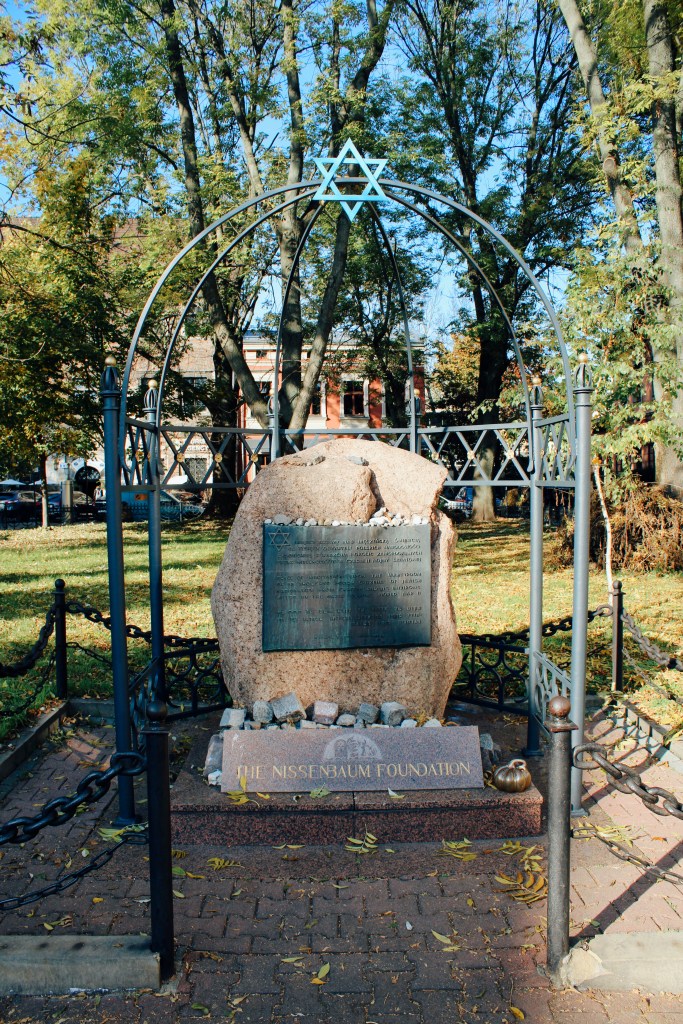
In the middle of this square, you can also find the memorial to all people who were killed or who needed to flee from Krakow during the WWII.
This Holocaust Memorial commemorates a community of 65 000 Jewish people who lived in Kazimierz before the brutal actions of WWII were put into motion.
The memorial is surrounded by a fence which is in the shape of candlestick with 7 candles, since this is the original true sign of Jewish people – not a David star which started being used as the distinguishing sign of Jews hundreds of years later.
Szeroka 12 and the story of the first female entrepreneur
At Szeroka Street – and actually not that far away from the memorial – you can find another important house. House at Szeroka 12 is the birthplace of a girl named Chaja who after her emigration to Australia started distributing a cream developed from her family recipe.
This idea led her to the establishment of a successful brand and becoming one of the first independent female entrepreneurs in the world. However, the world now knows her under a different name which is Helen Rubinstein.
Synagogue Popper and the guide on how to know a synagogue
Let’s now turn our focus back to synagogues, as there are quite many of them located at this square. An important thing to keep in mind while sightseeing in Kazimierz is that the synagogues – unlike churches – cannot really be seen from long distance.

It’s been a rule that no synagogue can be higher than its neighbouring buildings and thus, all synagogues in Kazimierz seem – at least height-wise – very humble (in comparison to Polish churches).
However, there is at least one tell-tale sign how to recognize a synagogue even from far away. Look at the windows of the building – if they have the shape of arch, the building you’re looking at is a synagogue.
Now that we know how to distinguish a synagogue from other buildings in Kazimierz, let’s see some more synagogues. The next one is Synagogue Popper which is ‘hidden’ behind the gates of house with large title Ariel. This synagogue has been one of the private ones, serving only to a specific small community in town. Yet, nowadays it’s not a functioning synagogue anymore, it can still be visited as it has been remade into a bookshop.
Old Jewish cemetery and the story of the enchanted tomb of Remuh
Szeroka Street in Kazimierz is also a location to two important historical places for the Jewish community worldwide. They are so important that they’ve become locations of pilgrimage. These places are Synagogue Remuh and the Old Jewish Cemetery.
The synagogue carries its name after one of the most significant rabis of historical Kazimierz – rabi Remuh. There is also a story connected to the rabi’s tombstone, that is located in the area of the old cemetery in close proximity of the synagogue.
Even though the cemetery itself has been facing frequent bombings during the WWII, rabi Remuh’s tombstone has (as almost the only one) endured bombings without any damage.
Therefore, it was believed by the Nazi soldiers that this grave is enchanted and carries some magical power. Thus, they were too scared to ever touch it or even come near it. This is also the reason why people from abroad who belong to the Jewish community travel from near and far to come to pray to Remuh’s grave.

Another specification of the Jewish cemeteries are the paper notes. There is a traditional way of saying goodbye after someone passes away – to leave a note on their tombstone, expressing whatever it is you’d wanted to tell the deceased but did not make it on time.
Thus, as you can see at the Old Jewish Cemetery in Kazimierz, there’s many little papers lying on the grass or being stuck in the tombstones. Coming back to the Remuh’s tombstone, there is a tell-tale sign how you can find it. It has the biggest number of the notes.
Mrs. Dresner’s courtyard and story of the most famous staircase in Poland
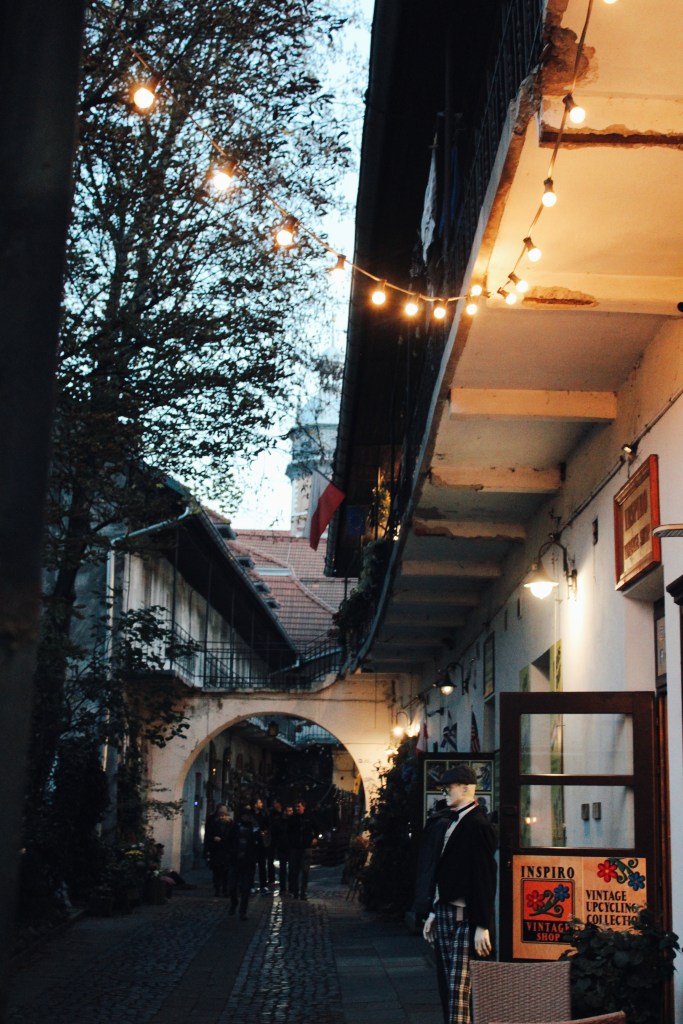
The next thing that you should know about Kazimierz is that it includes several places that served as key locations in the famous Steven Spielberg movie, Schindler’s List.
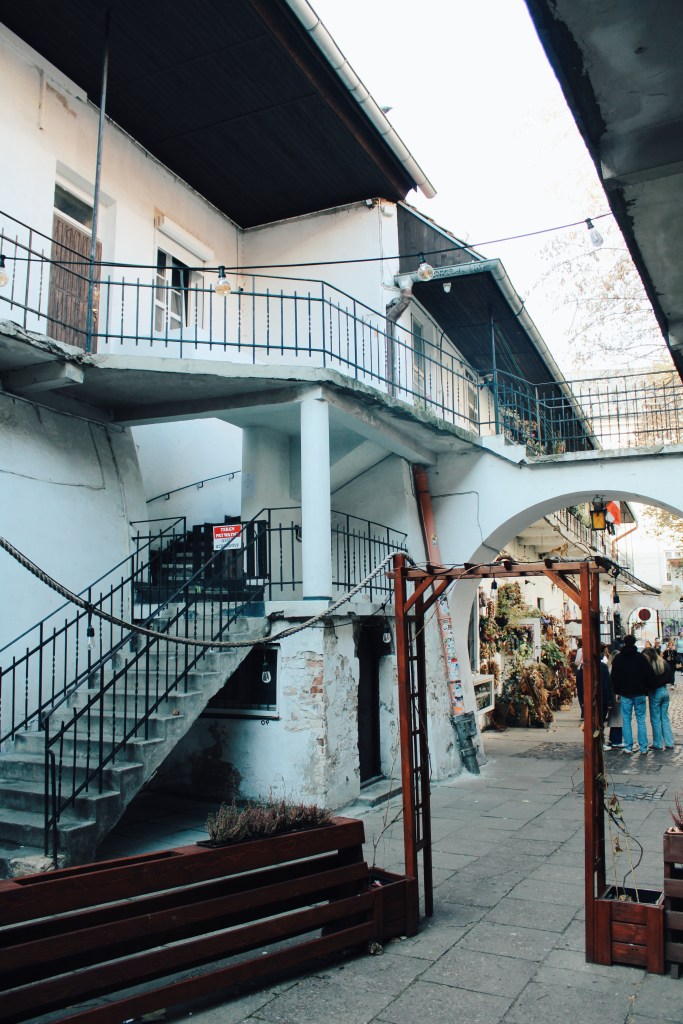
If you’ve seen this movie, you may already recognize one particular staircase, as it was used in an intense scene as a hiding place of one Jewish woman whom it saved from a rather tragic fate (as she’s been searched for by Nazi soldiers).
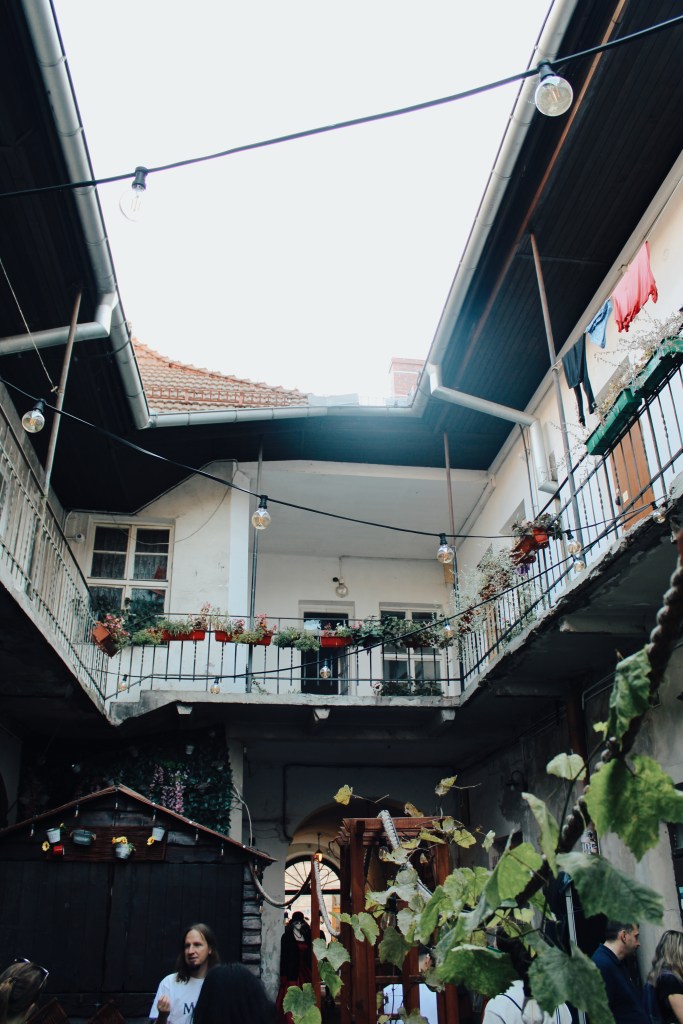
Even though this scene was not that important for the main plot line, its sinister and tense atmosphere resulted in it becoming one of the most memorable scenes from the movie. And thus, also Mrs. Dresner’s courtyard and staircase has become the most famous location in the film that is till this day frequently visited by tourists as part of a phenomenon called ‘Hollywood tourism’.
Synagogue Tempel and the story of its progressivism
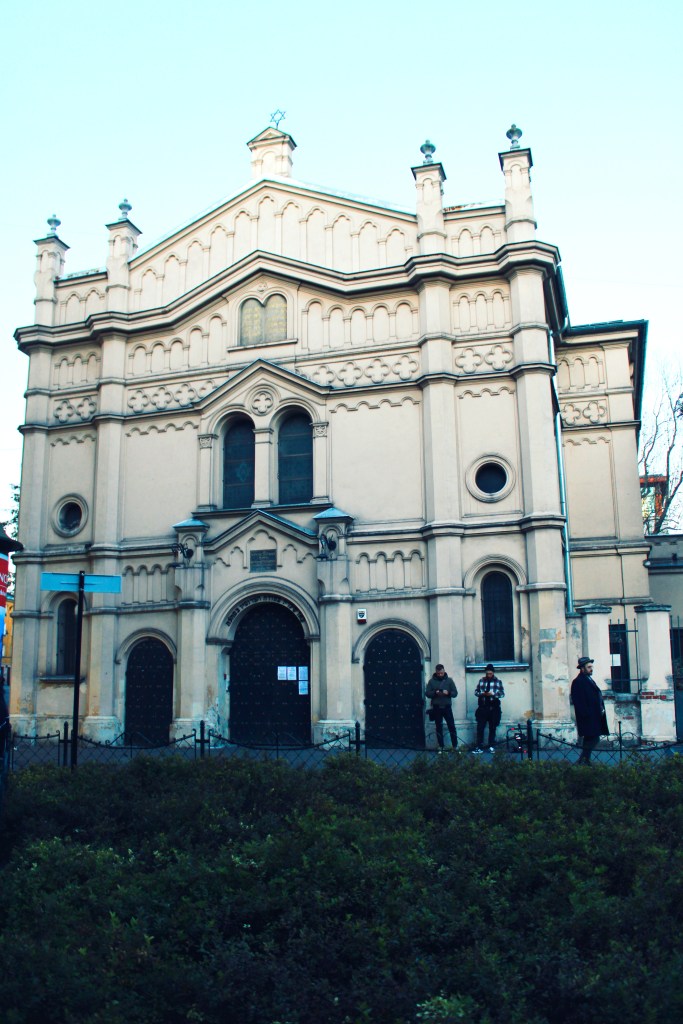
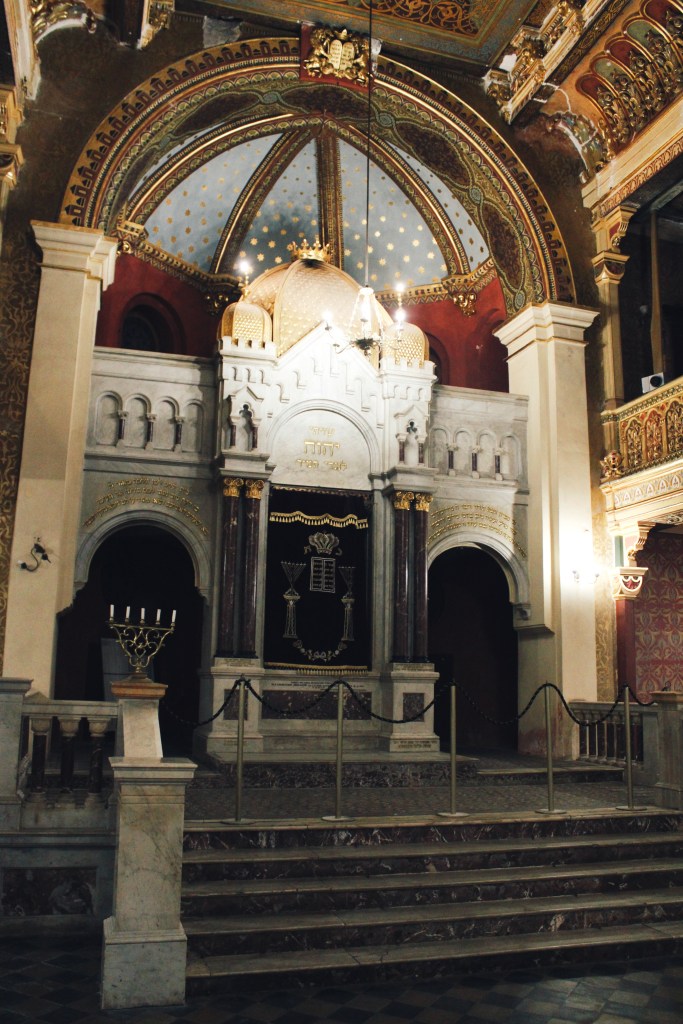
Our next stop on the way is Synagogue Tempel. As can be seen in the pictures, this synagogue looks a bit more pompous as the ones we’ve already been looking at. In paradox, this synagogue is historically younger than the others and represents the efforts of the progressive Jewish people to come back to the roots and to create a synagogue that would showcase all the ancient symbols of the Jewish folk.
Hence, also the title was inspired by history – Tempel. Even though the main aim here was to go back to history to find the original design of a synagogue, the rules that applied in this synagogue were quite progressive. It is of note that this was the first synagogue in Kazimierz where men and women were allowed to pray in the same hall – however, women still had to enter through the gates on the sides while men could enter through the main gate.
It quickly became a number one choice for a big community of the progressive Jews in Kazimierz who – as was emphasized to us on one of the city tours – were often criticised by the older generation for these reforms they set into Jewish culture. However, these arguments might be on-going until today (just in smaller community), one thing is for sure – Jewish culture is much more heterogeneous than one might expect.
But thanks to its heterogeneity, we can now admire a whole spectrum of synagogues built in different architectural styles, and that’s something that makes Kazimierz very unique.

Plac Nowy and the story of thousand bars
After the long wander around Kazimierz, one thing that might struck you is strong hunger or thirst. For that, there is a place called Plac Nowy which I’ve already mentioned before. This is the location of the flee-market that was originally taking place at the Szeroka Street.
Nowadays, this flee-market (maybe thanks to the whole square) has a strong hip vibe as there’s nearly 40 bars located in this square and so it’s a tempting place to visit for young people on a night out.
Moreover, in the middle of the square, there’s a house that’s divided into numerous booths where you can buy famous Polish fast-food called zapiekanka. It can be visualized as pizza on a baguette that is baked so that the cheese gets melt, and the pastry gets so amazingly crunchy. Now, if you want to find the best zapiekanki in the city of Krakow, this is the place to go. I tasted one myself and I still think about it now and then. It was truly delicious.
Good thing about zapiekanki is also that you can eat them as you walk around as they’re really not that hard to be handled on the run. Thus, I think now it’s a great moment to grab a zapiekanka and move on to the last part of the city that I wanted to talk about. And it will be quite a walk that’s ahead of us.

Podgórze
Southern from Kazimierz district, you can find another district that is – to me – very interesting to see. Across the river, there is the Podgórze district which is similarly to Kazimierz overflowing with hip places, though it is not as touristy as Kazimierz.
Though, historically this place is known as the location of Krakow ghetto, you can see as you walk past most of places bound to its existence, that Podgórze – just like Kazimierz – is trying to recreate even the places with tough history to spark them with life once again. Therefore, I consider Podgórze a true must-see in Krakow.
So let’s make a small walk around Podgórze, to find another set of stories to tell about its most memorable locations.
St. Joseph’s Church and the story of the dominant of Podgórze
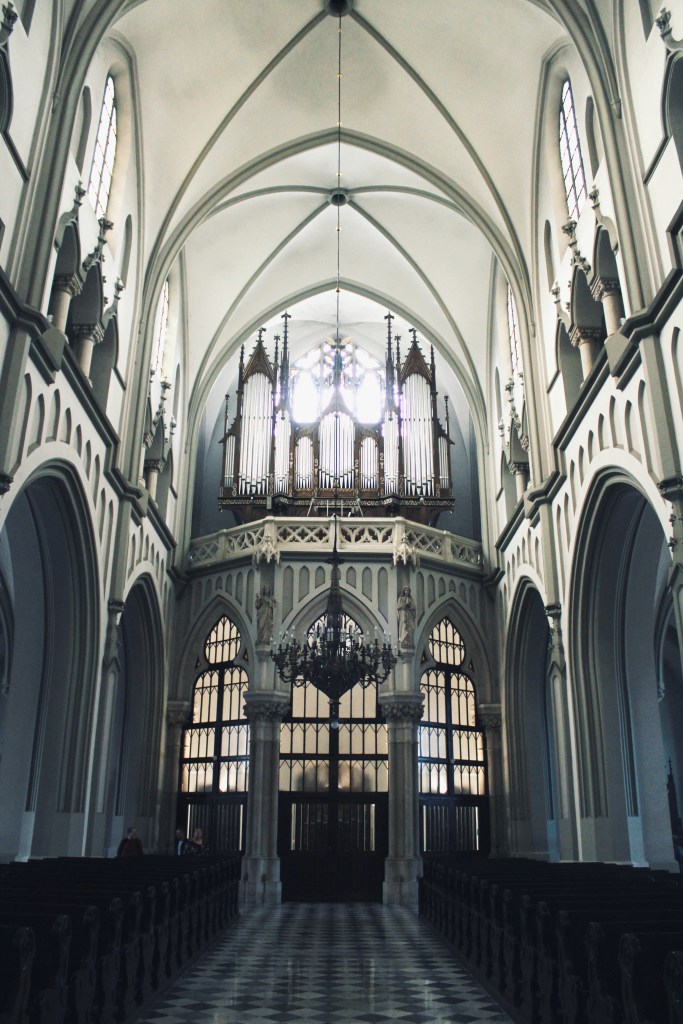
Let’s start at Rynek Podgórski, or the Podgórze Square which is the main square in this district. Here, you can find a uniquely looking church, the exterior of which is very richly decorated. The St. Joseph’s Church is a true dominant of Podgórze with an immense, 80m high tower.
Though its design carries some Gothic elements, the church itself was built at the beginning of the 20th century. Regarding this church, I must not only recommend to go and see its interior, but also emphasize the lovely atmosphere of entire square.
In the proximity of Rynek Podgórski and the St. Joseph’s Church, you can find a lot of cosy cafés, most of them making specialty coffee. Some of them are even combined with small bookshops where you can just sit and relax while reading some interesting book that you’ve just found on a shelf.


Park of Adalbert Bednarski and the story of its athmosphere
Up the hill, just a few metres from the St. Joseph’s Church, I personally found my most favourite place in Krakow. It is a large park that has some of the most stunning views of Krakow.
When we were around, it was the end of October, meaning that the leaves on the trees were already glooming by whole palette of colors from yellow to dark red which only contributed to the atmosphere of the place.
Another thing that I very much appreciated was the fact that this park (just like Rynek Podgórski) does not belong to the top touristy places in Krakow. Instead of the tourists, we were mostly meeting families with kids around this wonderful park. And we could not believe how many families we could see in this park on a random afternoon. We even got surprised when we saw some of them standing in line for coffee in the middle of the park – which was also the moment we realized that this park also has its own little cosy café.


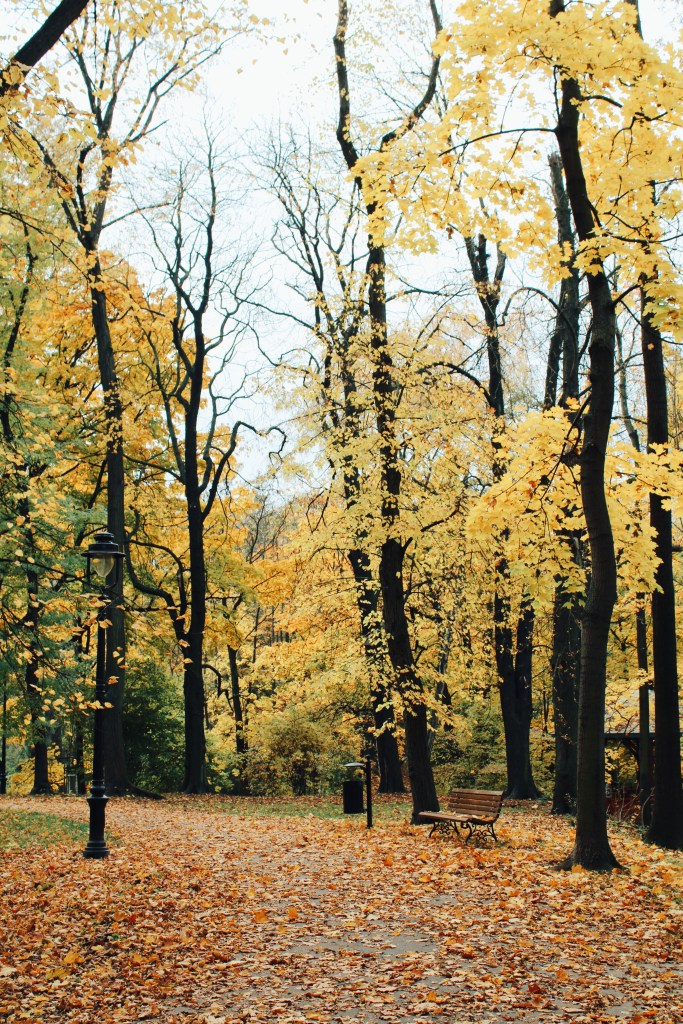
Of course, we did not just randomly wander to this park. We were led here by a very good friend of ours, who is a local in Krakow. And we were so happy to listen to him about how this park was just very freshly renovated to offer a cosy place to hundreds of people living in the neighbourhood.
Apparently, from spring till late autumn, many people are coming to this park daily to sit on their favourite bench and read a book, or to make a picnic with friends on one of the meadows. Or to just walk around and enjoy the great views of the church and the rest of Krakow. Oh, what an amazing place to be!
Jewish Ghetto Memorial and the story of empty chairs
Moving on to the Plac Bohaterow Ghetta (in translation the Square of Heroes from the Ghetto), you might already sense that we are getting to the very centre of what was the Krakow ghetto during the WWII.
This place is also a location to Jewish Ghetto Memorial which commemorates all that perished during the existence and demolition of Krakow Ghetto which between years 1941-1943 held more than 15 000 Jewish people in isolation and dreadful conditions.
These people are now commemorated by in total 70 empty chairs placed symmetrically across the entire square. These chairs carry photos on them and the little stones placed on top of them carry the message for all tourists that would fancy taking a small break on these chairs that they are meant to stay empty forever.
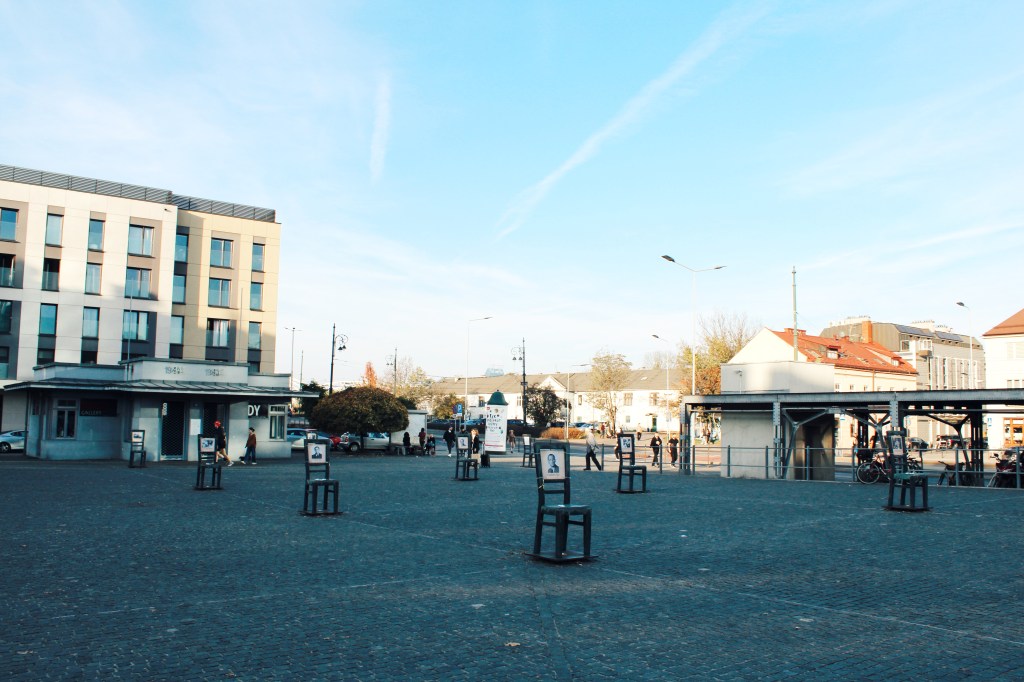
One of these chairs is turned in different direction than the others – it is turned towards the location of an orphanage to commemorate the 300 innocent children that were dragged out of the building during the demolition of the Krakow Ghetto and brutally murdered in the street.
All these terrible deeds are something that must never happen again – and memorials like the one on Plac Bohaterow Ghetta are very important for reminding us of what dreadful and brutal consequences wars have, so that we would not let ourselves be led down the same slippery slope again. Just like is written in Auschwitz concentration camp museum: ‘To forget is just like to let the victims die once again.’
Pharmacy Under the Eagle and the story of secret messages
Besides one mentioned chair that is oriented in direction of the orphanage, all other chairs that are part of Jewish Ghetto Memorial head to another building, and that is the pharmacy Under the Eagle.
It is because this pharmacy was probably the most important place during the existence of Krakow ghetto as it served as secret post office, keeping the otherwise isolated Jewish people in touch with their friends from outside the ghetto.

It was the only pharmacy in the entire ghetto, meaning that it owned a monopol on such important thing as the medicaments.
Though the inhabitants of the ghetto expected the prices in Pharmacy Under the Eagle to sky-rocket, the owner of the pharmacy never increased the prices. This first step made the owner gain the trust of the people kept in the ghetto and due to his kindness, the provided help did not stay at this gesture with the prices.
For long years, people from the pharmacy would smuggle letters in and out of the ghetto and keep the bridges that were so important for the people inside the ghetto.
It was one of very few symbols of stability and hope for the Jewish people imprisoned in the Krakow ghetto and thus, all the people who are symbolically sitting in the chairs at the Plac Bohaterow Ghetta are turning their heads in direction of this place.
Oskar Schindler’s Enamel Factory and the story of the saved lives
Another significant place that was like a beacon of hope for Jewish people during the existence of Krakow Ghetto was Oskar Schindler’s Enamel Factory.
You might have already heard about this place from the famous movie called the Schindler’s List but just to refresh your memories, I’d like to briefly mention that Oskar Schindler and his family had an enamel factory in Krakow (specializing in production of pots and other kitchenware) and that during the occupation of Poland by Nazi Germany, they put effort into employment of people with Jewish origin and saving them from otherwise dreadful fate in Krakow Ghetto or one of the concentration camps in proximity of Krakow.
There are records that claim Schindler saving in total 1200 Jewish people by providing them by a stable job and even accommodation in the area of the factory. Nowadays, most of the area of the factory is not accessible, but in the administration building, there is a museum that tells the stories of some of the people that were saved thanks to Schindler’s initiative.
However, it is of note that most of the museum does not focus on the story of Schindler’s factory but the overall situation in Krakow and the Jewish issue before and during the WWII. Though still, in my opinion it is a place where you can learn a lot about this specific (and emotionally tough) era in history of (not only) Krakow.

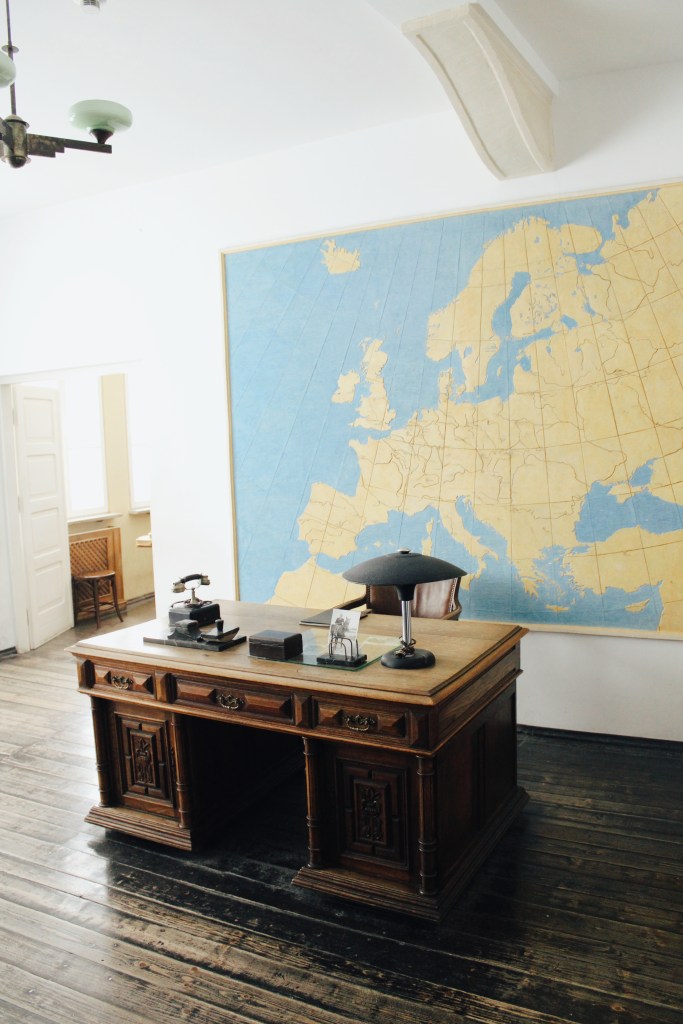
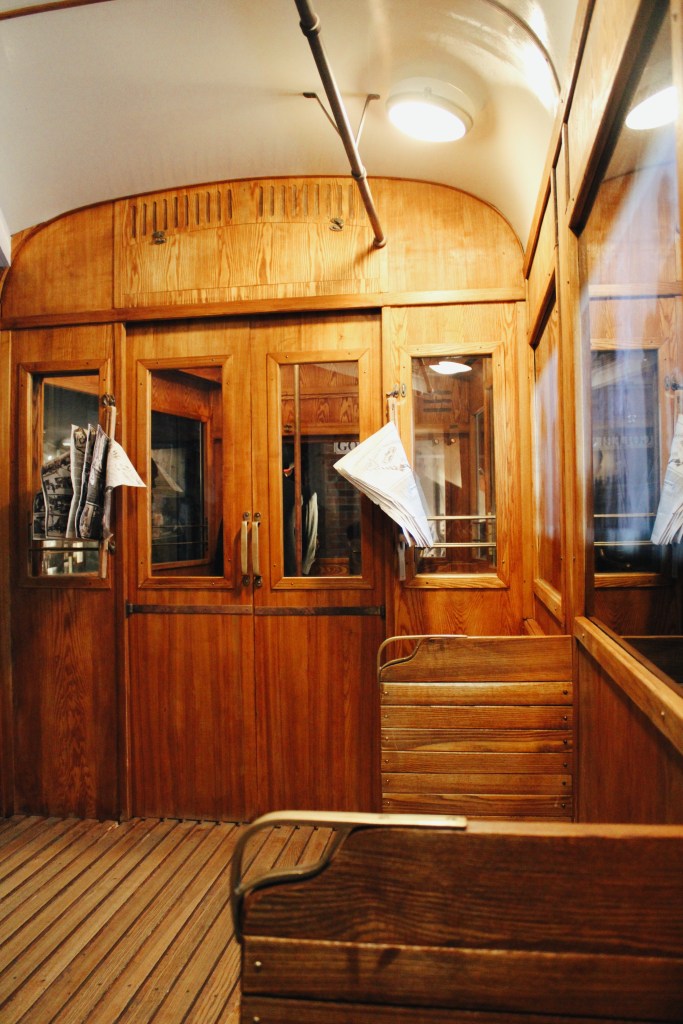
Last but not least, it’s important to keep in mind that the Oskar Schindler’s Enamel Factory has become a very much seeked museum by tourists from around the world so booking the tickets in advance is highly recommended. We ourselves underestimated the situation a little bit and we came without pre-booked tickets, and we were lucky to get in after standing in line for nearly hour and a half.
Krakus Mound and the story of its primary use
I know I’ve already mentioned the park in Podgórze as the place that has a bunch of great views of Krakow. Hovewer, even though I love the park very much, I still have to admit there is another place in Krakow that has truly the best view of the entire city.
Most probably it wouldn’t be any big surprise that it is actually one of the artificial hills built around the city for defence. In the past, these hills served as locations of the city guards who were (from this higher spot) see upcoming armies or threats and warn the citizens of Krakow in advance. The highest of these hills is Mt. Kosciuzsko which is located west from the city centre.

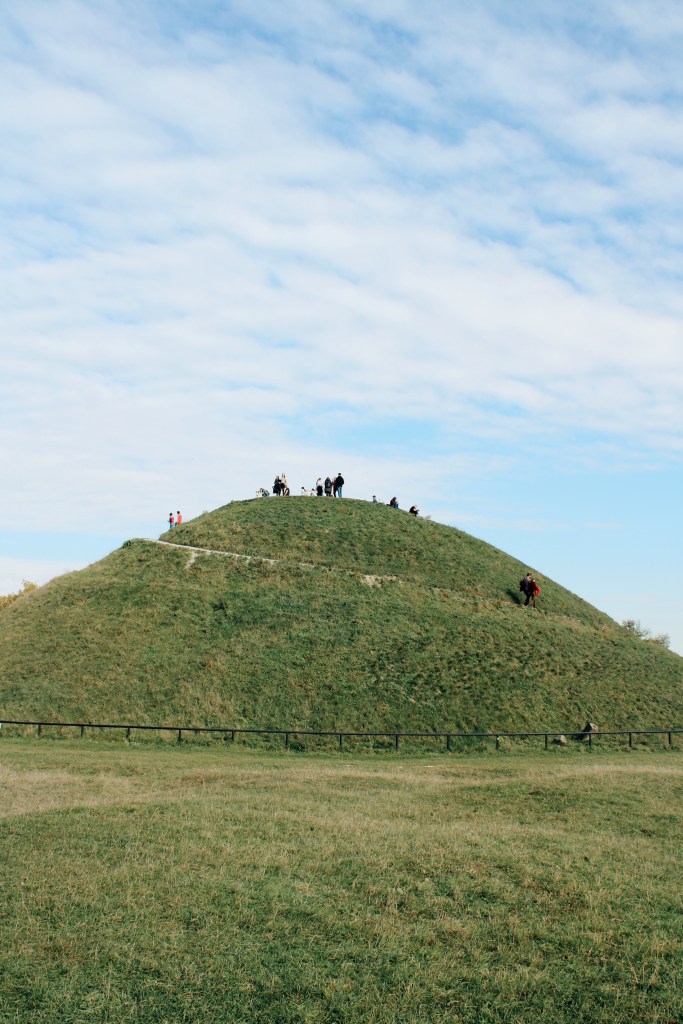

However, the hill that in my opinion has the best views of the city is actually the Krakus Mound which is located south from the city centre (and quite close to Podgórze).
Interestingly, in close proximity of the Krakus Mound, there is also a quarry that offers another bunch of colorful views, even though its history is actually really dark (as this quarry was the main location of the forced labor of the people imprisoned in Plaszow concentration camp during the WWII).
However, as I’ve mentioned, this artificial hill offers views of the entire Krakow. Standing atop this hill, you can really see the old town with Wawel castle, Kazimierz and Podgórze altogether, which offers a stunning look back to our wanders around Krakow.
So if you wish to chill out after the large amount of steps you’ve taken on your way around Krakow, make sure you bring some blanket and a basket with food and drinks to have a nice picnic on the meadow below the Krakus Mound – I believe you won’t be the only one doing so, as this place is really popular among the locals.
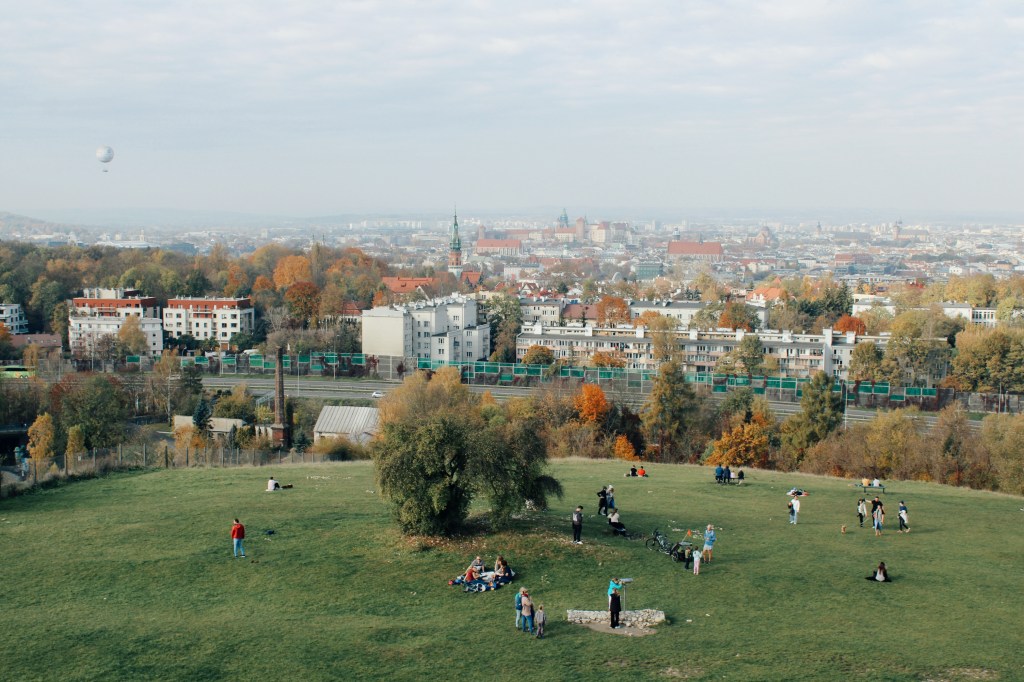
And it is also a great place to end our tour around Krakow. I believe that I managed to persuade you that it is a city with large spectre of views, sounds and tastes due to its vast historical, cultural and gastronomical heritage.
It is a true jewel among European cities which never ceases to amaze me, surprise me and teach me (even difficult lessons from the past). So what can I say in conclusion? I hope that Krakow will light a bright spark in your eyes so that once you’re leaving this beautiful city, you’ll feel as much love towards Krakow as I did when I was writing this letter.
Love,
Antonia
And finally, here’s a list of our top restaurants, cafés and bars that we managed to try out while we were in Krakow:
- Pierogarnia Krakowiacy – for traditional Polish pierogi
- Nolio Pop – for Italian pasta and delicious pizza
- Akita Ramen
- Ramen People
- Tacoteka Krakow – for Mexican cuisine
- Khachapuri – for Georgian cuisine
- NAPNAPCAFÉ – for brunches (near city centre)
- Ranny Ptaszek – for brunches (in Kazimierz)
- Somnium Cafe Bar – great coffee
- The Trust – great cocktails
- Zapiekanki Krolewskie – best fast-food in Krakow
 Love Letters to the World