

Montenegro is a small, yet nice country full of relax at sunny beaches and adventures hidden in mountains rising just a few kilometres away from the seashore. My first story with Montenegro took place in the evening when we turned our backs on the setting sun and went on to the Bay of Kotor (Kotorska Boka). Tired from a long time in the car, we wished for nothing else than to find a bit of rest in the hotel room. But unfortunately, something else stood in our way. It was the sea. You see, the Bay of Kotor is so large so that it consists of a few separate villages. To travel around the bay till we’d finally get to the village we were acommodated in would take us 7 hours. 7 incredible hours…
So we decided to do something slightly different – we crossed the bay on a ferry. This small ferry had capacity of not more than 20 cars, which is still quite small in comparison to the big ships crossing this bay every day. The undoubtful advantage of ferries is that it can take you from one side of the bay to the other in less than 15 minutes. Locals also use it for regular commute to school or work, which was a nice and brand new idea for me as a person who comes from inland. Also, one ticket for a car costs only 5 euros, which is really cheap for this kind of travel.

We stepped out of the car, already bumping on waves of Mediterranean Sea. Crossing the bay with cool breeze coming from the sea was soothing and relaxing after whole day of unbearable heat. We looked at other ships and all the lights coming from the shore as well as the mountains surrounding boka. That’s the first thing that fascinated me once I arrived there – the fact of how close were the mountains and the sea. It almost seemed as if the steep hills were arising from the shore in order to protect the area of boka against any dangers that the sea could bring. A strategically convenient place in times of war – that’s what guys said, looking at boka and already imagining the tactics of a warrior protecting his piece of land. But what they said was true, which is also confirmed in terms of the historical context.
However, that time at the ferry, we didn’t have this type of conversation for too long. We were listening closely to the radio because no matter how weird it sounds, I was almost sure I heard my mothertongue then. Truly, Montenegrin language sounds almost exactly like Slovak and that’s why I was chosen to be the translator for the rest of our stay in Montenegro. Although, in the end I didn’t have to translate that much because the entire shore of this small country has become quite touristical in the last couple of years, so most of people who are somehow involved in business are educated in English quite well.

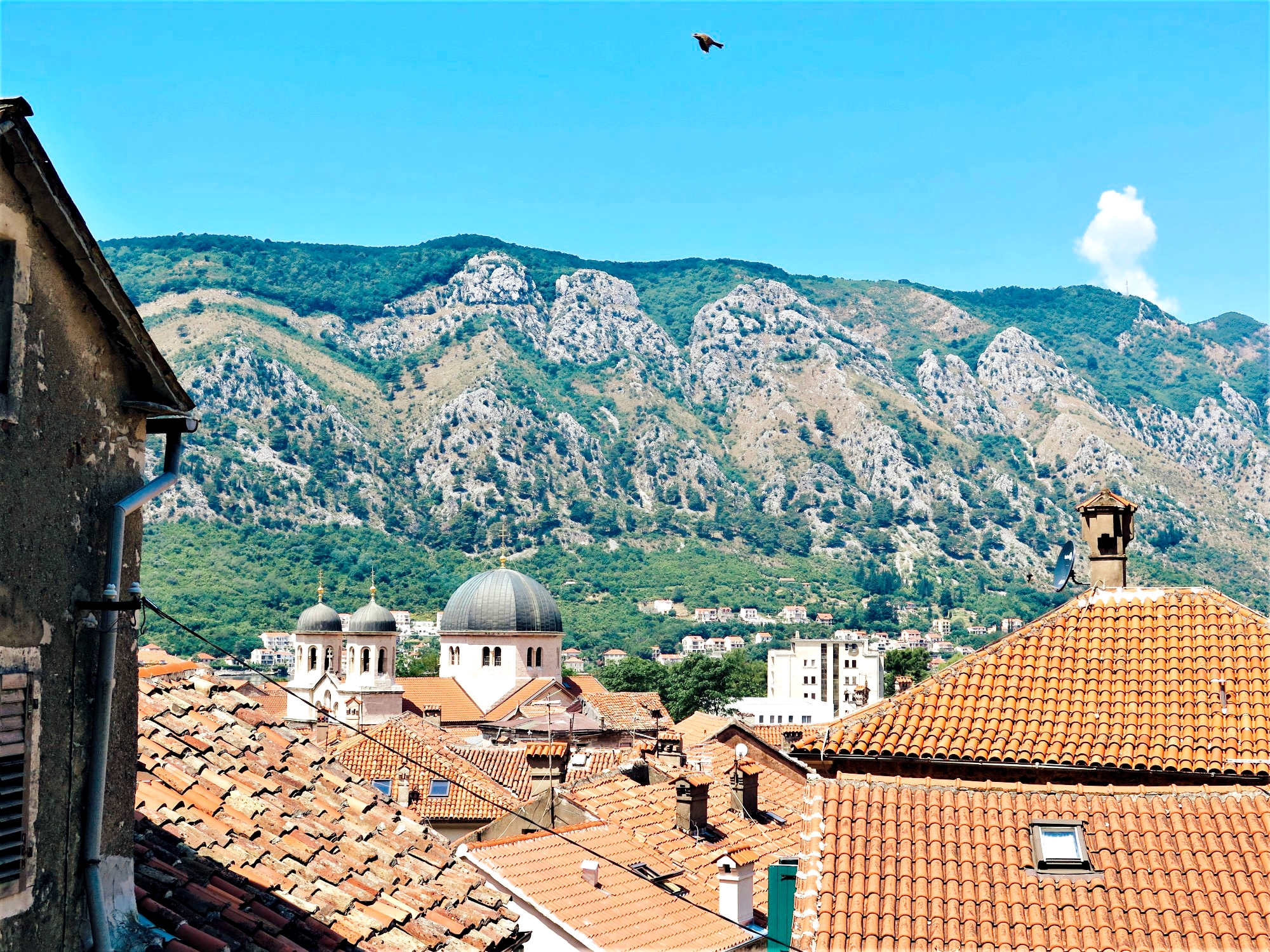
On the other day, we woke up to the morning sunlight reflecting from the sea which looked like shining. Above it, the mountains were standing majestically, making me feel cosy. Indeed, the look from our balcony was mesmerizing, even though I felt a slight despair because of knowing that it’s 9am and already 35 degrees Celsius outside. However, near the sea it’s always easier to bear the heat. That day we managed to explore almost the entire shore of Montenegro and not even the heat was capable of stopping us.
Starting in Prčanj, we skimmed small historical centre and headed to Kotor, the most precious jewel of all located at boka. However, Kotor is not the only place that is historically valuable, as there are lots of stories characterising both small houses and big architectural landmarks created throughout history. It is said that locals are people who value traditions and old legends about bay very much. That’s why the string of time was not cruel to memories of joy and sorrow which have been turned to stories and so, today the stories still live in minds of locals and curious tourists.
To give you a nice example of legends from the Bay of Kotor, let me tell you a story of three sisters. The three sisters (Tre Sorelle) once lived in Prčanj, which is the village where our travels began. They were daughters of a wealthy man, living a good life in a house near the shore (today known as the Palace of Tre Sorelle) where each one of them had a separate room with a window facing the sea. It is said that all three sisters were stunningly beautiful, wise and faithful. The only hitch in all of this was that all three of them were hopelessly devoted to one young man. This man was a young sailor, a captain with his own ship. However, mind of this young man was indecisive for way too long after he had realized that all three sisters wanted to marry him. To clear his mind, this man announced his departure to the sea, promising to devote his life to the one of the sisters, which would still be waiting for him faithfully when he gets back.
So the sisters waited – all three of them. They waited so long, each one of them looking from their window to the sea, trying to notice the ship of young captain coming from the distance. Eventually, the sisters became old and first of them died. In order to let captain know that she no longer waited for him, the other two sisters closed her window. But in no time, the second sister found her peace and so the third sister closed her window, too. Waiting for captain till her days end, the third sister left this world leaving nothing but an old palace and an empty room with nobody to close the window and let captain know, that no more life blossoms inside the house and nobody else waits for him. To this day, the Palace of Tre Sorelle reminds people of this wonderful, yet heartbreaking story.
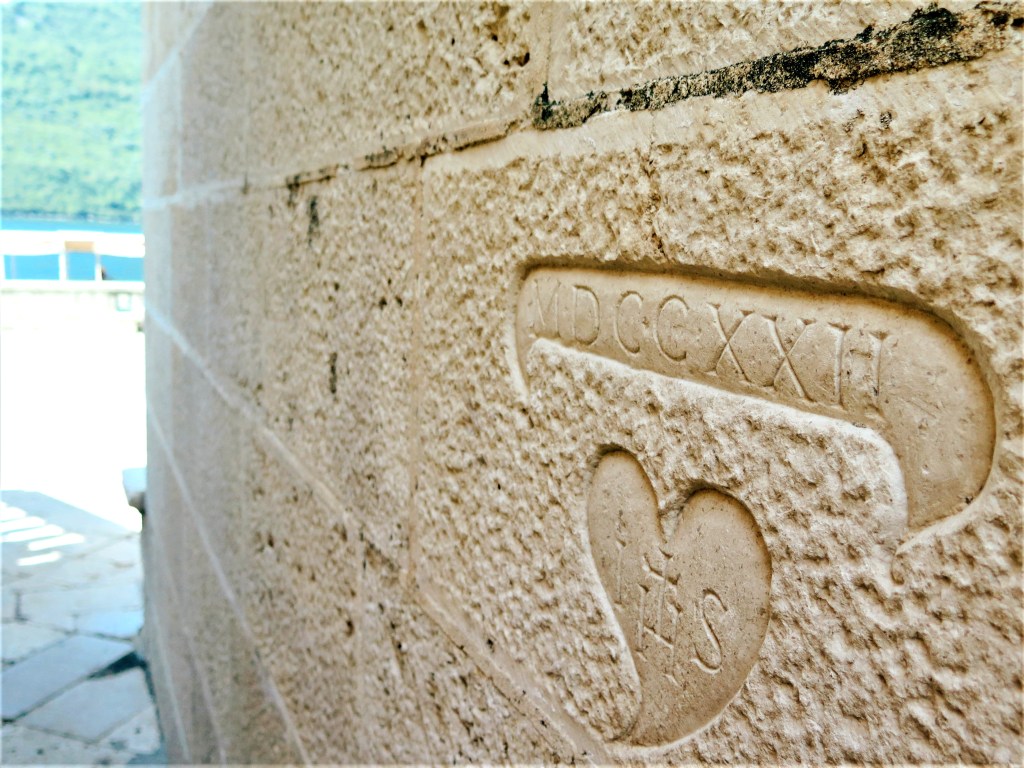
Many stories of this bay are dedicated to love. Maybe because love and sea have always seemed somehow interconnected. People have always been going on long journeys to the sea to find love, sending messages in bottles to their loved ones or strangers they believed would turn to be their lovers at least for a while. And when two people fall for each other, the first place they want to enjoy their charming romance at is the sea. People say that the sea has always meant an unlimited source of inspiration to them. I felt the same way when we reached the shore – suddenly, I had the urge to write, as if my heart longed for nothing else than to speak to the small notebook that I bought in Sarajevo and to the keyboard of my laptop. That’s why (according to the locals), so many songs and paintings and pieces of good literature were created at the shore, near the town of Kotor. And most of them, just like most of our lives, had something to do with love.
Aforementioned Kotor is the most significant town at the bay. It has the most preserved historical centre which looks very compact. The only thing that may seem disturbing is the concentration of tourists per square metre. Because only a fool would believe that this nice piece of land would remain unnoticed. Sometimes when you wander in the streets and look up to the cobbled houses, at least for a moment, you must struggle to believe that this place was built up with no miracle. Actually, there is one legend concerning just about this topic which is connected to the foundation of Kotor. The legend refers to help of a divine being, which led the first settlers towards Bay of Kotor. These settlers had been walking for so long and still could not find the right place for creating their own city. Then they finally chose the place – a meadow somewhere within the mountains. However, there they met a fairy called Alkima. This fairy warned them and reminded them of how important it is not to settle so far from a source of water. She said: „You need Kotorska Boka to survive. It’ll protect you.“ And so she led them down the hill and right to the sea where they created an idylic town which is now known as Kotor. Ah, what a place…
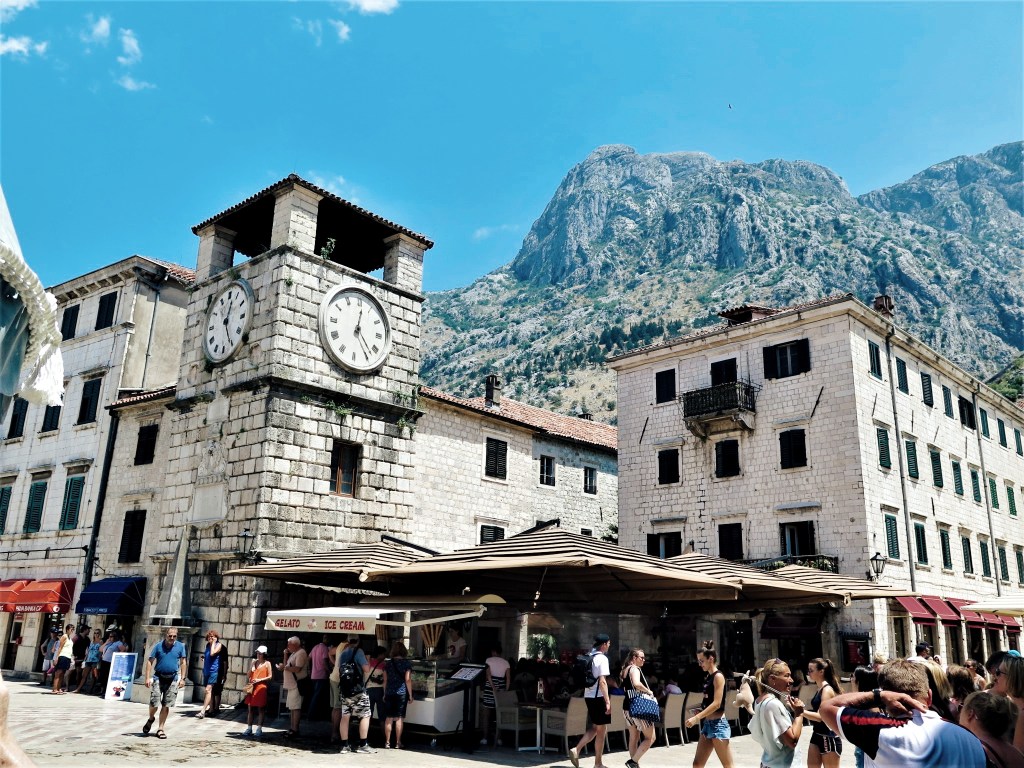
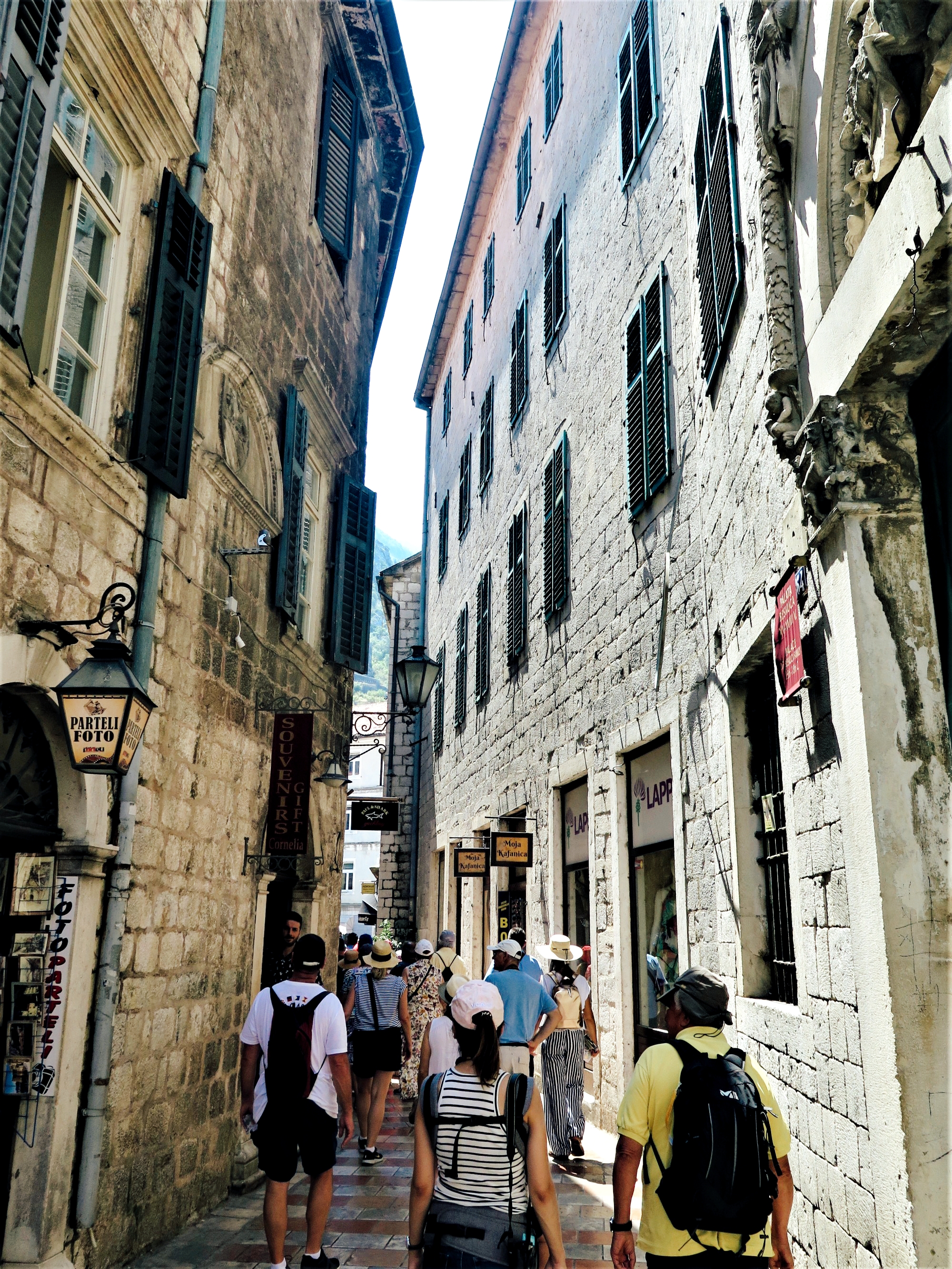
Its centre has a few cultural landmarks which stand behind the charisma of the town. The first one you cannot miss after entering centre through the historical Sea Gate is the Clock Tower from early 17th century. The Clock Tower is located at one of the two biggest squares in the historical centre with lots of souvenir shops that are usually crowded with tourists during the day. I myself had to fight my way out of the souvenir shop once that I’ve done my shopping. Luckily, my travel companions didn’t abandon me then and waited for me patiently as I was searching for a way out of the crowd. Yet, I must say that one thing surprised me quite much: The shore of Montenegro is even more crowded than Dubrovnik itself!
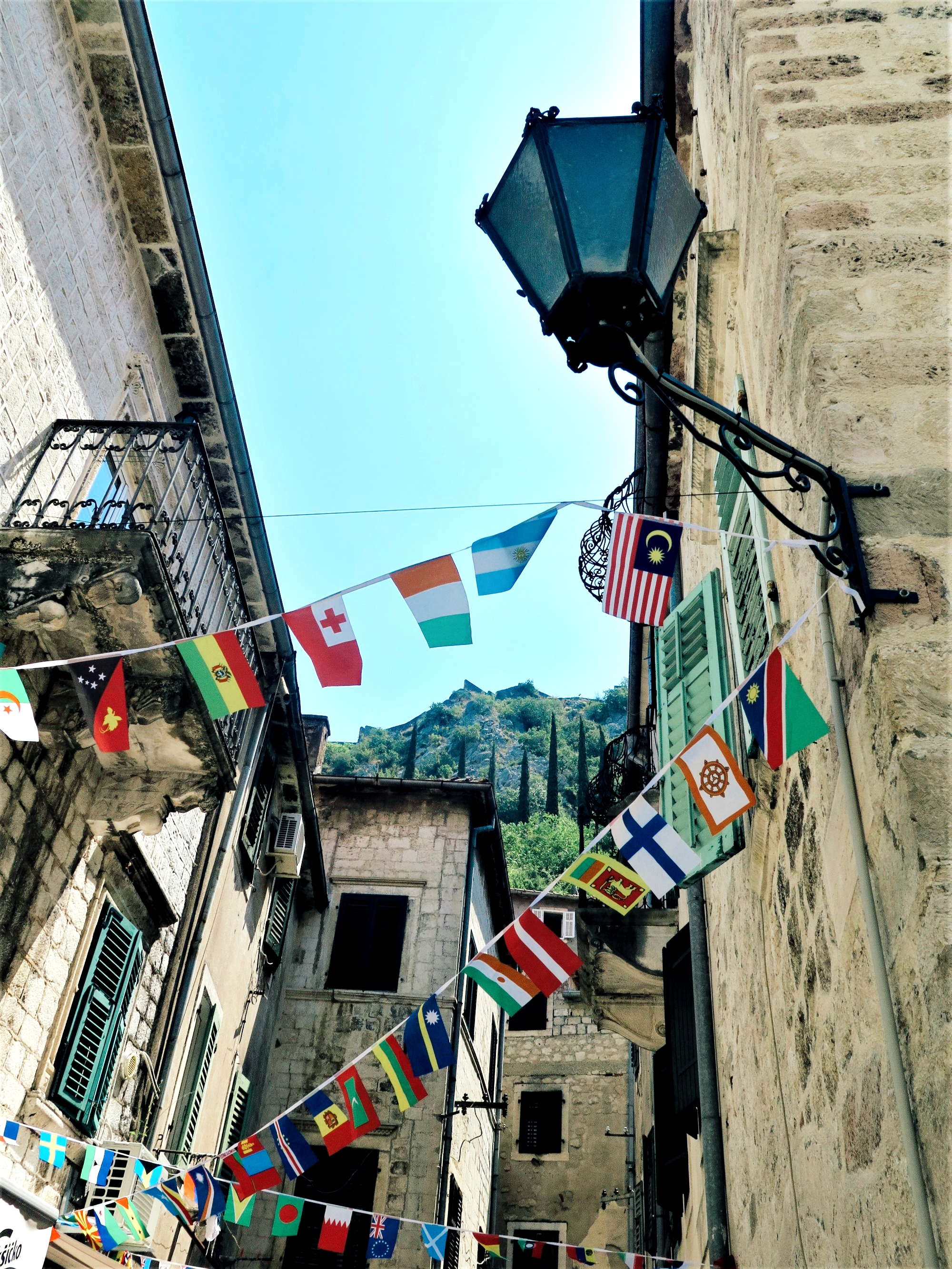
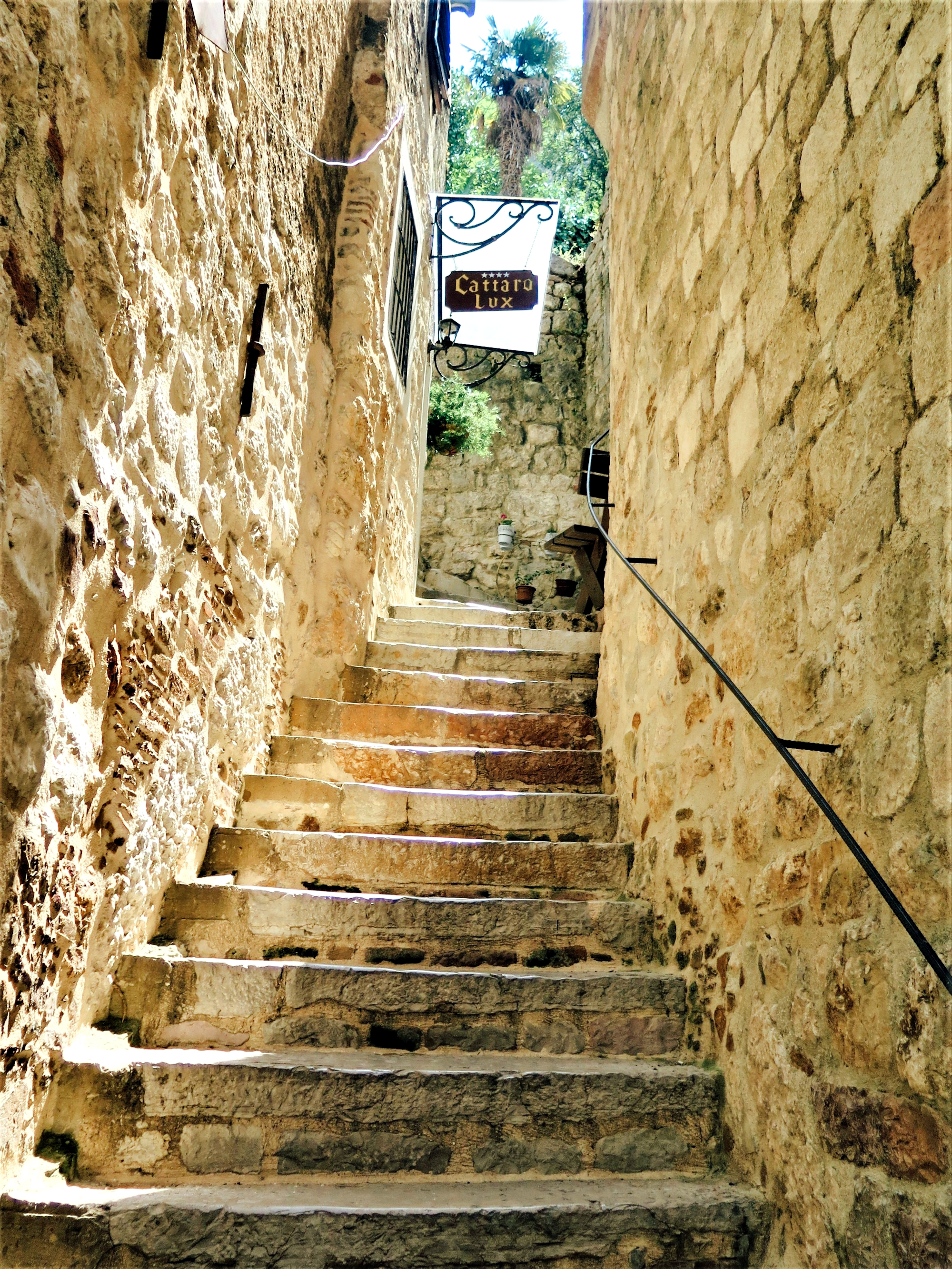
Still, Kotor as well as Dubrovnik has one huge advantage as a town composed of stone houses and narrow alleys. These alleys can easily become the element which protects you not only from heat, but also from the crowds. Tourists always run into these alleys where they separate and wander around the city in much smaller groups. Thus, taking pictures is much more convenient and also, you really get a chance to take a glimpse of the athmosphere that this city posseses. It’s really mellow, sweet and relaxed. Not even getting lost in Kotor can get you under pressure.
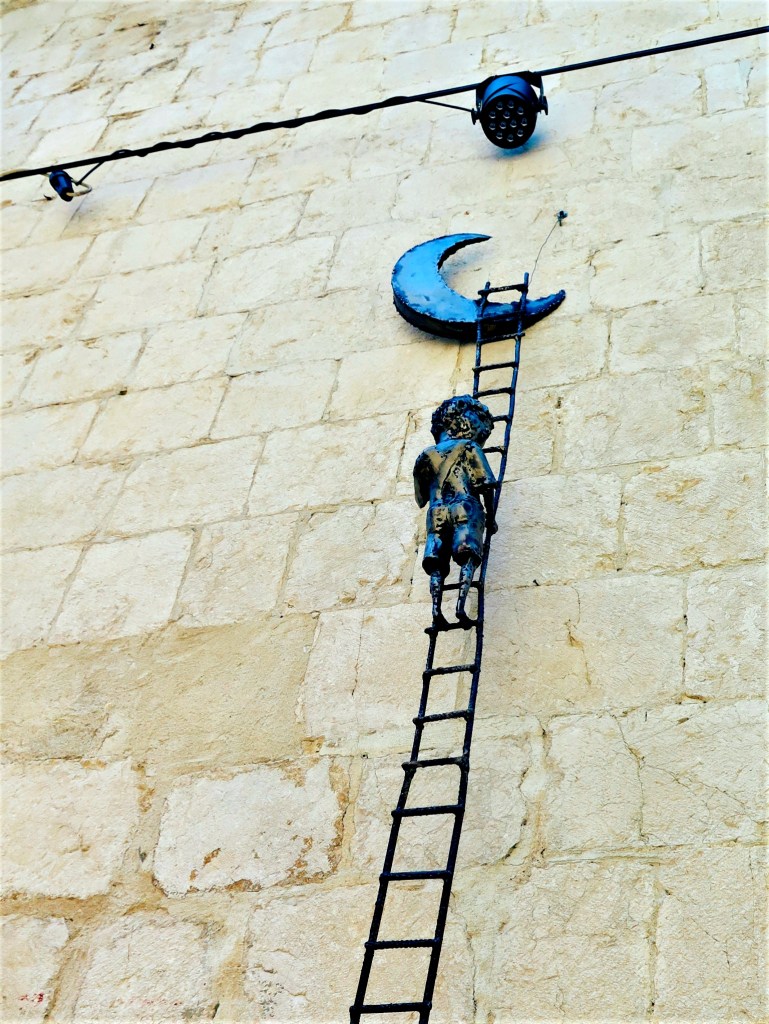
In one of the streets, we found an old acquaintance of ours. From out of nowhere, we suddenly saw The Little Prince – we laid our eyes upon him just as he was trying to climb up and up, all the way back to the rose he loved and still, left forgotten on his planet…
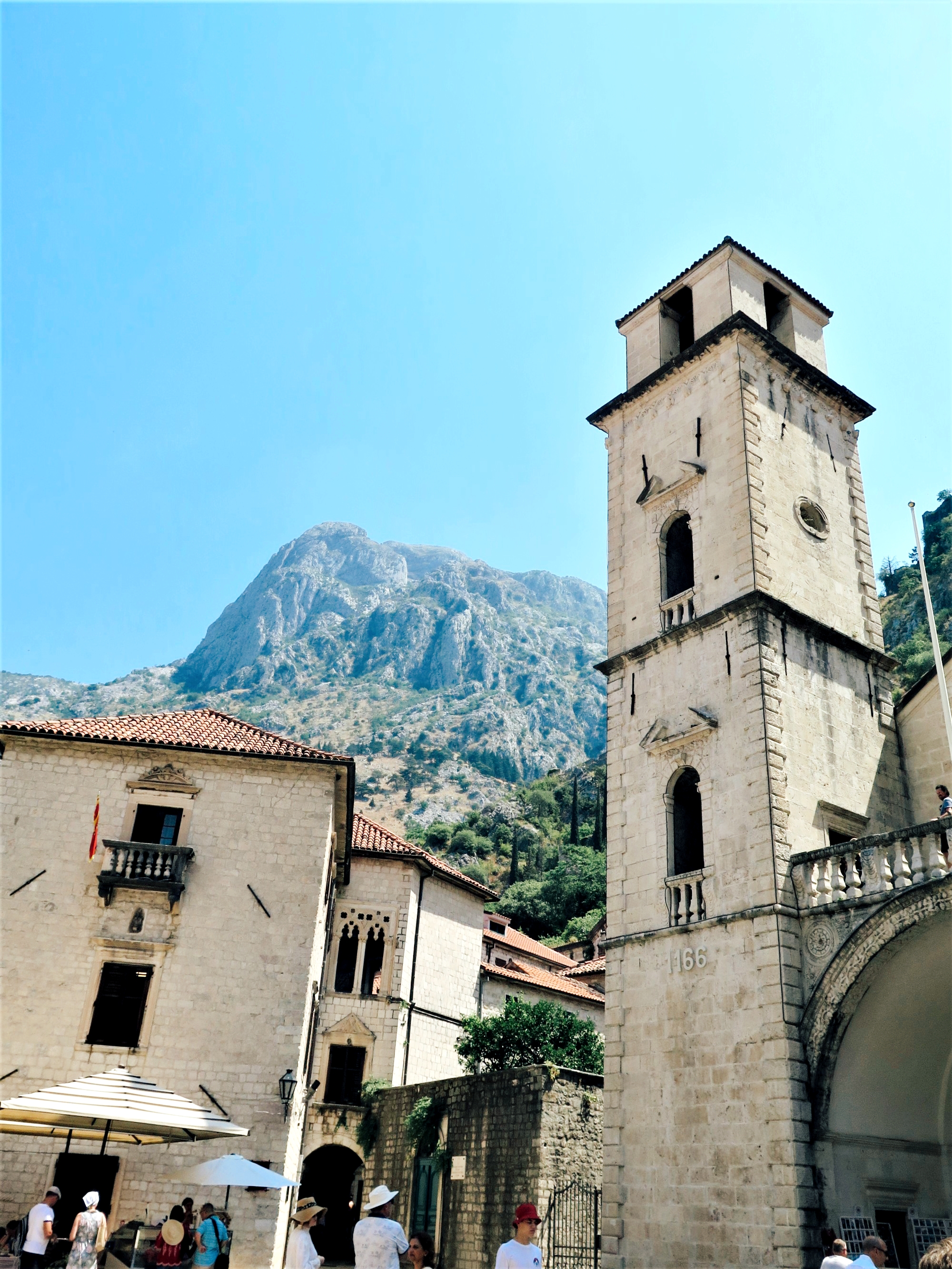
If I’m not mistaken, this street was not far away from the Church of the Holy Spirit, which is basically the dominant landmark of the city. The view of this high building surrounded by majestic mountains in the background creates an unforgettable landscape that’s truly one of its kind. If you’re keen on exploring valuable views, I can also recommend you to climb up to the walls of Kotor. But await the prices of tickets to be even more expensive than those in Dubrovnik – and students don’t have any discount here. But let’s not fall into despair because of that – a lot of tickets and entries in Montenegro are more expensive than expected, yet this doesn’t change the fact that the country has a lot to offer in any way.

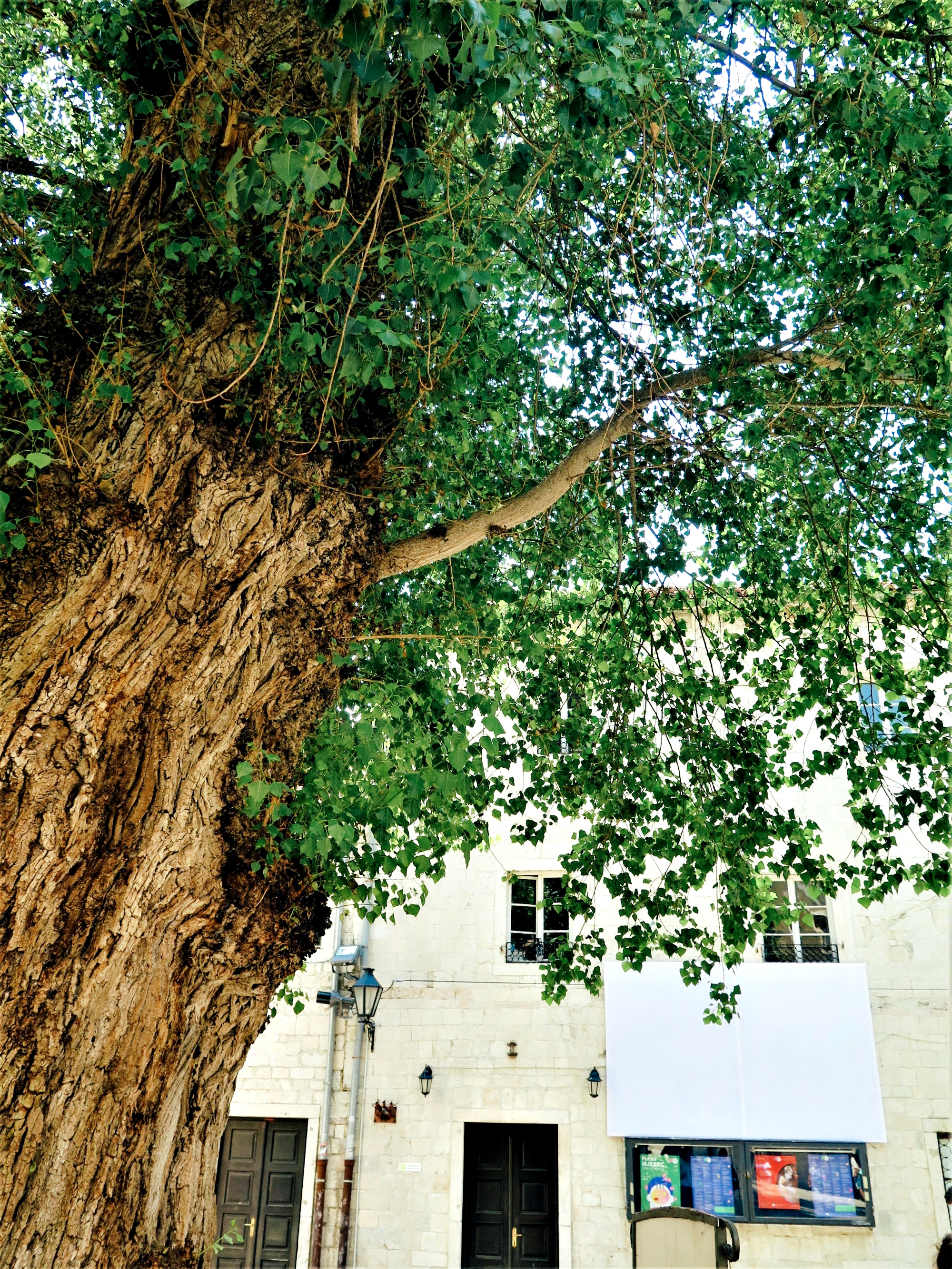


If you want to wander a little bit more south, you can visit a lot of towns with rich historical background, e.g. Budva, Sveti Stefan, Perast or Stari Bar. However, be prepared for some rather shocking things to learn about these cities before you go there. We arrived to each of these cities without being prepared for findings about the massive expansion of tourism in these locations.
And that’s why we fell into shock in Budva, where we didn’t find any historical centre in the hotel complex mashup and sadly stated that we could go to the next town. Apparently, the historical centre of Budva still exists and is stunning in its own touristical way. Sveti Stefan, on the other hand, wasn’t that lucky.
You see, we arrived to this small village and hid our car next to a park that definitely belonged to some hotel complex in the hills. We walked down to the shore, laughing when my friends made some sarcastic comments on tourism. Then we came to a sunny beach and saw a lovely little island connected to the shore via a long bridge. The bridge wasn’t crowded at all so we thought: Mmm, finally found a place that tourists haven’t yet discovered. Feeling so relieved, we stepped on the bridge determined to explore the little alleys of cosy city located on the waves of Mediterranean Sea. However, suddenly there appeared some fine gentleman dressed in shirt and announced that we couldn’t go any further.
„Oh, we are so sorry,“ we said and asked about the price of tickets to the historical centre.
„What historical centre?“ gentleman asked. „The entire island is a hotel complex and only hotel guests are allowed to go in.“

You should have seen our faces as they turned pale the moment we heard this shocking news. Ever since this finding, we had a new catchphrase we used when tourists became pain in our asses at every other landmark. Each time they did so, one of us sighed quietly and said: „Could have been worse. This place could have been a hotel.“
Hotel complex of Sveti Stefan is not more than 10 years old. To this day, it surely offers unique experience to every guest that decides to come and stay in the historical city centre. So if you’re searching for a fine hotel, go to Sveti Stefan. However, if you’re searching for history and stories (like me), don’t go to Sveti Stefan.
Rather skip this destination and move on a few kilometres south, to the city of Bar. This city has almost automatically become our favourite from Montenegrin destinations and not because of any megalomaniac landmarks but simply because of its unique charisma. The city of Bar has met expectations of all of us in some way. Guys had the opportunity to get psyched about the local seafood, dirty streets (yet only some of them are dirty, that’s important to mention) and last but not least, about Church of St. Jovan Vladimir – the lonely landmark standing almost in the middle of nowhere.
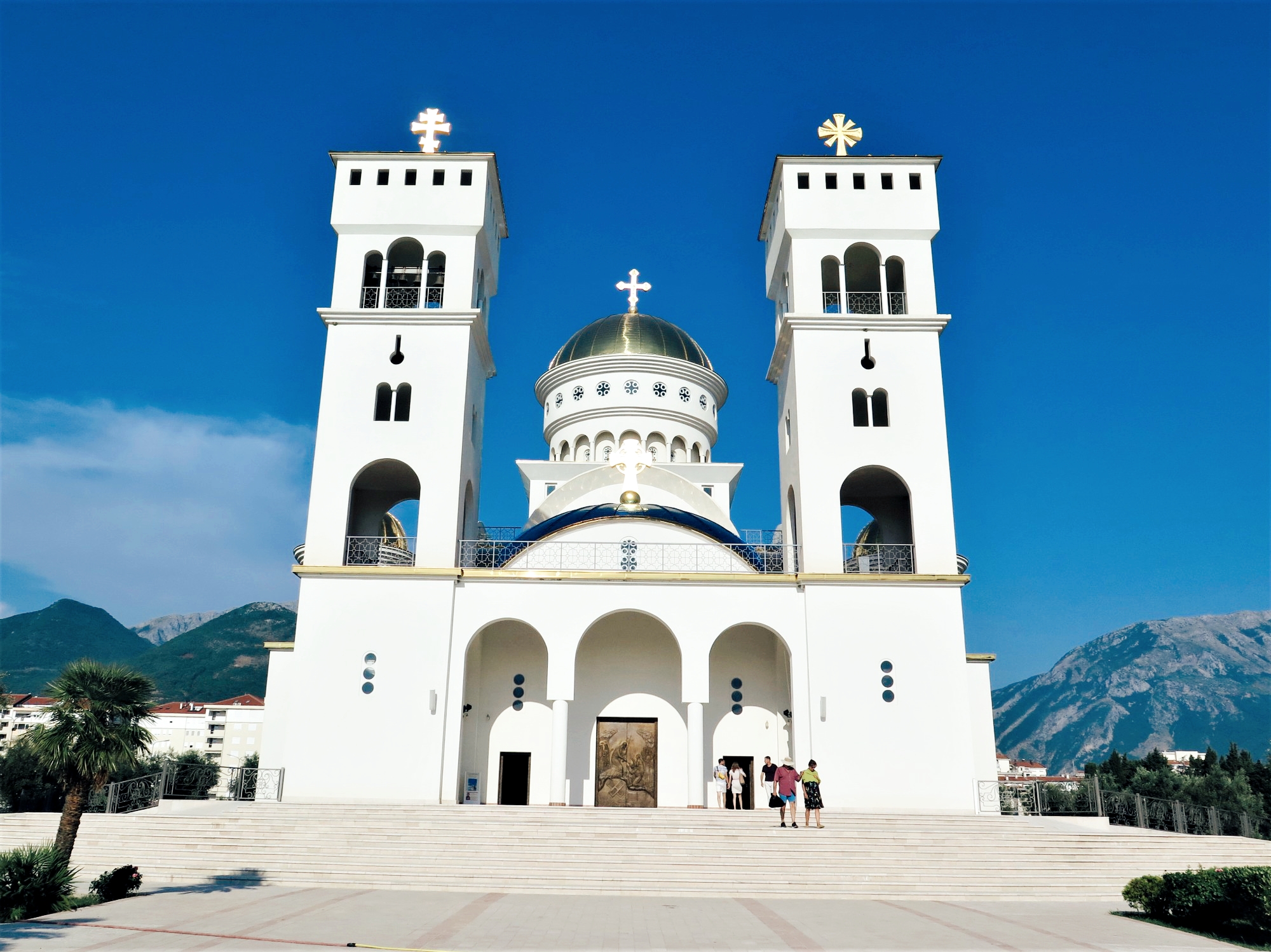


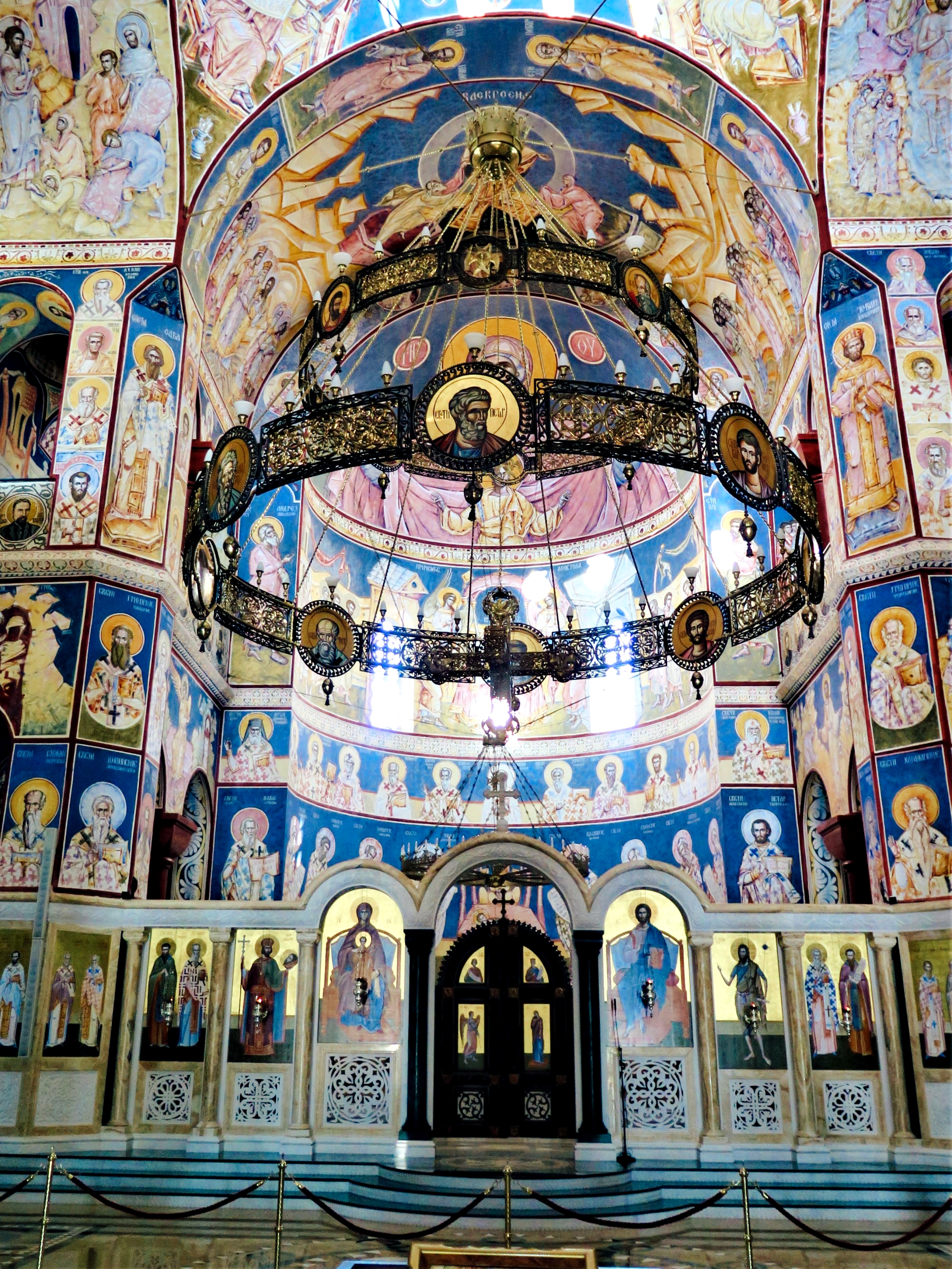

Reaching up to the sky from a flat land it stands upon, this building looks like a symbol of the town of Bar. Majestic, indeed. And if you wander underneath this cathedral, please do yourself a favor and walk inside for a minute. The interior of this building is breathtaking – the colours that shine everywhere around you surely cheer you up and give you hope even through the worst of days. And now, the best part comes in: this Serbian Orthodox church was finished in 2016 and therefore, it is a proof that even today, architects can still create landmarks that are worth seeing and sighing in awe.
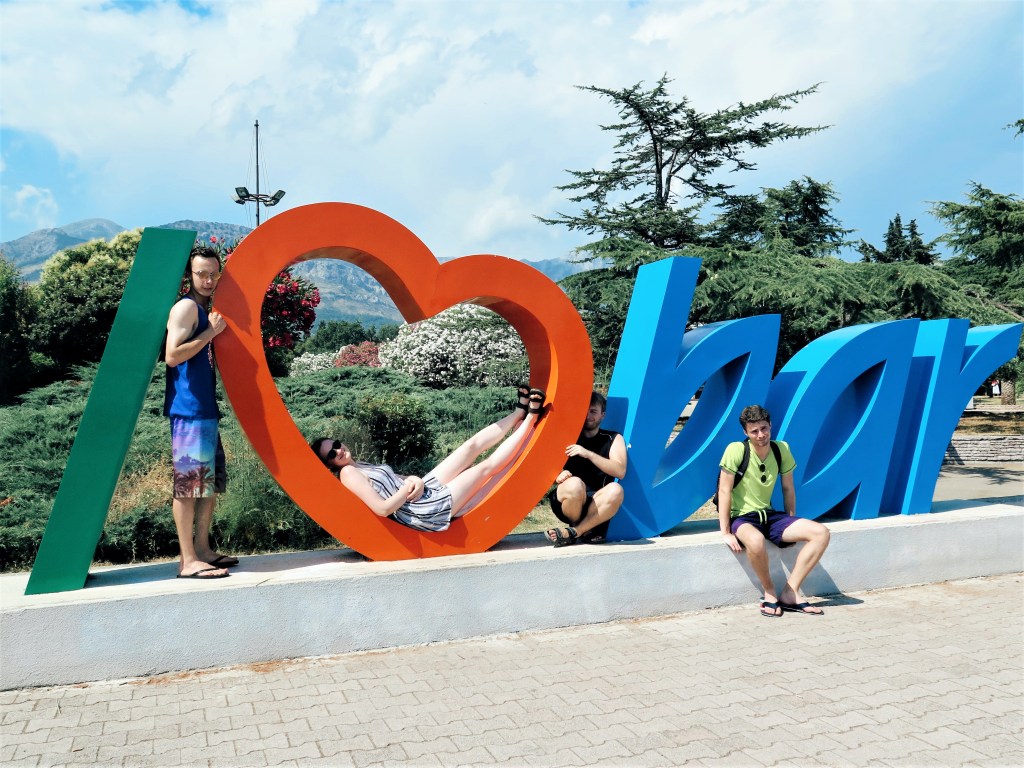
The town of Bar has surprisingly long and complicated history (much longer and more complicated than the aforementioned church). Moreover, there’s not only the city of Bar – approximately five kilometres from the newer city, there is a city called Stari Bar located in the hills. Now, this is a city with proper historical centre, fortifications and everything that almost uniformly characterizes cities along the shore of Mediterranean Sea. Even more interesting is the reason why the city and thus the inhabitants of Bar had to separate in the first place.
You see, the town of Stari Bar possessed an aqueduct which was collectively used for irrigation of households of all its inhabitants. Some historical evidence shows that this aqueduct was even used during Montenegrin-Ottoman war as the final element that forced Ottomans to capitulate. Not even hundred years later, the Bar Aqueduct fell as a victim of a huge earthquake that affected large area of Montenegro. This unfortunate event was the reason why a part of population of Stari Bar had to move to the seashore and rebuild their lives closer to the source of water. However, other historical evidence shows that the towns of Bar and Stari Bar have already been separated before the earthquake and that Bar was completely devastated and therefore had to be rebuilt after the nature disaster in 1979, just like parts of Stari Bar.
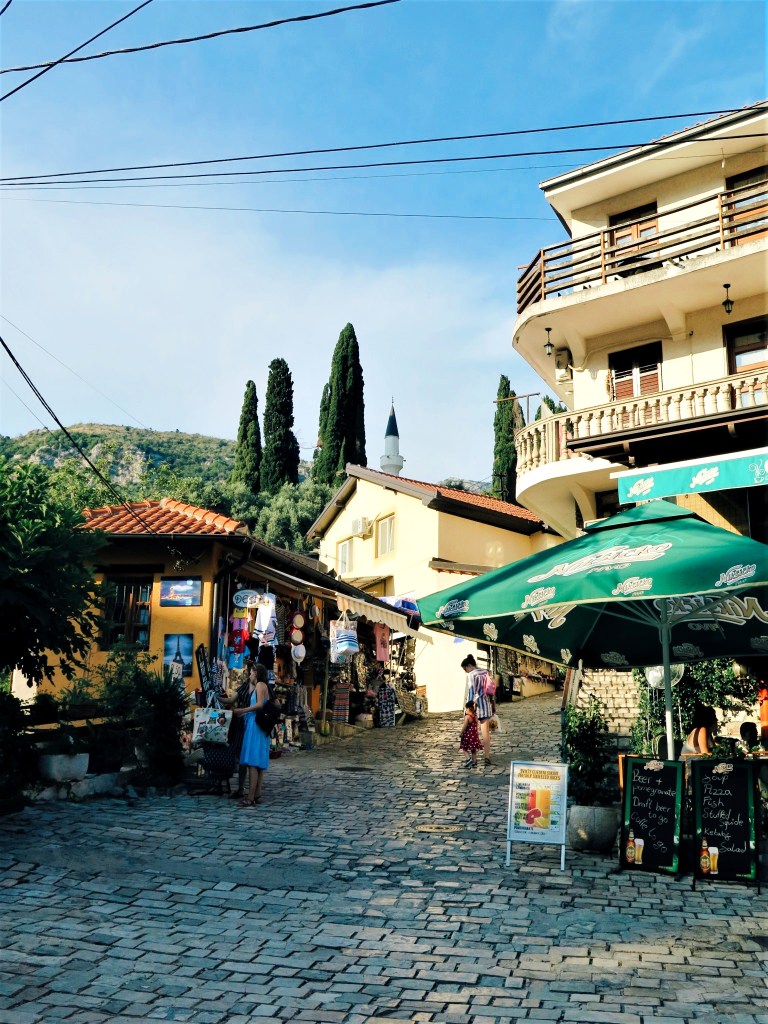
Restoration of Stari Bar must have been a bit more tedious than its neighbouring town, because the small centre of Stari Bar is situated pretty much only on a steep surface of Dinar Mountains (as Stari Bar is located at their southern tip). So when visiting this town, slippers is not the best idea. One thing that makes this town special in comparison to others located along the shore of Montenegro is that Stari Bar is not that focused on tourism and commercializing their local sights. Therefore, walking in the streets in late afternoon (when sun is already aiming down and behind the horizon) will offer you feelings of calmness and relax as you will not have to fight for a place to take a good pic, nor a better position in the queue for tickets. Instead, you feel free to explore the athmosphere of Montenegrin countryside and buy a sweet apple juice from local sellers (but please note this warning: sometimes it’s too sweet) or walk all the way up to the fortifications which offer a nice view of the city.
A funny story happened to us while we were trying to get to the fortifications (feeling a bit worried that there might be another crowd of tourists). When we arrived to the entrance, we could not notice anything but a team of young football players who were probably going on the school trip. When one of my friends saw that huge crowd of little kids ahead of us, he got under pressure, as crowds and kids are the two things in the world he hates the most. He somehow managed to get ahead of the crowd and ran up the stairs that led to the walls. The three of us could just watch an old lady yelling: „Hey! Hey! You need a ticket! Hey!“ on my friend while he disappeared behind the edge of the fortifications. So we came up to the lady and asked how much would the ticket cost, while swallowing the bitter truth: Yes, Stari Bar is another place in Montenegro where you need to buy a ticket – and they won’t even offer you a student discount. However, our friend was still not back from the fortifications which made us believe he did not get why we weren’t following him at all. When he finally came back a few minutes later, we announced that he should have bought a ticket for 5 euros. So he replied: „Nevermind. Let’s go. I’ve seen the view anyway.“ So this is the story of how we didn’t get to see the fortifications at all. But my friend who got there illegally, said the view was nice. So I recommend it… I guess 😀
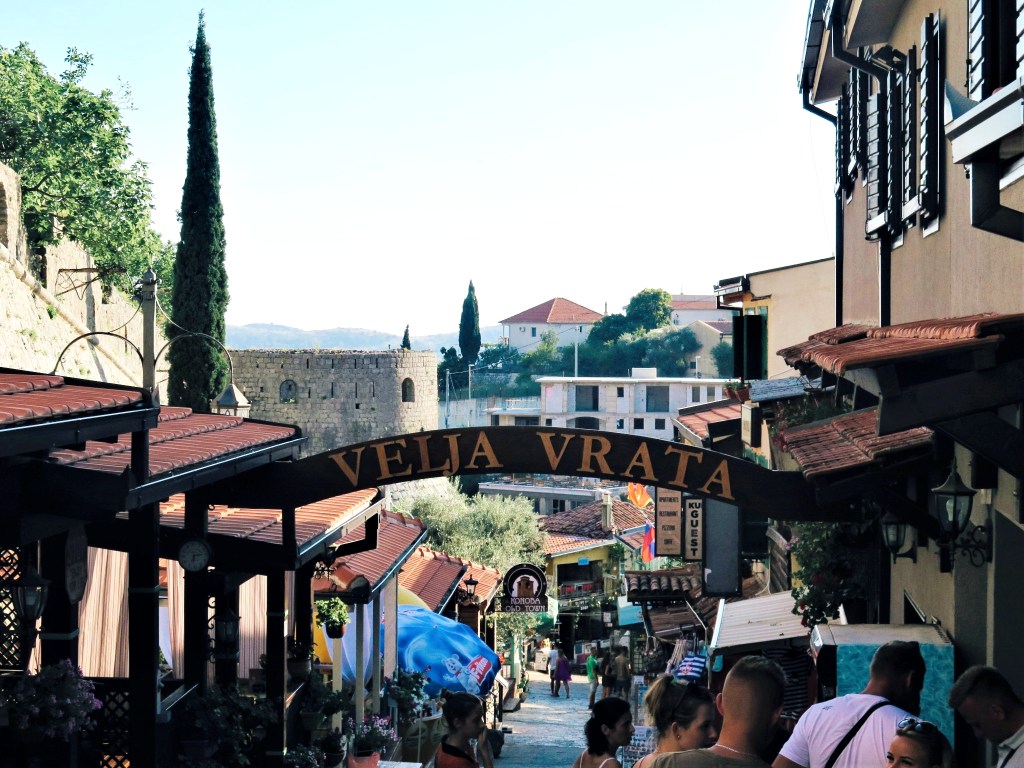
Whether you decide to visit the fortifications or not, Stari Bar is just the place you’re looking for if you want to experience a photogenic Montenegrin place with interesting history and not so many tourists. It was truly the best possible end of our seashore drive on that sunny day in July and it has begun our favourite Montenegrin city.
Truly, the road from north to south of Montenegro offers an adventurous journey full of remarkable historical places and spots to rest and enjoy swimming in Mediteranean Sea. And the journey all the way back to Kotor can be turned into a crazy ride full of photoshooting resulting in 120 terrible pictures and ugly-face-selfies in your camera. Try it out someday!

And on the way home, do not miss out on Perast and Our Lady of the Rocks. It is a small artificial island in the middle of Kotor Bay which was formed by slow sedimentation of rocks and sunken boats. It is believed that in the days of old, a small icon of Virgin Mary holding the Child was found on the surface of this island by a bunch of fishermen who then decided to pay hommage to Our Lady by building a church on this island and dedicating it to her. After the original church had been built, sailors of Perast started to gather the most precious objects they could find on their voyages and bring them to the church. But that is not the only way how people from Boka have ever shown their love for Our Lady. Some of the traditions of Perast church have echoed throughout history till nowadays. As it has been known, people of Kotor Bay are so fond of their traditions, they still organize annual celebrations of the day when icon of Virgin Mary was found at the island. This celebration takes place at the end of July and includes traditions like sailing towards the island, connecting the boats to each other in order to create a circle and sort of hug the entire island and last but not least, throwing white rocks into the water so that Our Lady of the Rocks would never sink.
Unfortunately, we did not get the chance to see this unique tradition of Bokelians (because we were visiting bay at the beginning of July), but we did get to see the island, walk there a bit and even take a slight glimpse of the church’s interior. Although, be prepared to pay another fee for an entrance to the church – it’s 3 euros for entering the church and another 2 euros to see the altar. Of course, you can also walk up and see an old bell which was taken from Perast during World War II. According to the story, German soldiers took 28 bells from Kotor Bay at that time. 27 of the bells were thawed to be used for production of canonballs, whereas one last bell was saved by an Austrian officer. This man took the bell to Graz where he hid it in his house. A few years ago, this bell has been given back to Our Lady of the Rocks by his grandson and thus, visitors who come to see the church can now admire the original bell after its return from the travels around Europe.
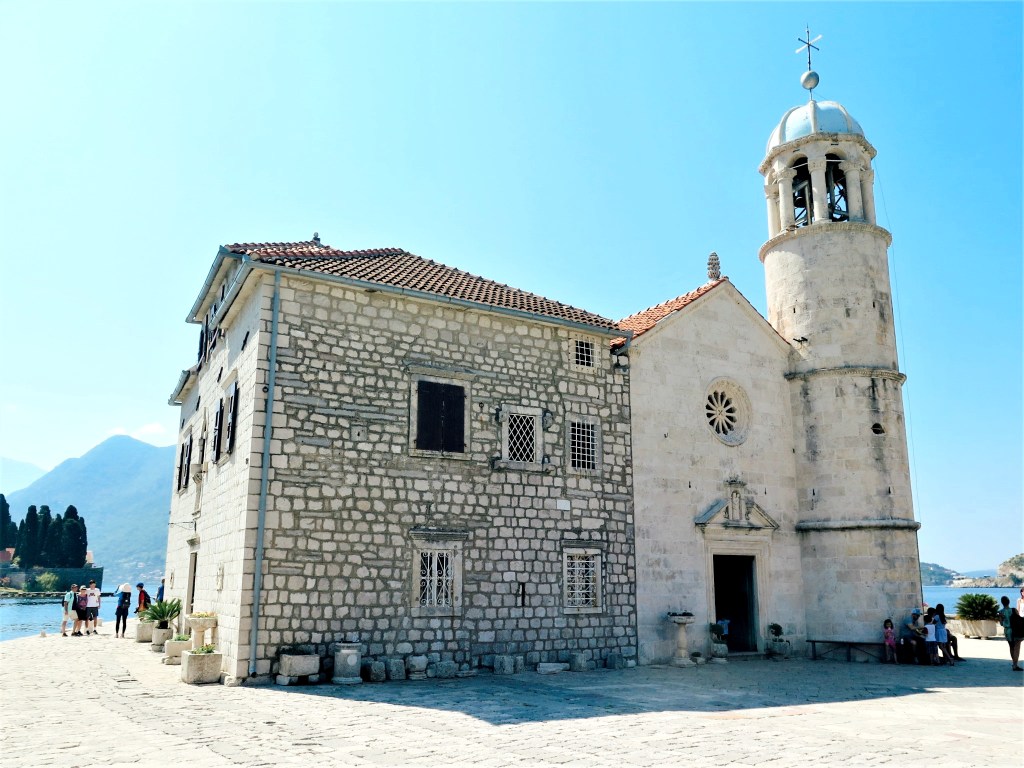
Though, the ancient bell could not be the only view the travellers’ hearts crave. In my eyes, standing on the island offered a perfect circle of an undoubtful beauty. No matter if you looked north or south, east or west, the sea with mountains in the background made me feel free and secure, excited and serene at the same time. It is almost an indescribable feeling, so the only thing I can add is: Go and see it for yourself. You’ll see, this place is one of those which instantly steal a piece of your heart and never give it back.
Love,
Antonia
Have you enjoyed reading the Love Letters?
Follow us for new content delivered right to your inbox.
 Love Letters to the World