
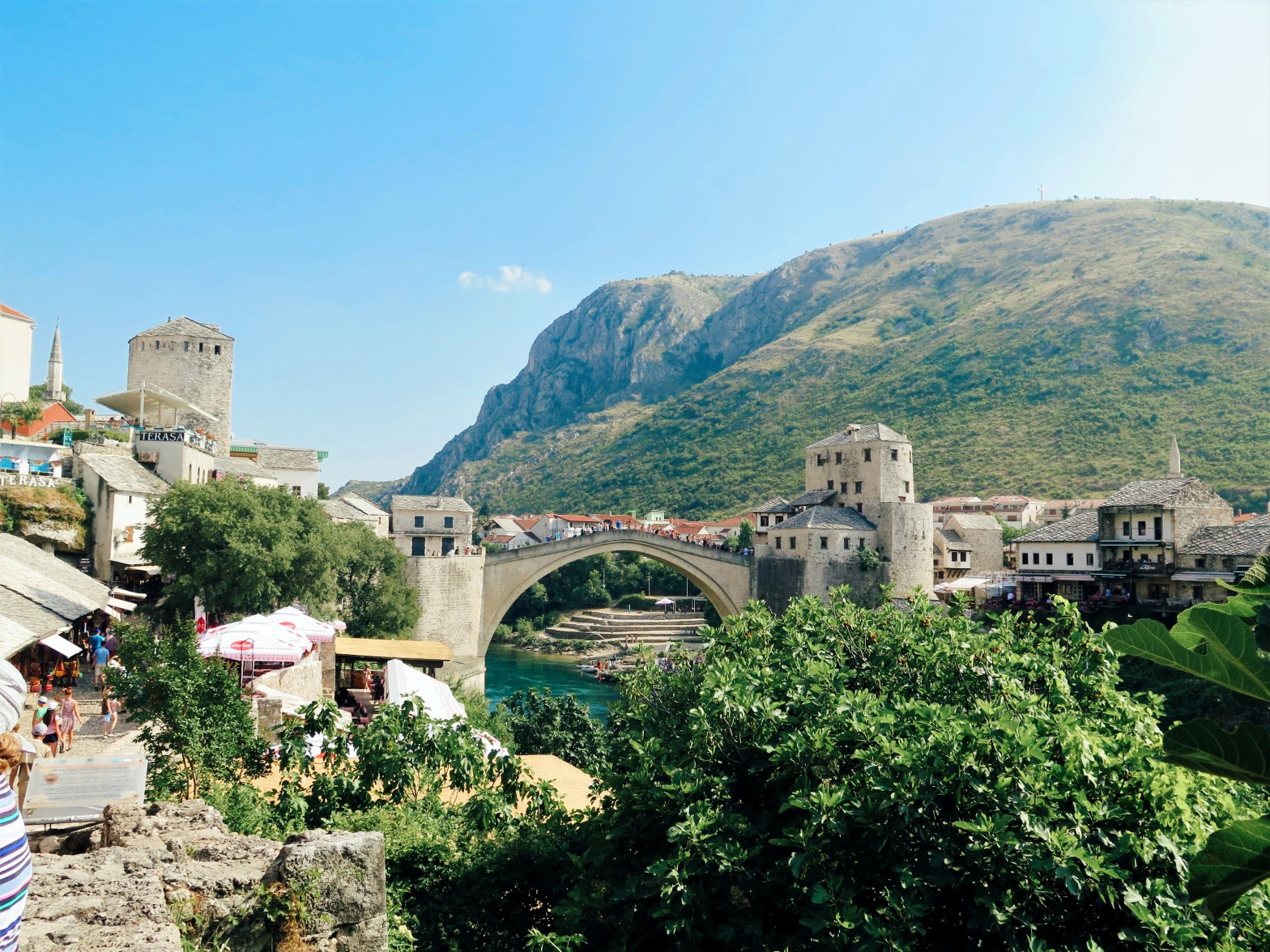
I must admit that I was often surprised by charm of the places we visited during our wanders across Balkan Peninsula and Mostar was no exception. Though it is a city which has gone through hell of long war with no less cruelties than any other wars, it still endured and now it’s another must-see right next to the jewel of Bosnia, the beautiful Sarajevo. So after a visit of this mesmerizing place I thought I might share my story (and the story of Mostar, as well) with you…
We arrived to this (at first look I thought quite small) city after a long drive from northern part of Bosnia and Herzegovina. The first difference I noticed was the climate, definitely. Weather in Herzegovina was incredibly hot that day, and even though that Mostar is located just 70 kilometres south from Sarajevo, the weather there was almost 7 degrees Celsius warmer than in the capital city – the air thick and dry from the heat. So a suncream is an obligatory item in your luggage if you’re heading to the southern part of Bosnia and Herzegovina. Another thing I recommend to have with you is a strawhat – or basically any cap that would protect your head from getting sunstroke – the sun can be quite agressive in Mostar (just like anywhere else in the south).
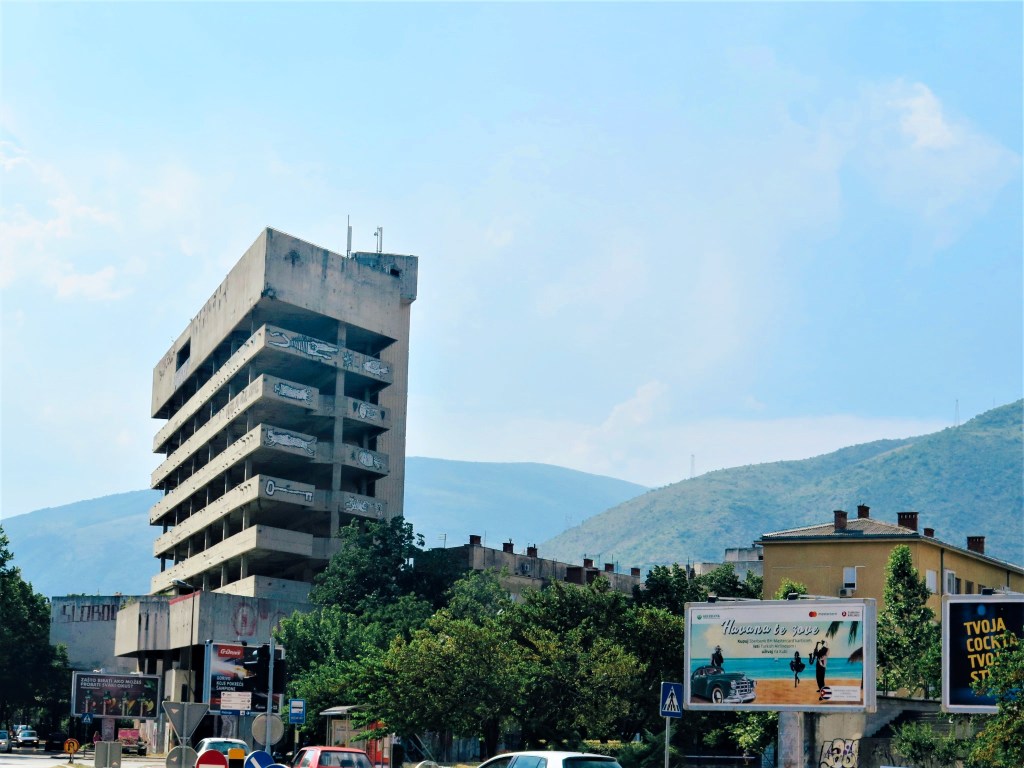
So… we got out of the car, realized it’s 39 degrees Celsius, hid under the nearest tree and put on a suncream (typical tourists, nay?) – great start! Then we walked to our first historically significant stop in the city – the sniper tower. A high building which once was a home to one of the biggest banks in Yugoslavia has throughout history turned into a ruin. However, it served an important purpose as it helped Croats defend their part of Mostar during war in 1990s. When we walked around the building, I was almost afraid, suddenly feeling insecure about its stability. In my vivid imagination, I saw the entire massive construction literally falling right on top of us. So of course, the access to the sniper tower is not allowed – and this time we did not feel adventurous enough to break into the restricted area.
Feeling relieved when we were leaving the sniper tower, I could focus more on the other part of the city centre. And that was totally stunning. From a point of view of a tourist, the city felt almost as if no war has ever happened there. And the inhabitants felt like living in a peaceful and prosperous way, creating a wonderful athmosphere for locals as well as for tourists. Unfortunately, reality is the other way around and the tension is still present in the city, even after 20 years which have passed since the conflict. The conflict I mention is quite interesting and knowing more about it actually helps people catch a better glimpse of the situation at this magical location.

So the city used to be inhabited by people of three nationalities – Bosnians, Croats and Serbians. It’s not only the cultural differences that play a huge role in relationships between people of the three mentioned nationalities – but also religious manners helped the situation in Mostar to fire up. Everybody wanted their place in the city and yet, people could not tolerate the ideology of the others. As the first, Serbians were banished but not even this act of intolerance was able to help restoring peace in Mostar. And those who were allies once found themselves standing on opposite sides of the battlefield. And what I say, I mean literally. The city has turned into a real battlefield in 1990s. The western side of river Neretva (flowing through city of Mostar) belonged to Croats (who used famous sniper tower to shoot at civilians and defend their riverside) and eastern side belonged to Bosnians (who basically did the same thing, only from a different location). Through the years, almost all bridges that had been built on Neretva fell because enemies were too afraid that the enemy might use them as a way to sneak into their area and occupy it. One of the bridges that was torn down was Stari most which has always been the most iconic place that characterises Mostar.
This unfortunate event happened on the 9th November, 1993 and for many locals it was so heartbreaking that even artists wrote songs crying about the loss of their valuable cultural landmark. Nowadays, the bridge stands again at its original place and offers a romantic view of the old town to every visitor.
However, the war has still stayed in hearts of people living in Mostar. Locals have doubled everything in this city, from bus stations to fire departments. And the most shocking thing is that local kids go to school on shifts – Bosnians start every morning at 8 whereas Croats start at 2 p.m. This way kids can even attend same schools but still, they never meet pupils from other ethnical groups.
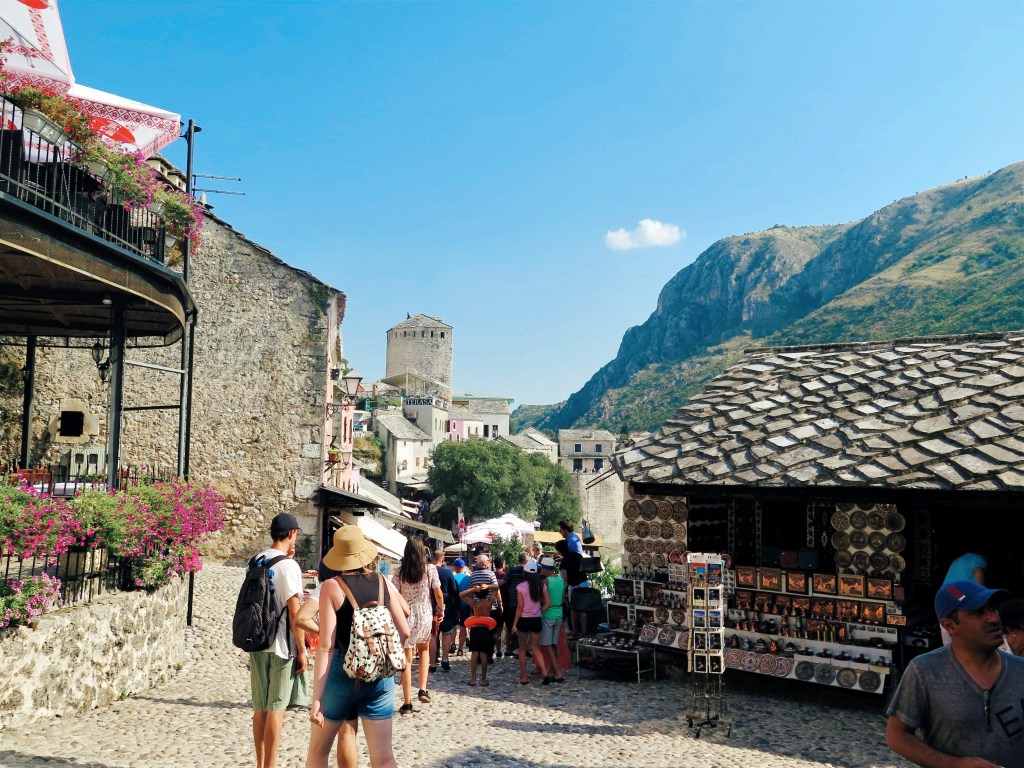
To be honest, at the time I visited Mostar I had no idea of how intensely these two cultures collide there. The city has a wonderful athmosphere for all tourists (and truly, there is a lot of them) so that when you wander around cosy city centre with buildings from white stones and little alleys buzzing with lively dialogues of local knick-knack sellers, you won’t feel intercultural tension for a second. Seriously, the centre of Mostar feels incredibly safe and comfortable for everyone. Sometimes you might get a little sick from the amount of tourists passing by the streets, but this element is just a price for seeing such a great piece of world, just like every other place whose beauty has become recognized worldwide. The Old Bridge I have already spoken about has an absolute maximum in density of tourists per square meter. It almost feels like all the tourists concentrate exactly at the area close to the bridge. But that’s nothing strange, as the singularity of this famous landmark has spread worldwide even before its destruction and restoration.
And I’ll give you a tip:
Don’t mind fighting for a place at a path located right opposite to the bridge. It’s a great place to make some memorable pics.
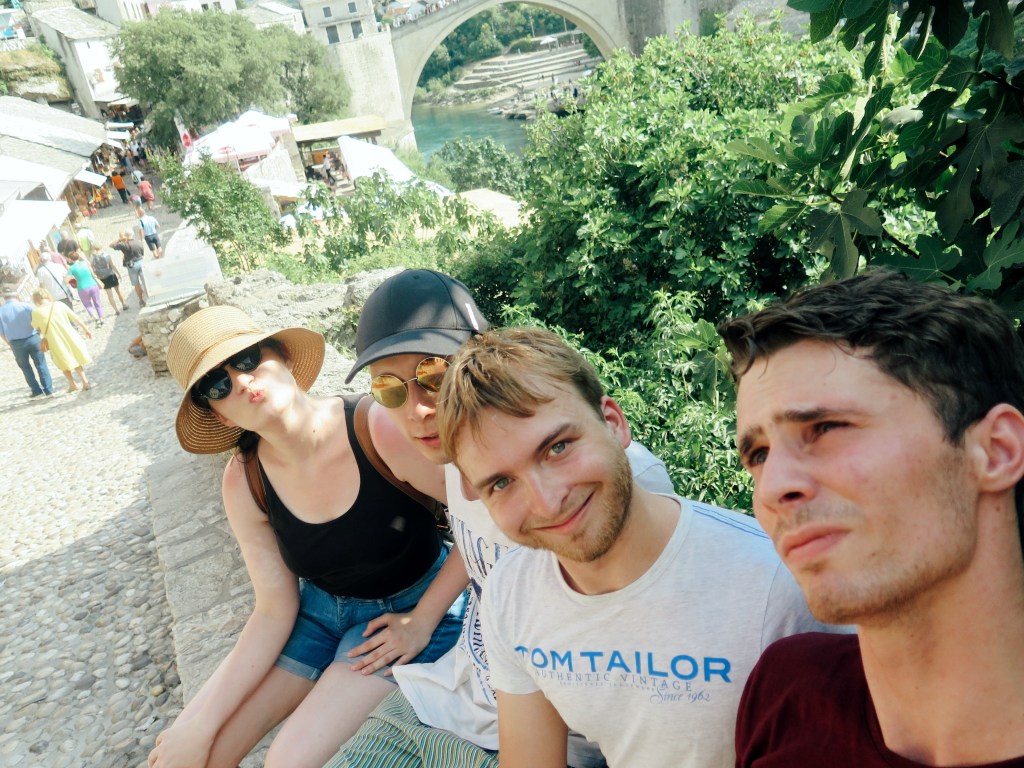
Also, you can watch some adventurous individuals jump from the Old Bridge. Some young guys do it to make some money so if you ask them and pay them a few KM (short for convertible mark, their national currency), they jump to the cold water of Neretva just for you.
Recalling the view from Old Bridge in Mostar, I reckon I wouldn’t ever wanna be forced to jump from its top. However, my friend who loves adrenaline said he would jump in any minute (so for some people, even the height of the bridge is no big deal).

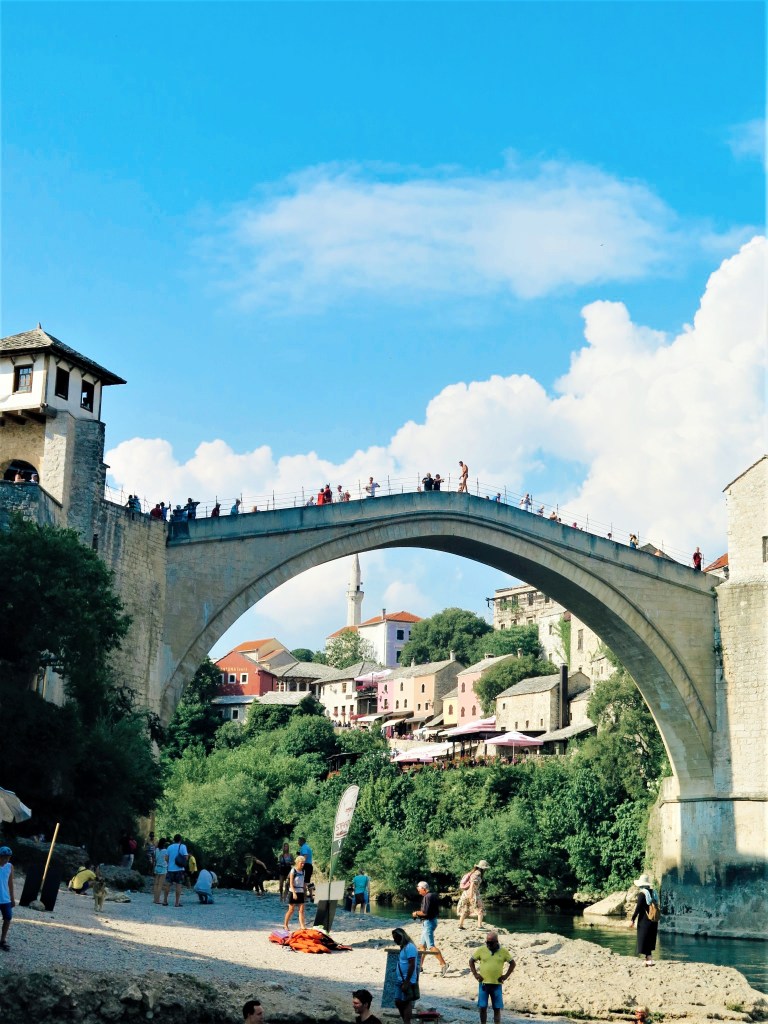
Still, those of you who want to visit the bridge without craving any adrenaline, you’ll probably have the idea of walking there in slippers. For those who really do have that idea, I’ll leave a piece of advice. Don’t do it. The bridge is much steeper than what it looks like in the pictures. And the stones which the bridge is madeup of are all very smooth, which makes the way up (and down, as well) extremely slippery. Not even the little steps help once you don’t have normal shoes on (and I confirm it as I saw a few women fall down as they were trying to pass the bridge – they were all wearing slippers). Another thing – once you get on the top of Old Bridge, give yourself a minute to just enjoy the view. It’s breathtaking, with all the colours of lovely little houses located on the right border of Neretva and the mosque that looks so stunning so that I couldn’t resist taking a few pics of it. See for yourself…
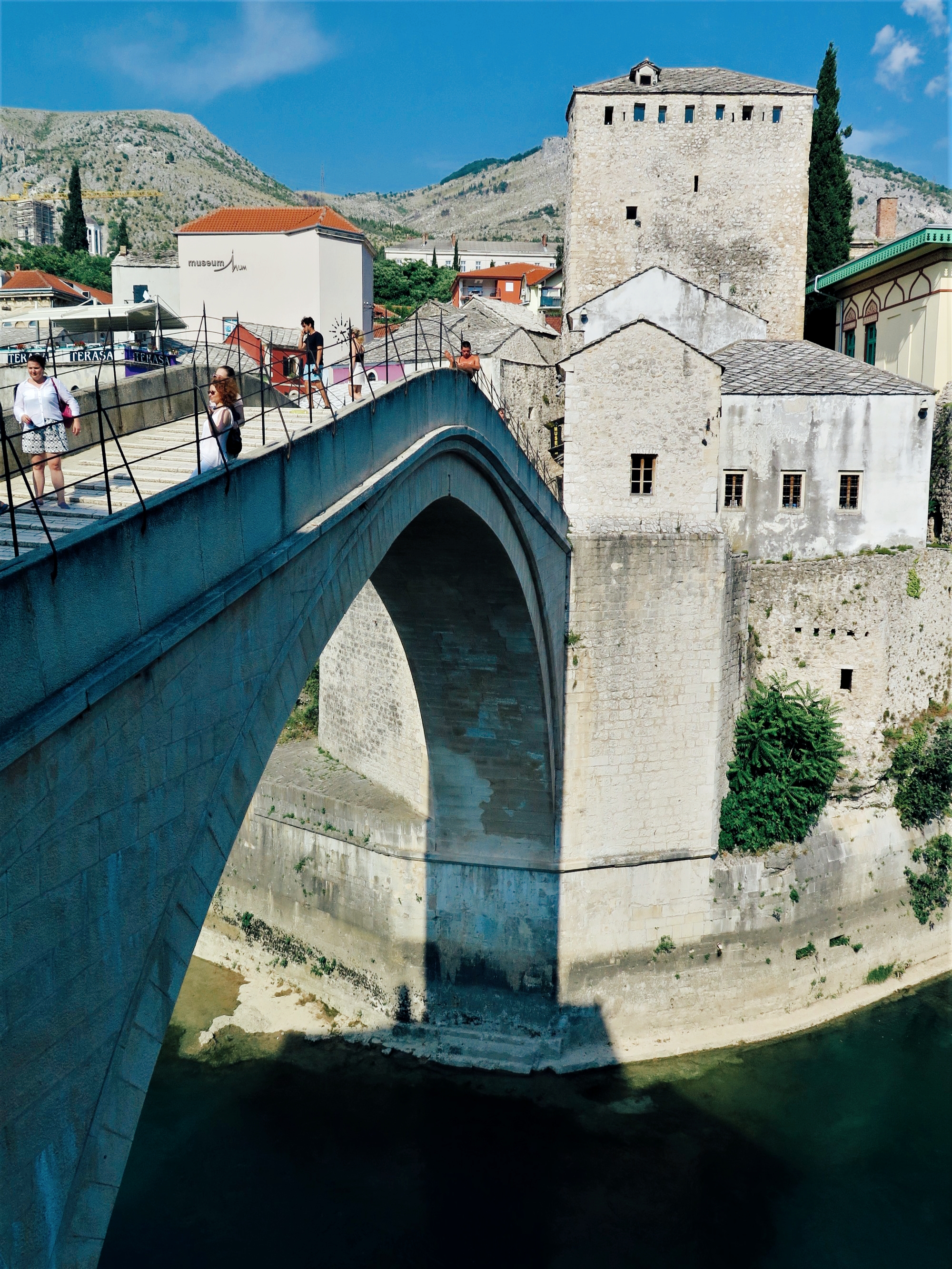
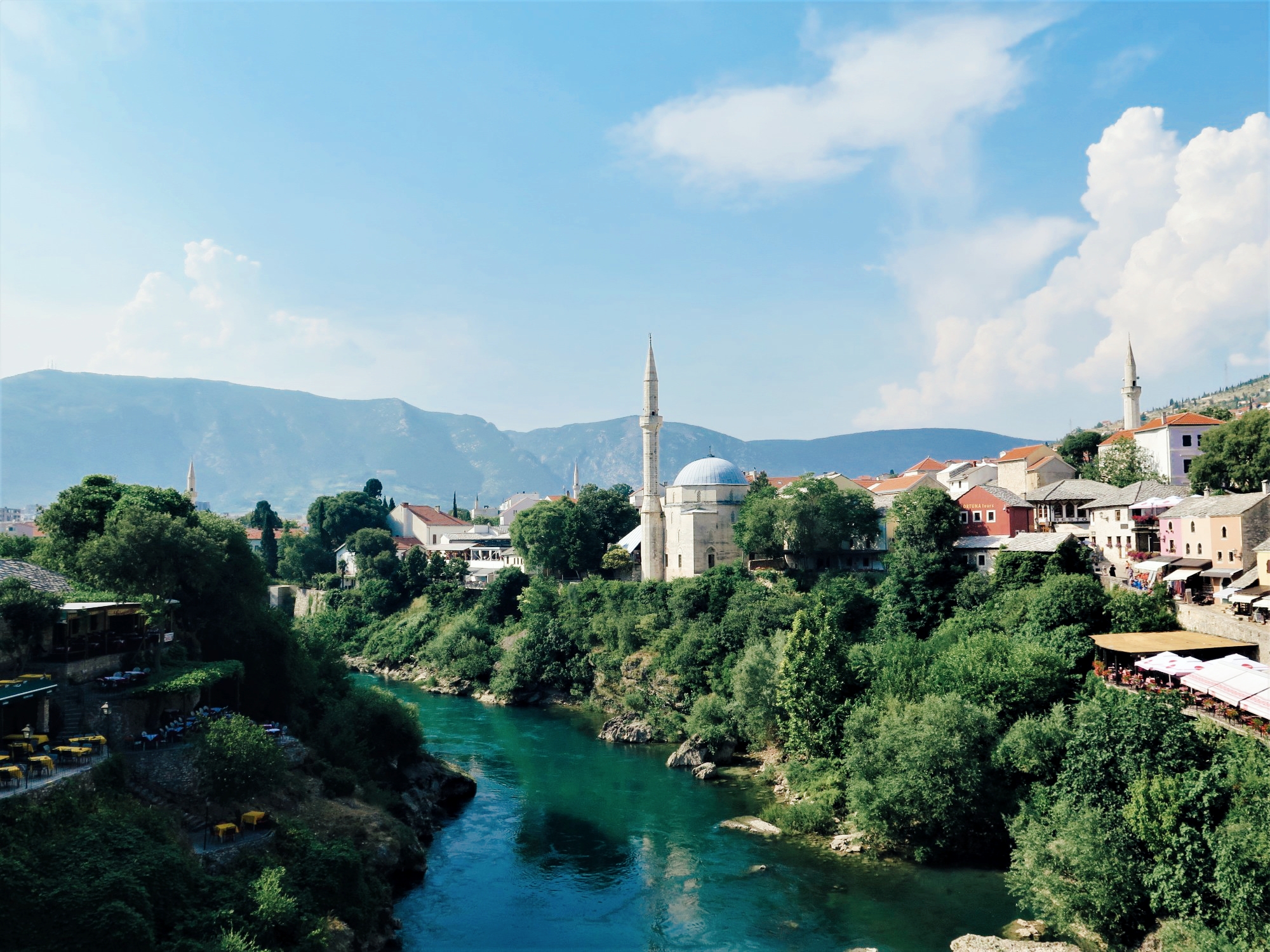
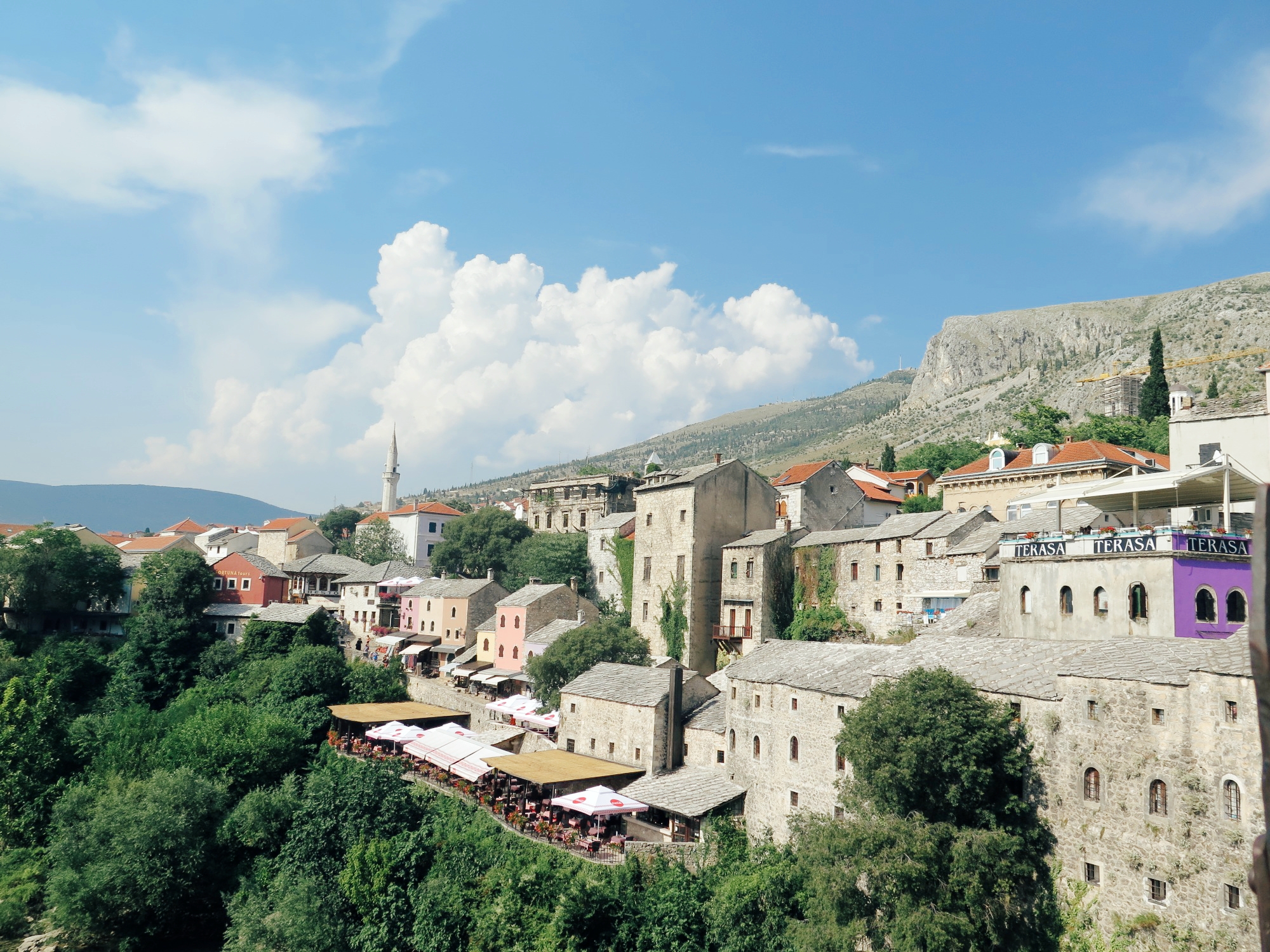
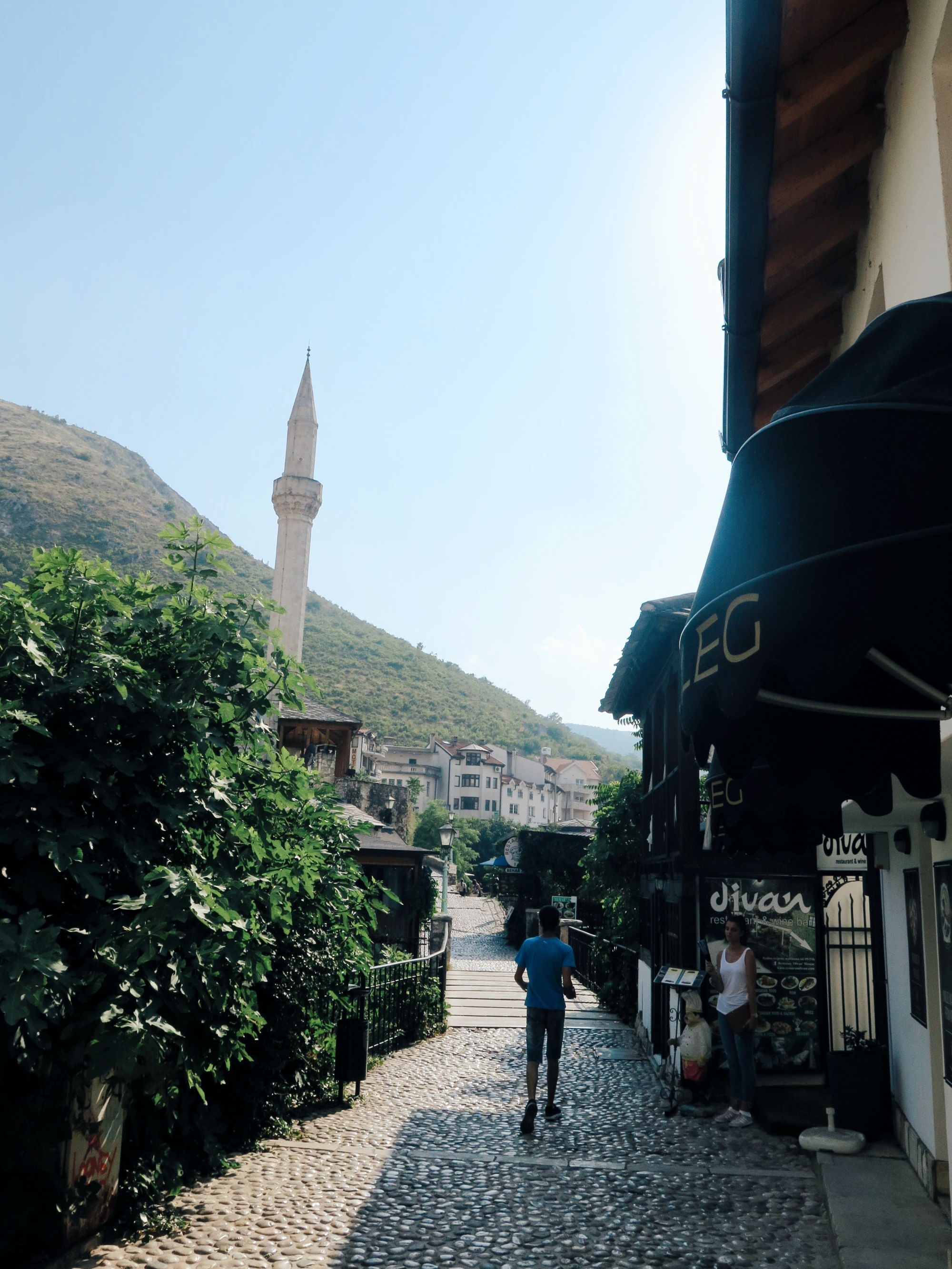
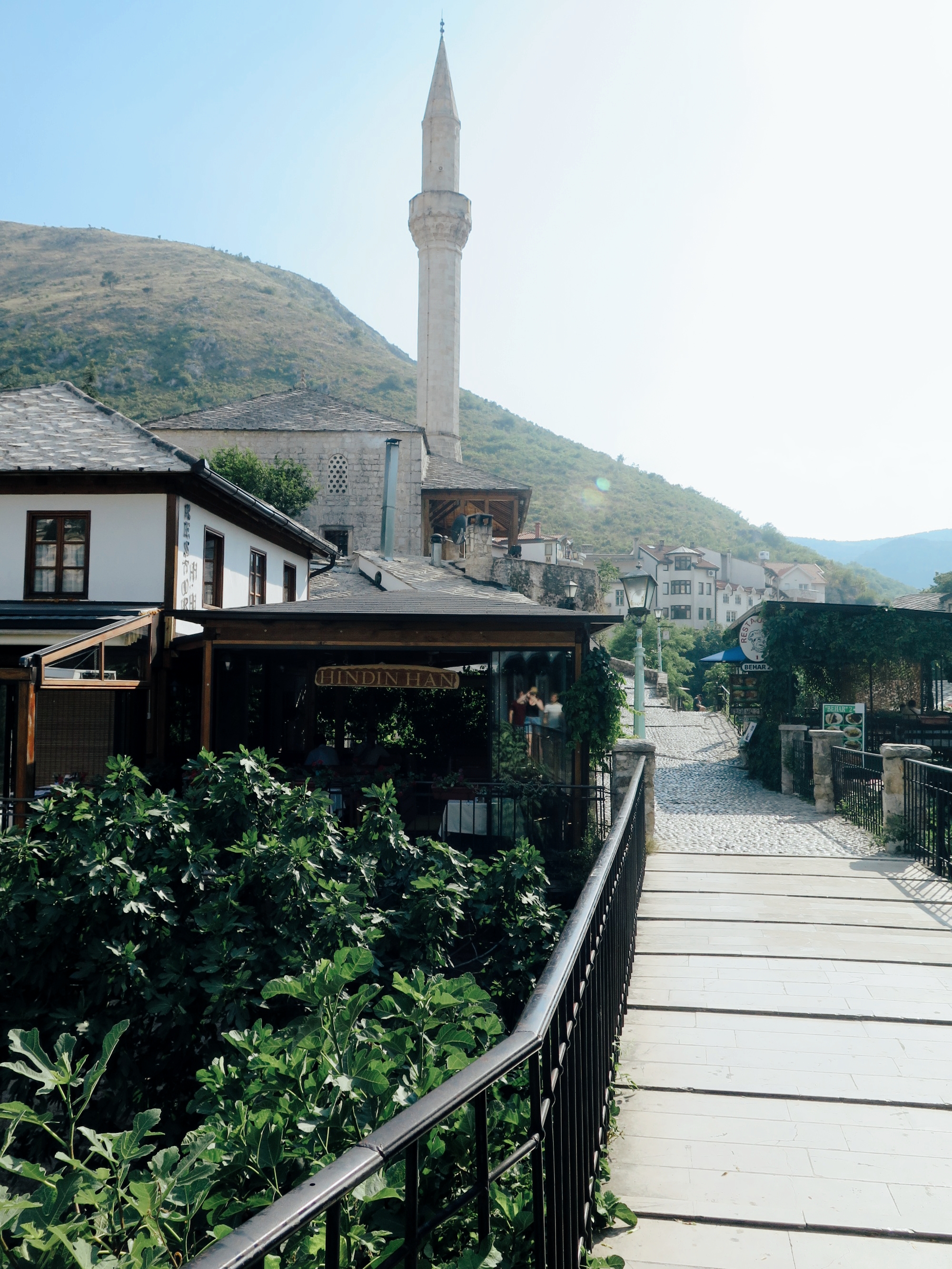
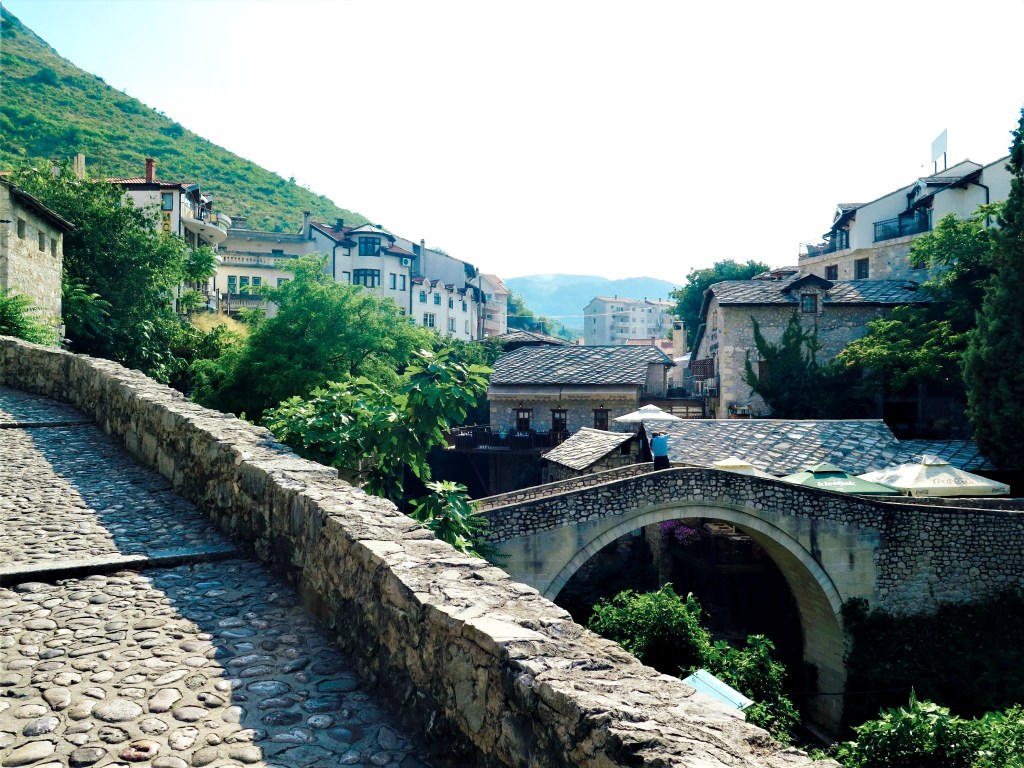
On the other side of the bridge, you’ll find a calmer part of the city centre. Firstly, you won’t find so many visitors walking there, probably because this part of the centre is full of little cafés and restaurants ready to soothe thirst and hunger of every passer-by. You’ll find here even a smaller, yet no less charming bridge (called Kriva ćuprija), which had been built in 1558, which is 8 years before the original Old Bridge was created. It is said that Kriva ćuprija is the oldest bridge which stands in Mostar to this day. And here’s a pic – ain’t it lovely?
And if you get tired from the heat and wish for nothing more than to unwind somewhere away from the crowds and the rush of the mainstream sightseeing locations, I can tell you about a place which is not far away from the centre, yet still it offers exactly what I’ve been describing. You’ll find this place (or this little beach, to be specific) right next to the Old Bridge. There can be a few tourists at the beach but if you go there in the evening, there won’t be any huge crowd of people crawling in the deep waters of Neretva. No. This place materializes the serenity of hot summer evenings when the sky dyes to orange and pink colours and you’re left with nothing but your soul to see it. It’s an ideal place for lovers to speak up about their feelings, or to any lonely artist who wants to speak up about their feelings in a drawing or a book they’re currently working on.
Once upon a time, I fell in love at this place. I fell in love with this place, feeling emotional about the stone city and the small gravel beach and the colours of sunset shining above Mostar that was slowly going to sleep. As the stones of all buildings in the city were cooling down, you knew you would want to be there when they heat up again. But that exactly was the moment when I had to leave this city. And lying there at the gravel beach, I just knew that once again the city turns back to life and the stones will heat up again. And I will be there. I don’t know when but I will try my hardest to find a way back to this city and back to my beloved gravel beach. Till then, I will keep this view on my mind and in my heart…
So if you’re searching for a place where you could make some stories of your own (and by stories I mean some super exciting tales that you want to keep telling to your friends and family), Mostar is an ideal place for their creation. It’s a city of both rush and peacefulness, conflict and compromise and last but not least, neverending photogenicity of each and every little alley, stone bridge or old house with a happy family inside. Try not to fall in love with it. But resisting to fall in love with Mostar is not possible, I think…
Love,
Antonia
Have you enjoyed reading the Love Letters?
Follow us for new content delivered right to your inbox.
 Love Letters to the World