
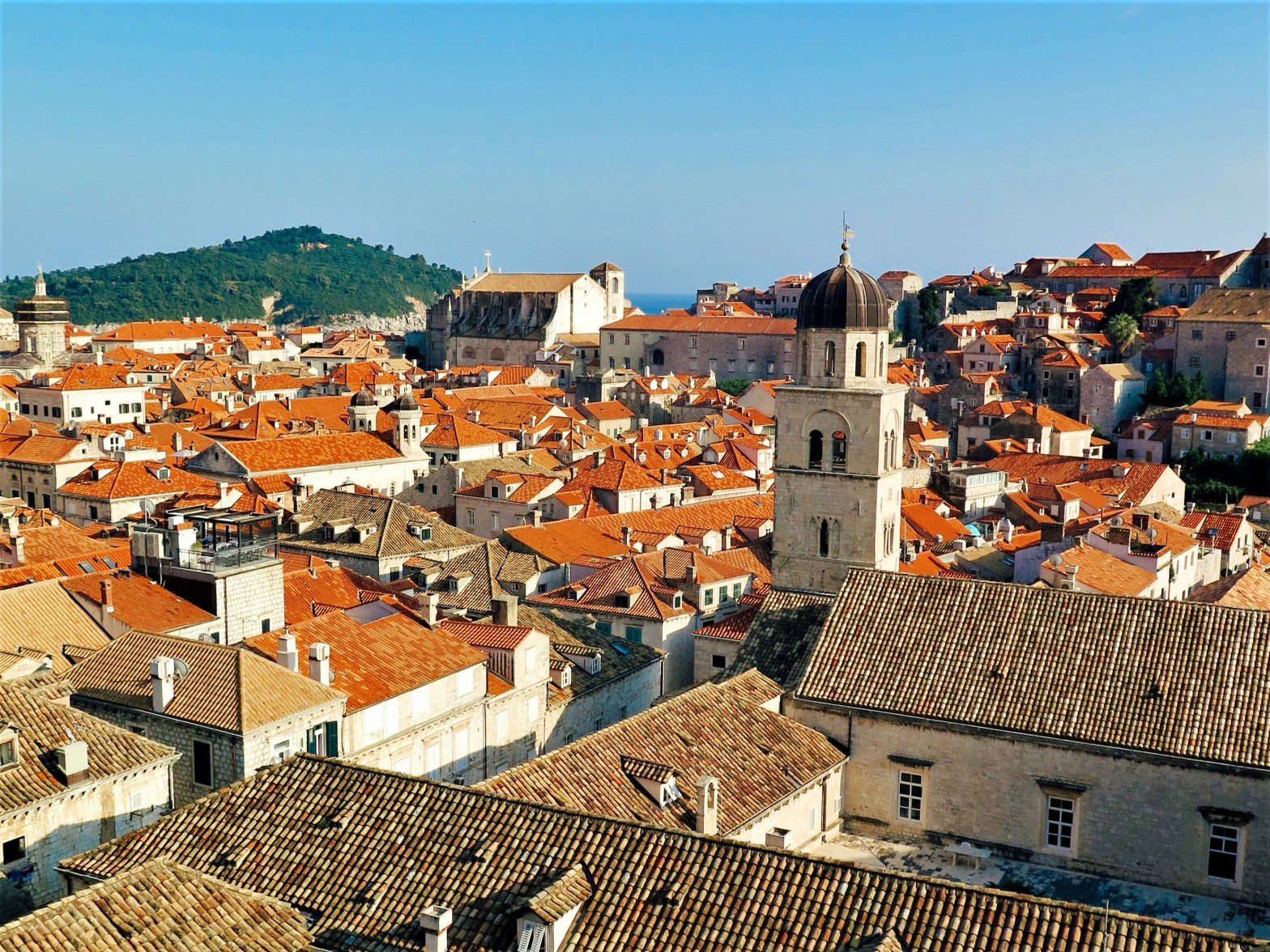
Until this day, I have mixed feelings about Dubrovnik. On one hand, a mesmerizing stone-walled city on the edge of Mediterranean Sea, which is so rich in terms of landmarks, landscapes and all the elements which make up a city of dreams – on the other, an incredible amount of tourists, crowded places and Game of Thrones walking tours and souvenir shops. It is a city which literally tempts you to take the step through the big Pile Gate and explore its wonders, but people who mind queues of tourists and large crowded places have to put very much effort into imagining the city without all these disturbing factors.

Arrival to Mediterranean Sea
& the story about the border
We arrived to Dubrovnik after several days of exploring the biggest cities in Bosnia and Herzegovina. Before that we were in Zagreb and Maribor, which were all cities laying on sides of rivers, but not at the seashore. And thus, during our Balkan roadtrip, Dubrovnik was actually our first contact with the Mediterranean Sea (and for me, the first contact with the Mediterranean Sea after nearly 8 years).
I remember sitting in the car, listening to some music when suddenly, somebody announced that it’s necessary to pull our passports out of our backpacks. At first, I didn’t react to the announcement. I was too consumed in admiration of the landscape lying on the tip of my nose. The glimmering sea touching the horizon which again, without a single cloud was adding even more grace to this stunning panorama. After a while, I realized that the debate went silent and that guys were just waiting for my reaction. It was because I had all our passports in my backpack… but nevermind, I stopped dreaming just on time, as we were approaching the border. There, we had stood in a short queue before our passports were checked.
During our passport control, a strange look was given to my passport as the officer considered it weird for a Slovak girl to be travelling with three Czech guys. You see, the rest of the world does not know that Czechs and Slovaks shared one country not that long ago and that we can still speak fluently among ourselves, using just our mothertongues (which is why many Czech students get in touch with many Slovak students at their universities). Maybe, the officer at the border thought I might have been kidnapped by trio of Czech guys, who looked like proper badasses in their short-sleeve T-shirts and green flip-flops (we had a good laugh about this idea). Though, seeing happy smiles on faces of all members of the car, he did not investigate any more on my presence there. And thus, our Dubrovnik adventure could start.
This city, just like the cities of Kotor Bay, is rising from the seashore right to the mountains that are really close to it. So when you’re in Dubrovnik, you can say that your going downtown – literally! When we were going through the city by car, trying to approach the old town located in close embrace with the Mediterranean Sea, a couple times we have been trapped in traffic jams which are during tourist season present all over the place. So be prepared for that.
After we had found a good parking lot (and by good I mean for free), we walked down the hill to the historical city centre which is surrounded by the famous city walls and so widely pursued by the travellers from all around the world not only because of the locations known from popular series Game of Thrones. Starting at the pier where the final scene of this series took place, my friends could not resist to make their own photoshoot with the goal to recreate this epic scene…
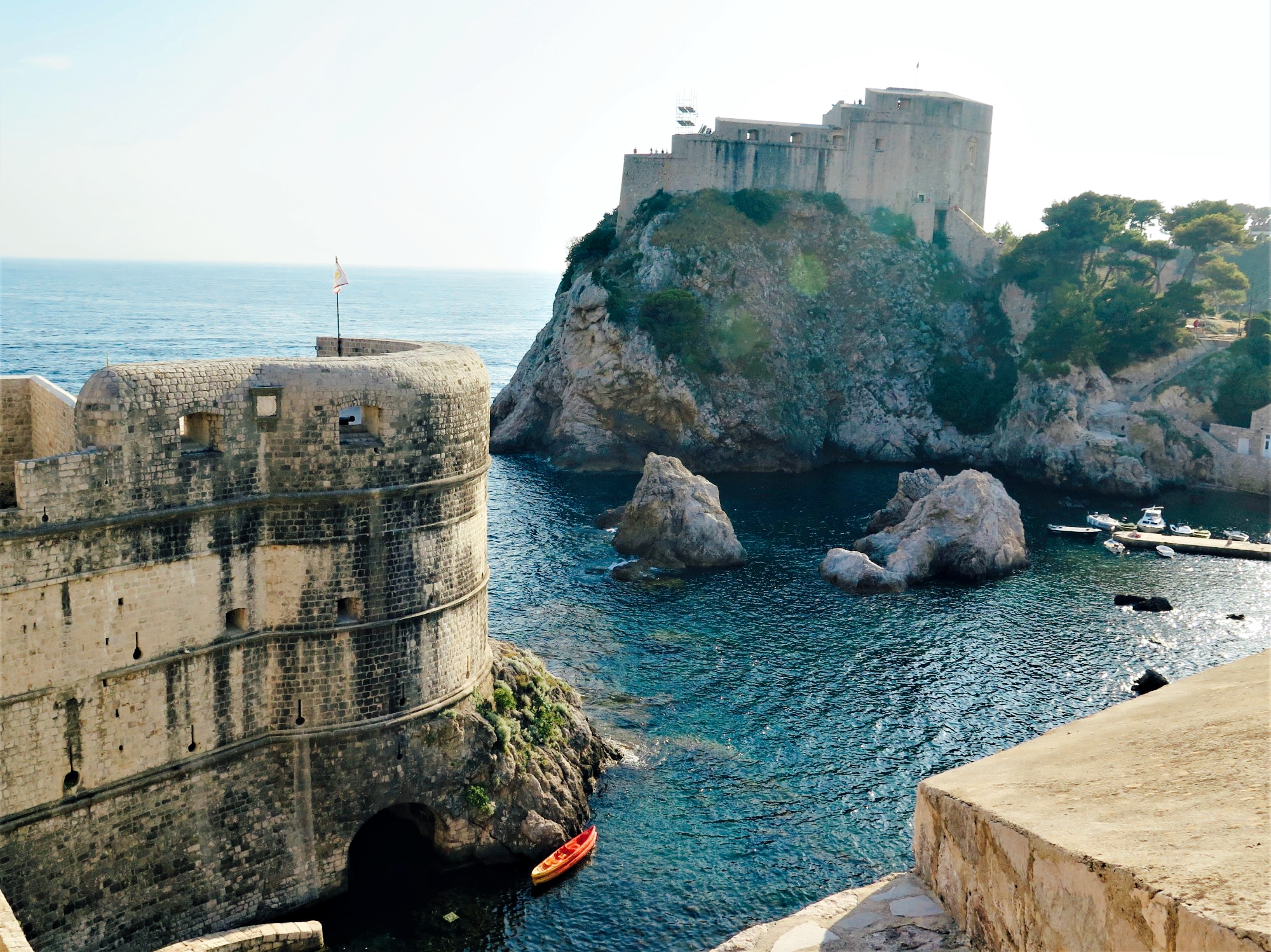
While I was taking pictures of them, our other friend who was not that interested in the series itself, wandered a bit further away from us, perhaps trying to seem like he does not know us, perhaps trying to catch a better glimpse on Lovrijenac Fort or St. John’s Fortress, which are two most iconic landmarks located at Dubrovnik seaside.

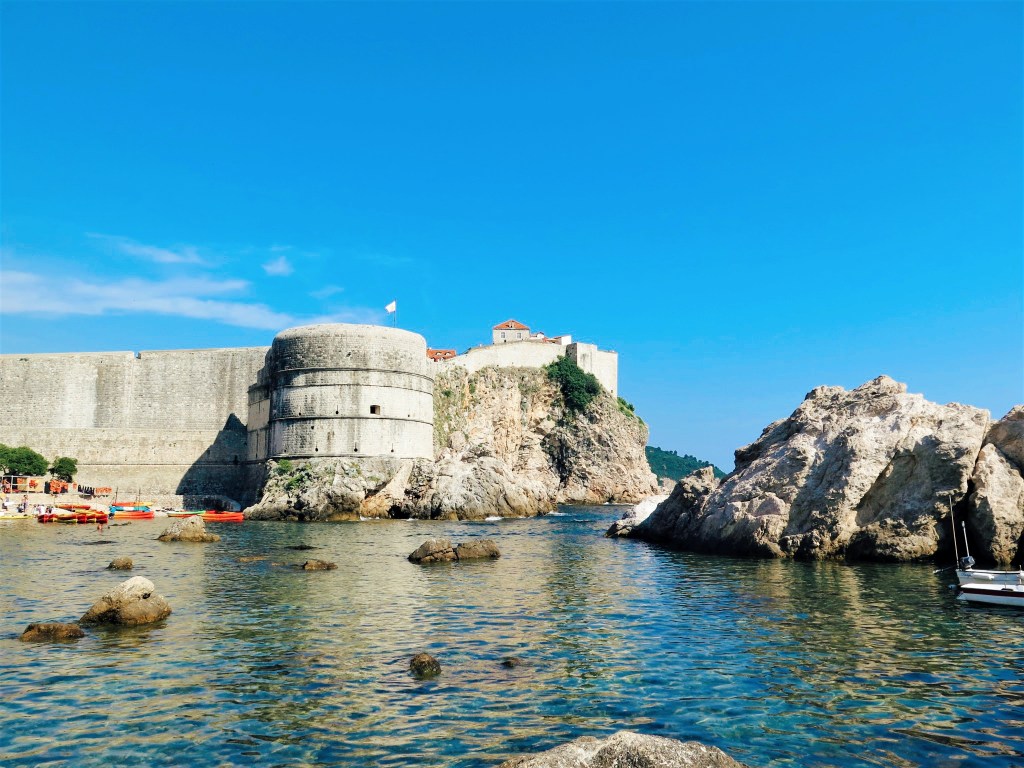
The Lovrijenac Fort
& story of the invasion by Venetians
Both of these stone giants were really significant for the city throughout history. Mentioning long-term conflicts with Venetians, Lovrijenac Fort was one of defense installations made by the locals. This especially disappointed the invaders, who were planning to use the strategic position of the hill where nowadays stands the great Lovrijenac Fort, to build and outpost on it and overtake the city from there. But locals heard about it and thus, in just three months, they built Lovrijenac Fort to dismantle any attempts of Venetians to use the location and start invading the city.
St. John’s Fortress
& story about all the pirate ships
St. John’s Fortress, on the contrary, was very useful in terms of city’s defence against pirate ships. According to the locals, St. John’s Fortress has a special mechanism which allows people who observe any pirate raid approaching the city bay pull a lever and make an entire wall fall right on the top of the ship and damage it. Of course, these days people of Dubrovnik don’t defend themselves against tourists (I’m not saying that they shouldn’t, in some cases) but this fortress is still one of the most iconic landmarks implemented into the character of the city. I even made a picture with it, standing just two steps from falling into the waters of Mediterranean Sea (because there are pathways in Dubrovnik which are so close to the water and still, accessible to tourists).
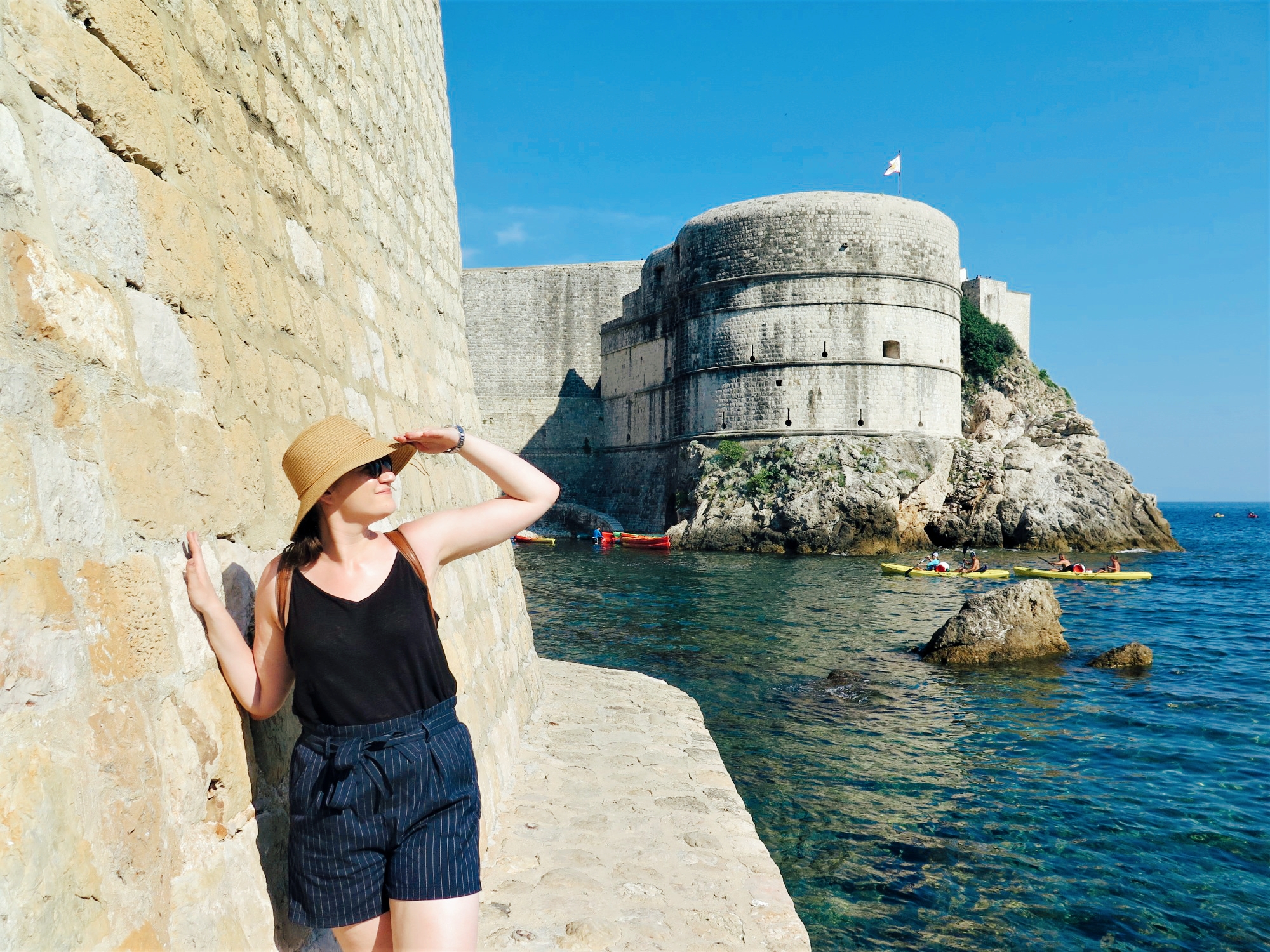


Walking these paths reminds me of a funny, yet a bit embarrassing story of mine. As Dubrovnik disposes with a large and well maintained seaside, locals often organize kayaking competitions there during summer. When we were passing by, such competition was taking place just beneath the St. John’s Fortress. We walked more to the side of the small beach and then guys suddenly climbed up to the cobbled sidewalk leading towards the entrance to the old town. And I, a person not that skilled in climbing, didn’t want to do the same stunts there, so I walked through the entire beach, heading to the normal staircase. While walking, a young man stopped me and asked me if I also participate in their kayaking competition, to which I just laughed sarcastically and walked away. Later on, I realized it was not the best answer to his question. But he could have known that already, as I was the least sporty-dressed person on the beach in that moment.
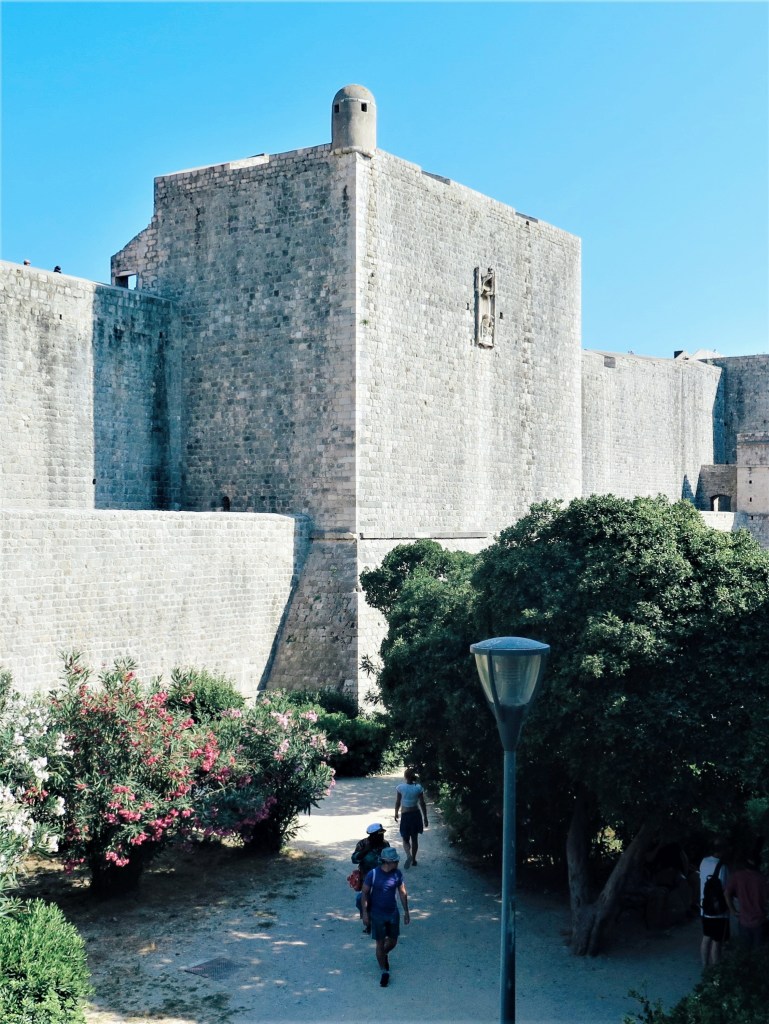
Anyway, from the beach we went through some beautiful parks which were fully in blossom, until we arrived to the Pile Gate – the main entrance to the old town of Dubrovnik. Stone walls, standing majestically in front of tourists, were taking me back in time, to the days when the merchants and sailors exhausted from their neverending wanders across the sea, were crossing the city borders to deliver goods from faraway lands. The historical markets were awaiting them, with large crowds of people negotiating with sellers to lower the prices of fish they wanted to buy. And to all of that, noblemen were looking at this rumble and tumble from the comfort of their big mansions, sitting in their upholstered chairs and sipping the black tea from the porcelain cups they got all the way from China.
That was the first thing I imagined sitting on a stone banister and looking towards the old Pile Gate. And I must say even if Dubrovnik of yesterday has ever looked like this, then today’s Dubrovnik does not look like this at all. Firstly, there’s the modern locals of Dubrovnik who generously offer cold pints of pale ale for just 8 eur/3 dcl and meanwhile, shop for yachts for themselves and their families.
Secondly, there’s these hundreds of tourists walking the city from dawn to dusk, buying these expensive souvenirs and walking tours which would take them around the city just in tracks of the world famous characters from Game of Thrones series. Me, as I was standing there at that point, was not at all interested in Game of Thrones propaganda, and thus I was a little bit demotivated by the amount of commercialization of the place. And my vision of an old-timey Dubrovnik with fish markets and merchants from across the Europe, has disappeared in a puff of smoke.
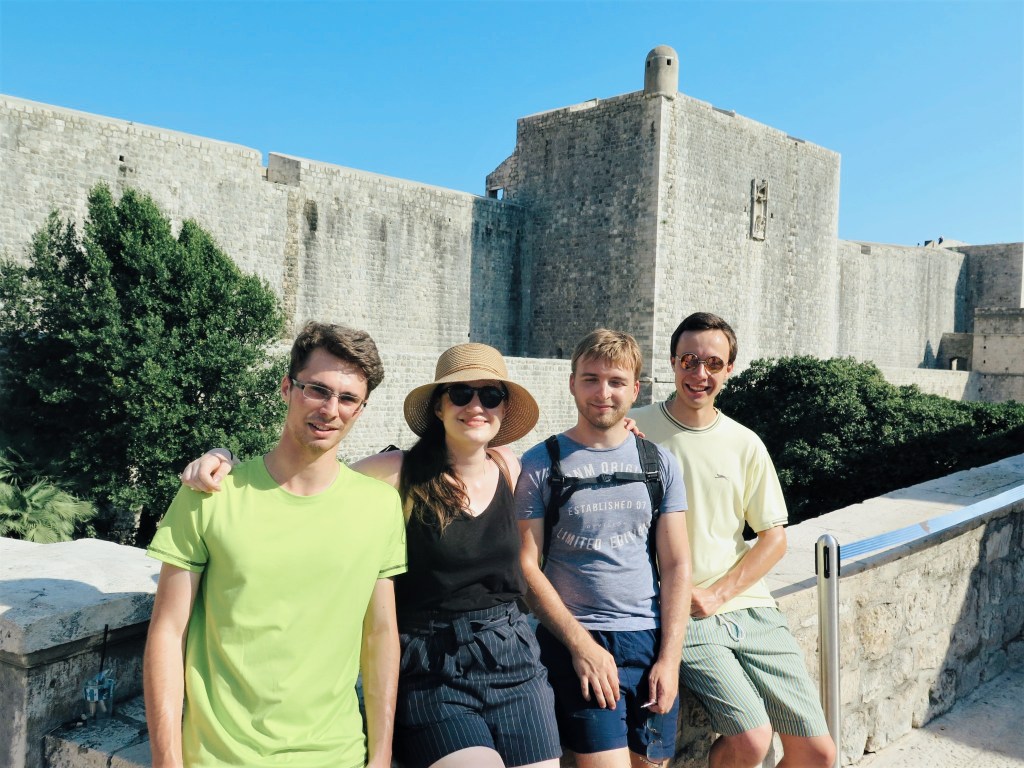
Meanwhile, we were trying to take pictures with the fort behind us, which resulted in many shots of us with absolutely no trace of any fort behind us, and also a couple of pics where my hat is being slowly eaten by one of my friends. Take a look for yourself…
And also, take a look at how cute we are in the pictures that one of the tourists took for us (though still, no trace of any fort behind us).

Historical city centre
& the Game of Thrones mania
I must point out one simple fact, about tourists in Dubrovnik being the biggest struggle during exploration of the city. They are everywhere, literally. I think you sure know that Dubrovnik was a highly frequented destination for tourists even before all this Game of Thrones mania. Nowadays, when you walk through the Pile Gate and step into the crowded square right behind it, the first thing you can hear (except for a mashup of a hundred voices) is the sound of mandoline playing the intro to the aforementioned series.
Not that bad as an opening melody to the city which has so much in common with this worldwide phenomenon. Though, it is a little bit disturbing, when you return to the square 30 minutes later and the guy with mandoline is still playing the same opening theme. And when you go up to the walls and walk above the square, he’s still there, still playing the same melody. And when you’re leaving the city 6 hours later, guess what? He’s still there, and as the city is turning dark, he still plays the very melody. Annoying, I thought when we were leaving the city in the evening.
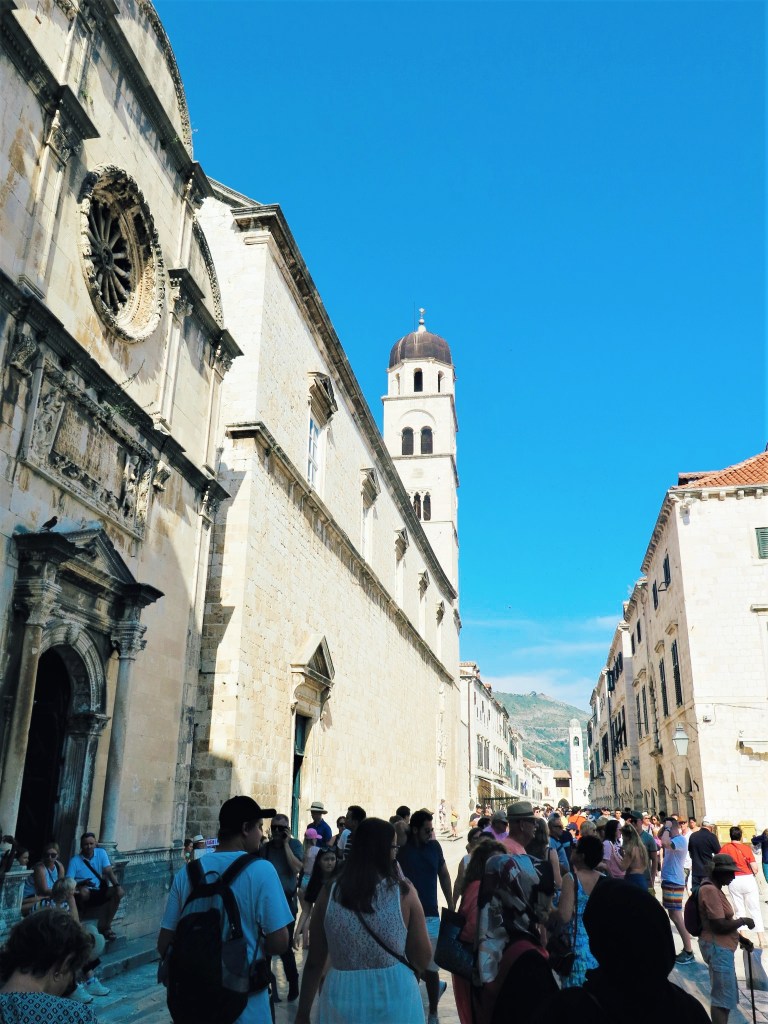
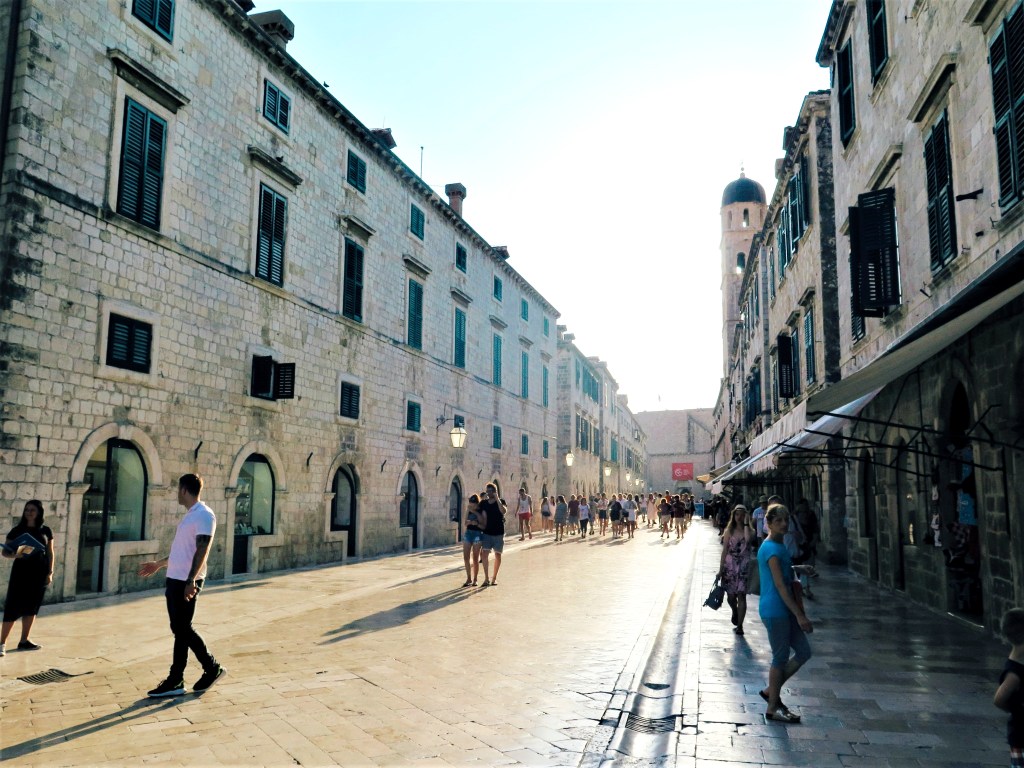
Amazing, I thought when we entered the city in the afternoon. We stepped on one of the biggest streets in the old town, which is named Stradun. However, since the concentration of newly arriving tourists was incredibly high, we almost immediately decided to turn to the right and enter the maze of stone alleys which are very abundant in the historical centre of Dubrovnik. Passing by the houses, we not only got a bit of rest from the crowds, but also, we got a bit of rest from the heat. The day we were visiting, it was 33 degrees Celsius in Dubrovnik, which is not that much (in comparison to 39 degrees Celsius, which we had in Mostar the day before) and also, heat is much less unbearable close to the shore, with the fresh breeze coming from the sea.
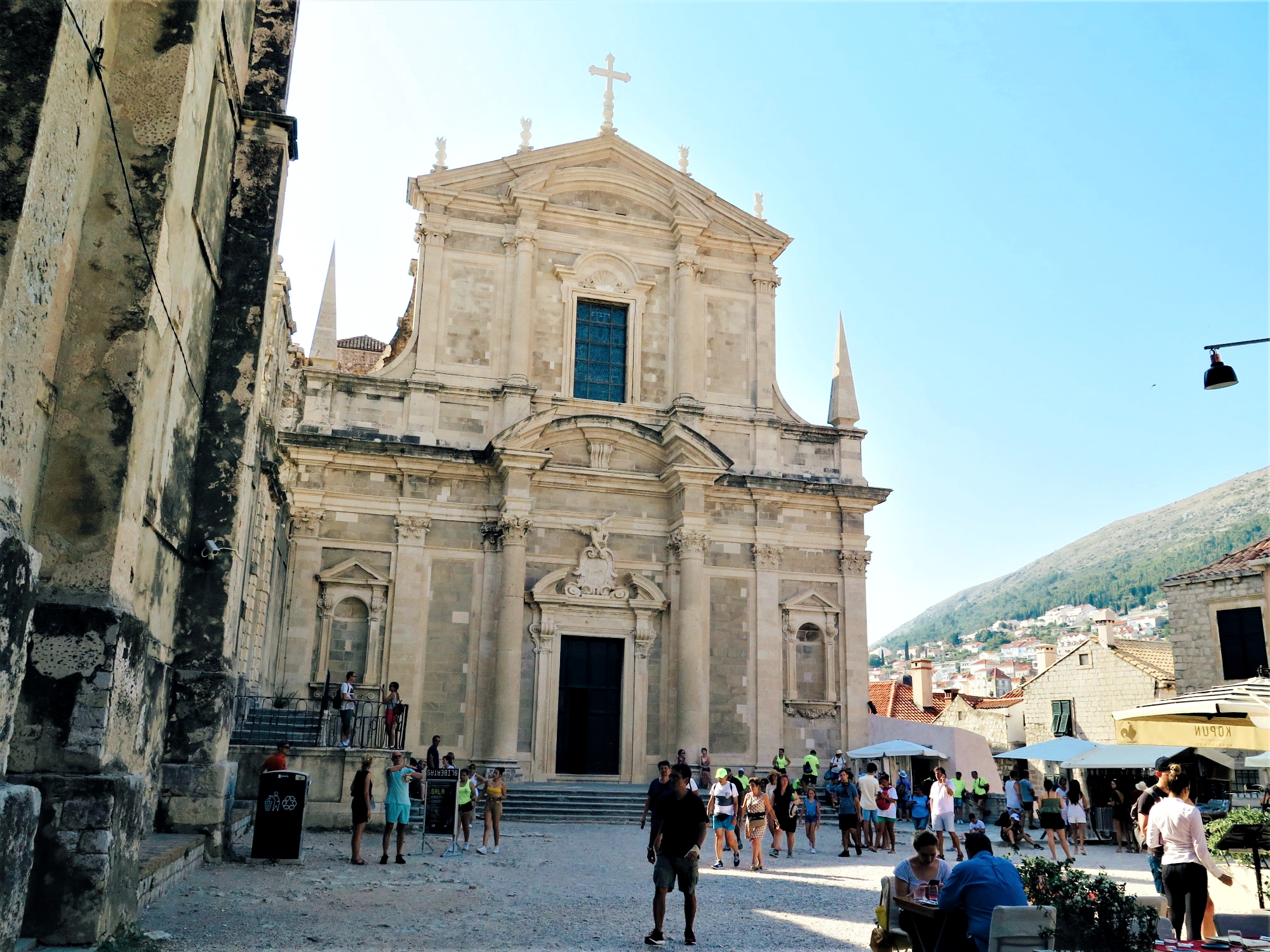
And then, after finding your way to the big architectural landmarks of the city, you get overwhelmed once again. We took a few pictures at nice staircase in front of the Church of St. Ignatius, but we had to wait 5 minutes until a huge wave of tourists passed by, because due to their presence making a nice photo of the place was just impossible. The same thing happens in souvenir shops of Dubrovnik. Once you walk in, you have to fight your way out.


Dubrovnik Cathedral
& the legend of King Richard the Lion-Hearted
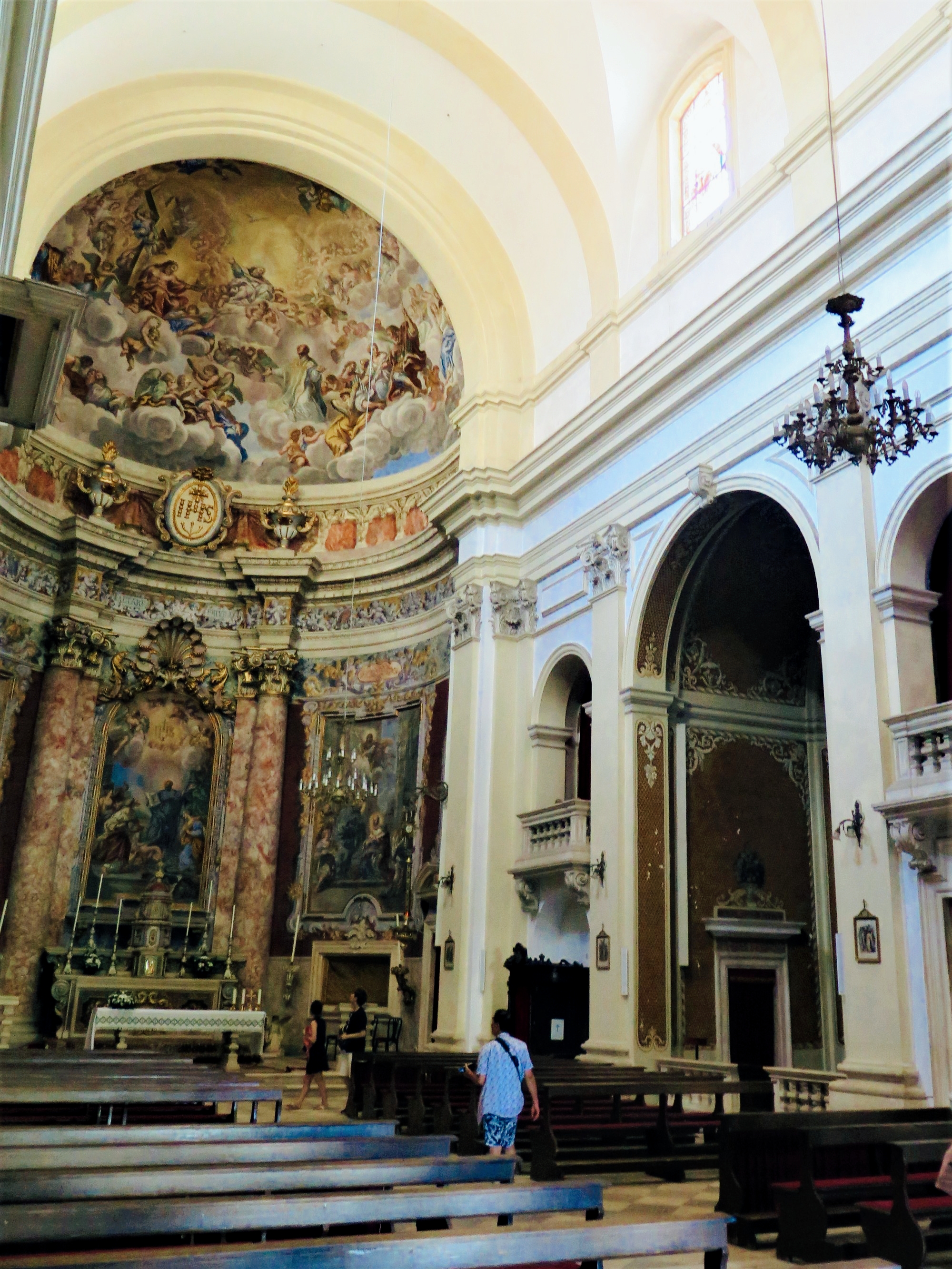
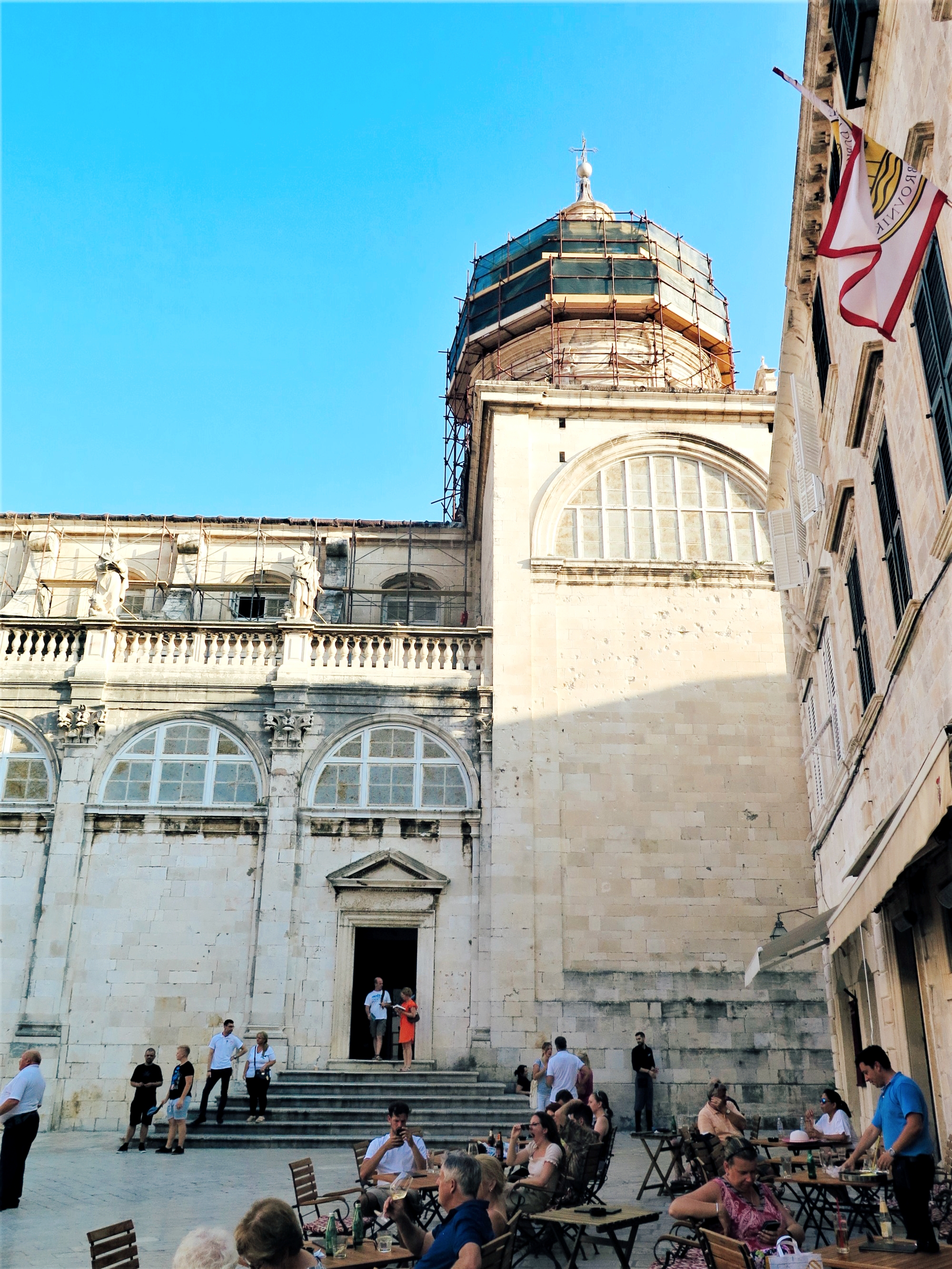
After I had done my shopping for magnets to my family, we continued our city tour towards the famous Dubrovnik Cathedral. The building itself is done into so much detail, though its exterior is not overly decorated. It seems humble at the first sight, though after taking a closer look at the little curves and ornaments on the facade, you have to admit the cathedral is a masterpiece. According to the legend, precisely 100 000 ducats was spent on building the dominant of Dubrovnik’s old town.
This legend also tells a tale of King Richard the Lion-Hearted and his return from the Third Crusades. During his travels home, he got caught in a huge storm. Floating on wild waves of Mediterranean Sea, the king made a vow that if he survives the storm, he would build two churches (one on the first land he would set his foot upon, the second one in his homeland), both of them dedicated to Blessed Virgin Mary. Luckily, the Venetian ship which was having the king of England on board, did withdraw the dangers of stormy sea and thus, the king could set his feet upon the island of Lokrum (which I will be speaking more in detail about later).
When people of Dubrovnik heard about the tragic events which brought the king of England near their shore, they invited him to the city and said he could stay until he fully recovers from his injuries caused by the storm. King Richard accepted the invitation and due to the hospitability of people of Dubrovnik, he agreed to the plan of building the Church of Blessed Virgin Mary in the city of Dubrovnik. But under one condition, which was that the people of Dubrovnik would build a smaller church on the island of Lokrum, as well (which they did and they dedicated it to the Benedictine monastery). After the agreement was made, King Richard left 100 000 ducats to the people of Dubrovnik and a servant who would control the process of building the church and report to him, if all goes well. And thus, even though that the records point out some errors in the legend when compared to the historical context, I considered it worth mentioning, since the kindness and hospitability of Croatians can’t be denied by anyone and neither can be the dominance of the Dubrovnik Cathedral among all the sights we can see in the old town. It is a true masterpiece, indeed!

Orlando’s Column
& all the encounters
The square next to the cathedral is known as the main meeting point in the historical centre. By the meeting point, locals mostly mean the Orlando’s column which is a memory of a medieval knight who once helped Dubrovnik reclaim its status of free trade city. To this day, lots of people are meeting at this place. And since the square is so rich in terms of number of interesting historical buildings, even the tourists are often drawn to this place. But no worries, if you walk there in the evening (at around 7pm, when everybody is having dinner in local restaurants), you won’t meet that many people anymore. Hence, even taking good pictures is possible.
Historical clockwork
& the story of Maro and Baro
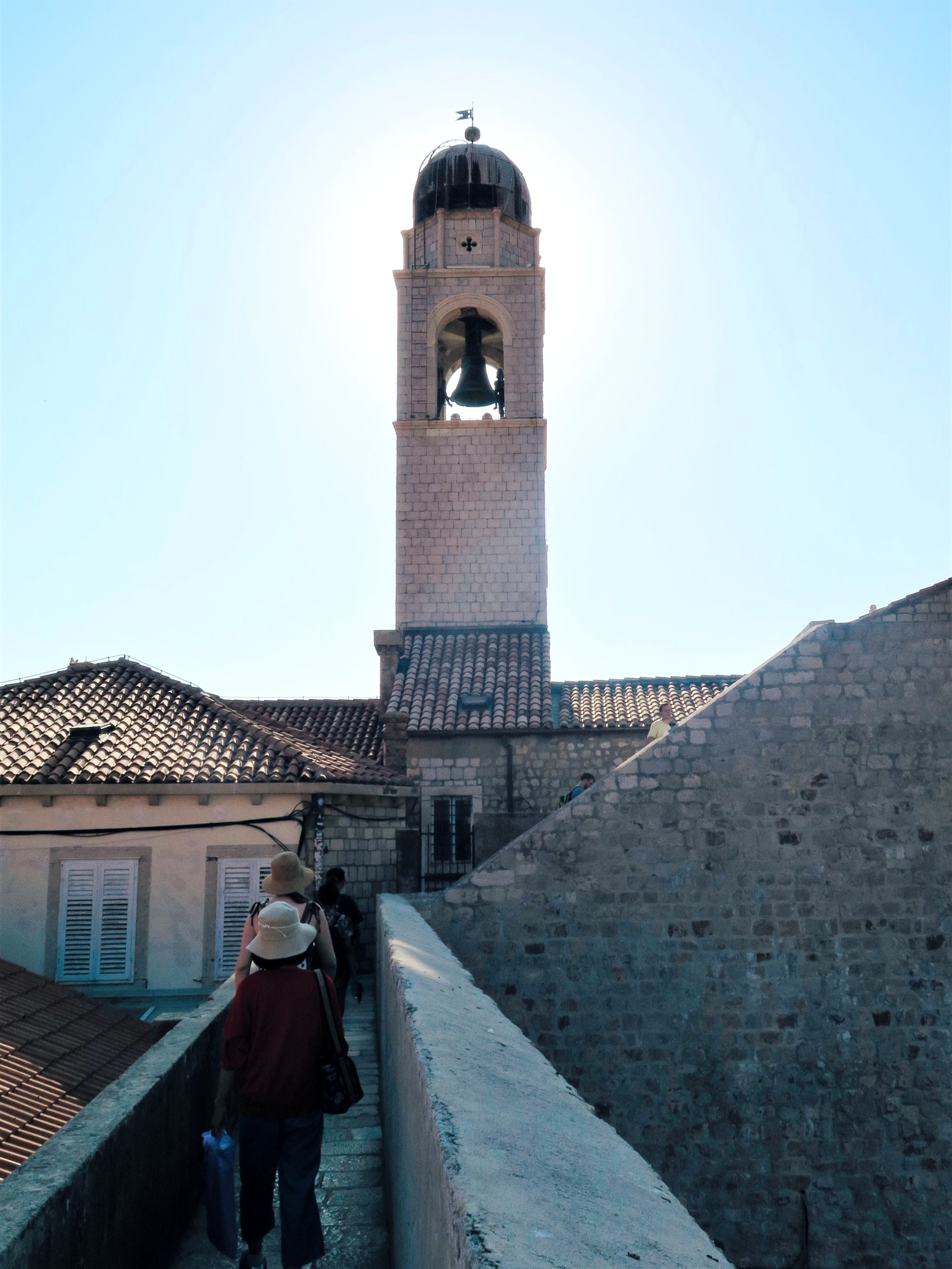
The statue of Orlando stands right in front of St. Blaise church, another nice historical monument of Dubrovnik old town. On the opposite side of the square, there is the famous Clock Tower from the 15th century. A nice legend is connected to this old Clock Tower. You see (or you will see, once you go there), on the top of the clockwork, there’s these two little figures, which were given names Maro and Baro by the people of Dubrovnik. The clockwork could only work because of them, because they are holding a mechanism which makes the bell ring each day at noon. Unfortunately, the bronze that Maro and Baro are made of has caught a weird shade of green through the years of clockwork being in bussiness. Therefore, instead of Maro and Baro, these figures are now more popular among the folk as Zelenci (in English, the Green Guys).



The Sponza Palace
& story of a tremendous earthquake
Another significant landmark of old Dubrovnik, the Sponza Palace, lies right next to Maro and Baro’s old Clock Tower. It is said that besides the architectural value of this Italian style house, the place is so special because most of trade with merchants coming from all across the world was happening at this place. Also, it was one of few buildings which survived the tremendous earthquake in the 17th century untouched. Just look at the loggia, I could imagine the noblemen of Dubrovnik looking right to the plaza with the grace and even a slight hint of meanness in their eyes. History really does come alive in Dubrovnik, as the centre with these buildings coming from all eras is very well-preserved to this day.
Another nice (and I can’t use the words tourist attraction) building stands really close to the Sponza Palace and the Clock Tower. It is the Rector’s Palace. A place where there’s the museum of Dubrovnik, displaying their exhibition on cultural history of the city. But enough with the sightseeing, now it’s time to change the point of view.
Walls of Dubrovnik
& story of a neverending walk
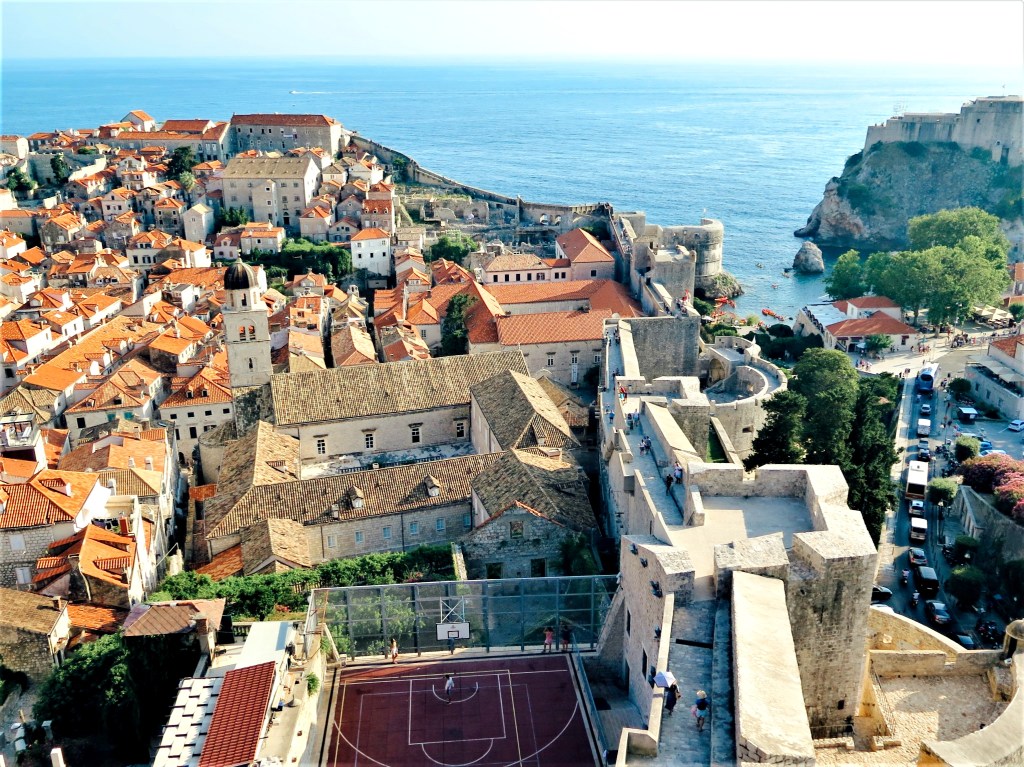
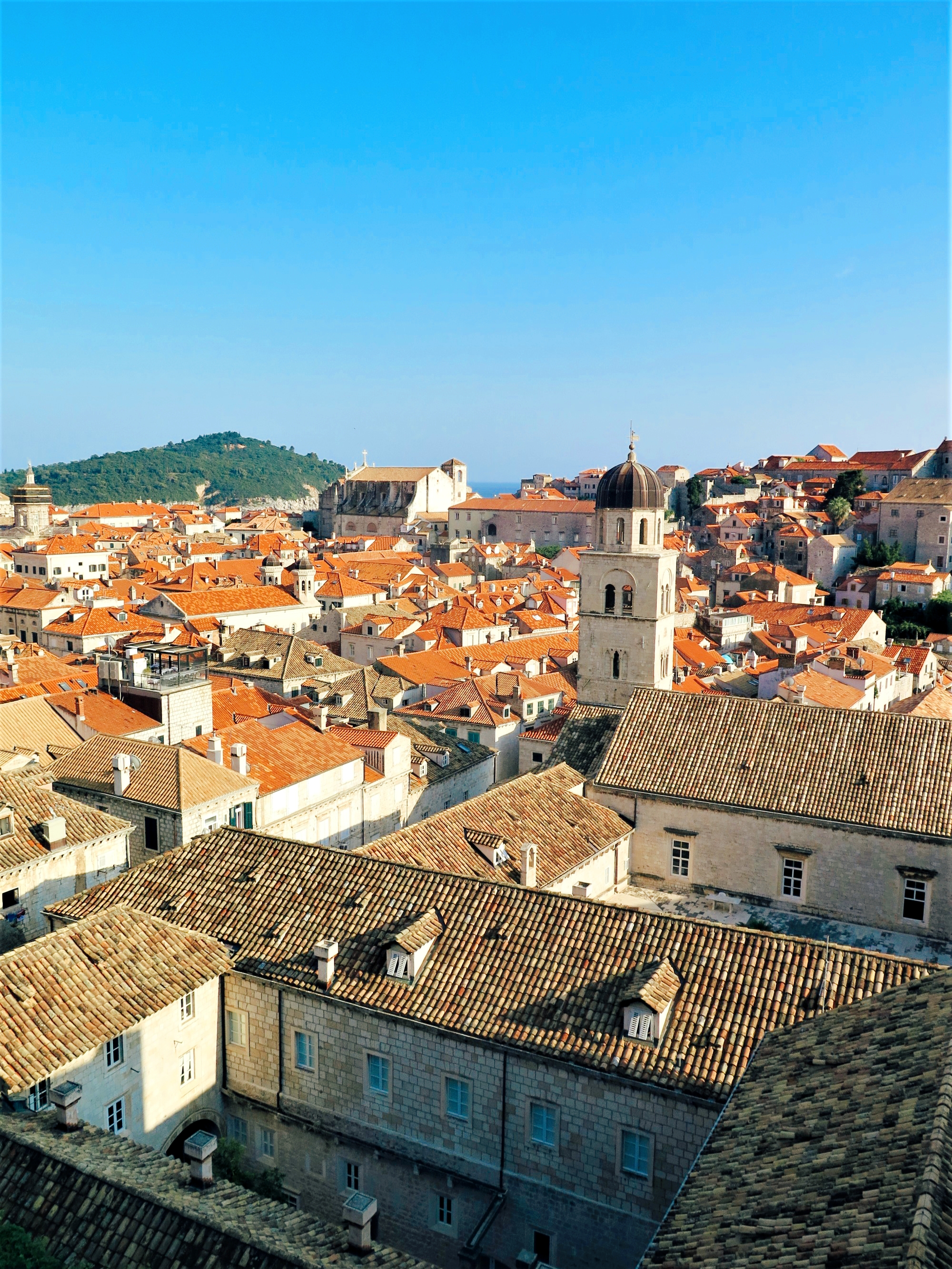
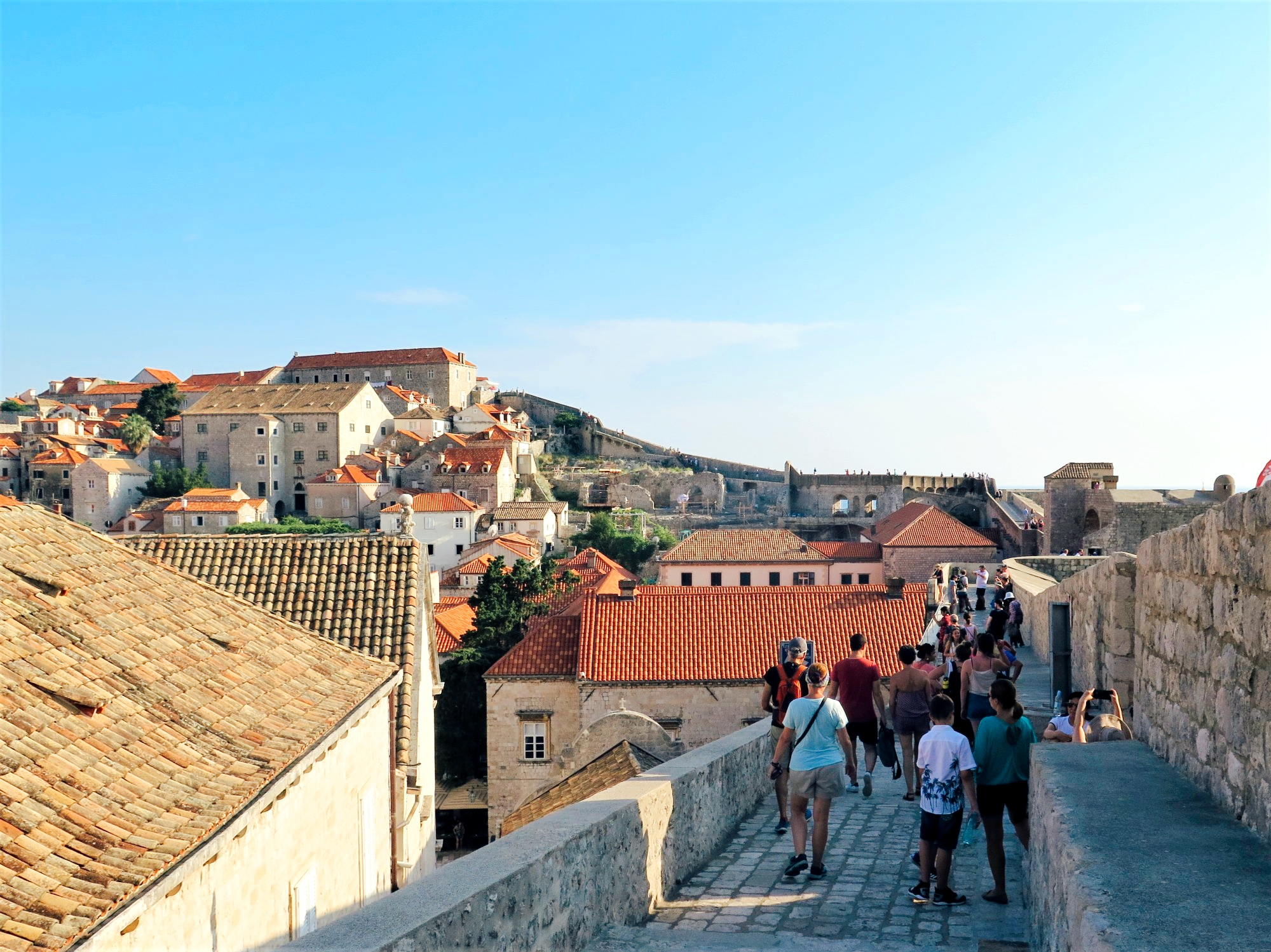
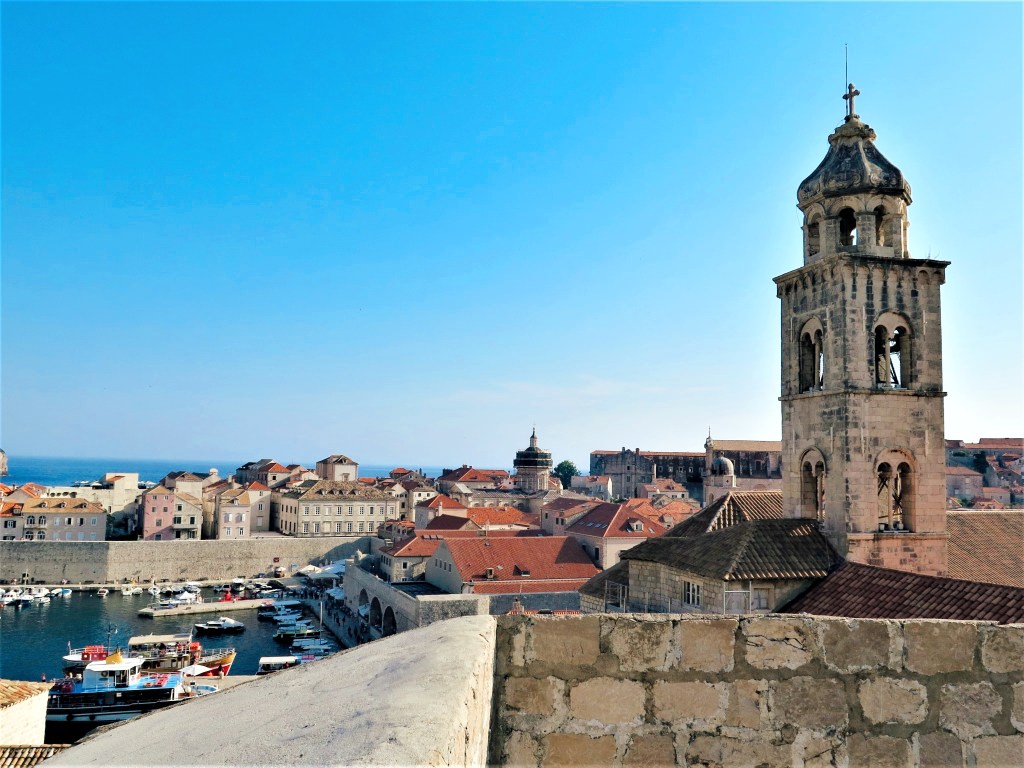
Even though we did not achieve the proper bird’s eye view that day, we at least came closer to it by climbing up the city walls and taking a long walk along. And when I say long, I really mean long – nearly 2 hours long walk. Turns out that the walls of Dubrovnik are 2 kilometres long. Yes, I know, you must think: „Who would ever walk 2 hours and pass just 2 km?“ The truth is that the fortifications are a bit different to the normal type of walk. Firstly, you have to watch out for tourists. The walls are really narrow and at some points, it is even hard for two people to cross each others’ way. Secondly, you have to be careful, because the heat can slow you down and even make you feel uncomfortable. Rather wear a strawhat once you’re there, walking the Walls of Dubrovnik. Also, carry a bottle of water with you, because all the stops with beverages on the walls are crazy expensive. Seriously, 8 euros for a pint of beer? And 5 euros for a glass of orange juice?
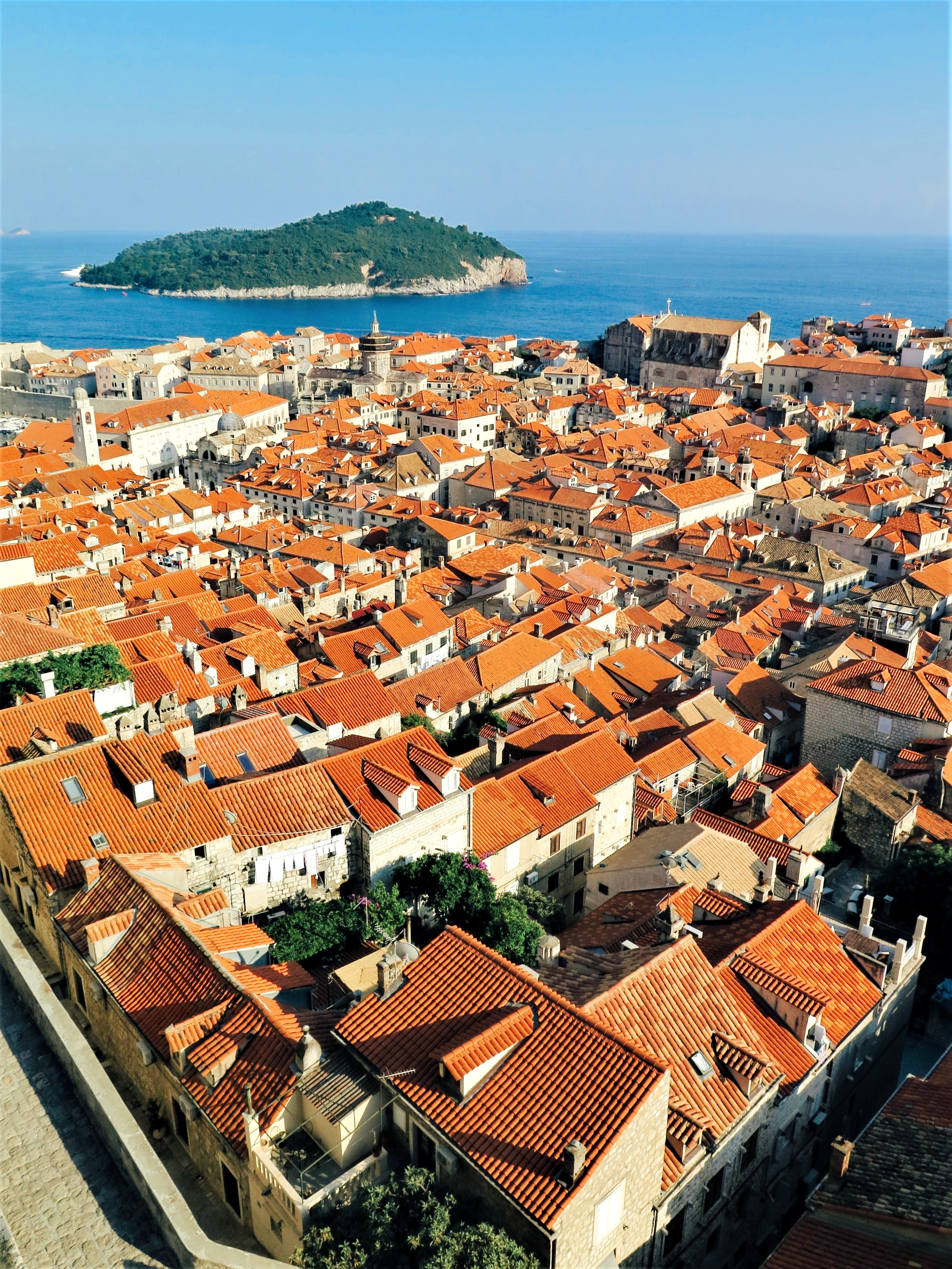
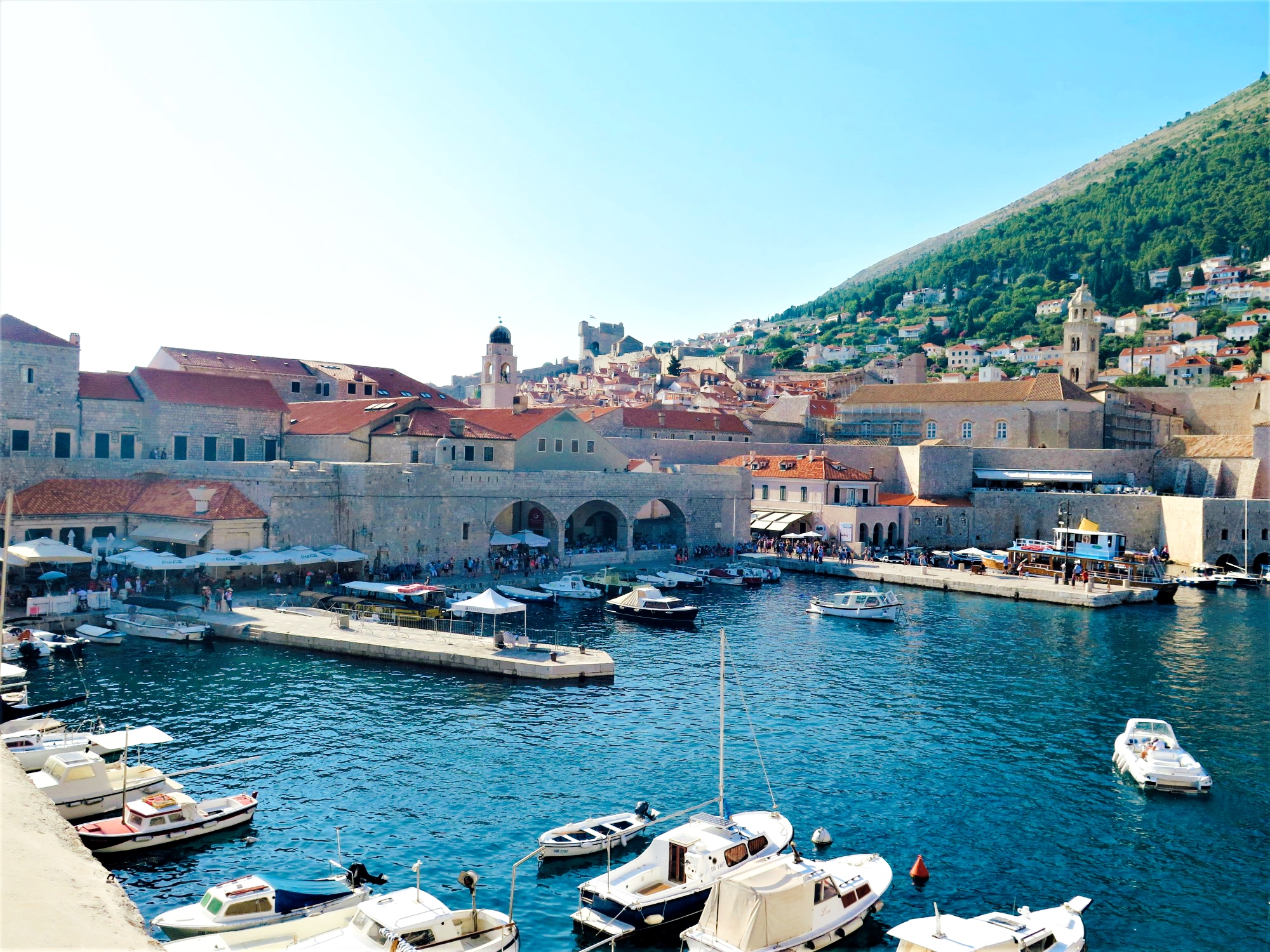
And last but not least, Walls of Dubrovnik offer the most beautiful landscapes you could ever see. The city is standing right there at your feet, taking a bow silently and offering the views you’ll consider unforgettable. Thus, of course you’ll take your time walking these 2 kilometres. You’ll make enough pictures of the red-roof city from all angles, you’ll sit down at some points to discuss whether the tower you see is really the tower that was destroyed in the last season of Game of Thrones, and when walking at the side which is close to the shore, you’ll stop for a moment and just enjoy the cool breeze coming from the sea.


Island of Lokrum
& the legend of a cursed monastery
When standing there, on the edge between the shore and the sea, take a glance at the Lokrum island, rising proudly from the deep waters as the lonely island close to Dubrovnik. On the island, there used to be a Benedictine Monastery established in early 11th century. There is an interesting legend connected to the island, which I would love to tell you about. This legend tells a story of French army general, who gave commands about the closure of Benedictine Monastery on the island of Lokrum. According to the legend, monks did all they could so that they would not have to give up the monastery, but the commander was not to be reasoned with. So the night before their departure, monks made a ritual by lighting up candles and walking around the island three times. In the morning, completely exhausted they boarded the boats and abandoned the island, saying they would never come back again. None of them even looked over their shoulders to take once last glance on their piece of land. But it is to be said, that the previous night they also laid a curse upon the island. They said: „Whosoever who claims Lokrum for his own personal pleasure, shall be doomed!“
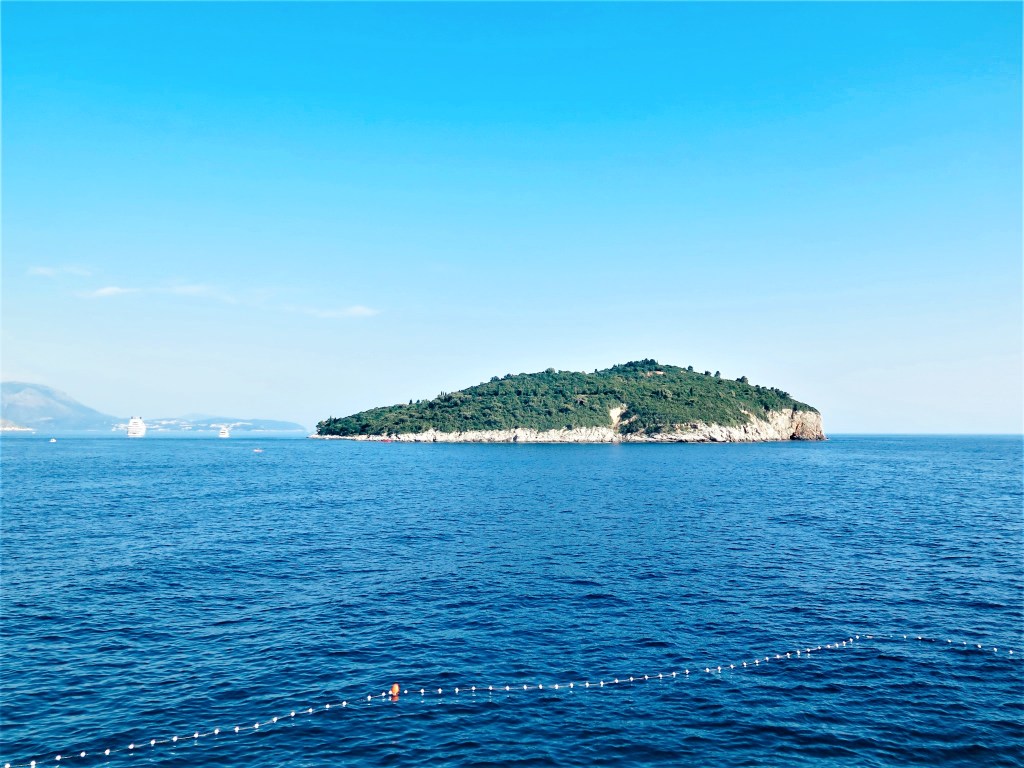
And not long after the army moved to their newly claimed island, the curse started to take effect. One of the three Dubrovnik aristocrats jumped out of a window, the other drowned in the sea on the way to Lokrum, and a servant killed the third. Later on, a series of unfortunate events happened to each and every owner who decided to spend some time on the island of Lokrum, including general Tomasević, archduke Maximilian (younger brother of Francis Joseph I.) and his nephew. After empress Elisabeth of the Habsburg monarchy learnt about this strange connection of their family to the island they owned, she tried to offer the island back to Benedictine monastery. But they refused, holding on to the promise that their brothers had made. Thus, even though that empress Elisabeth visited the island once, due to superstition she refused to spend a single night there.
Mysterious is the legend of Lokrum, which seems so peaceful and idylic from the Walls of Dubrovnik. But one is for sure – Benedictine monks never returned to the island, leaving it abandoned. Nowadays, tours around the island are available for tourists. Though, after hearing the local legend, visit of such an island must be a bit of an adrenaline experience. We did not have the time to visit both the city and the island of Lokrum that day, unfortunately. Or should I say fortunately?
After two hours of walking the Walls of Dubrovnik, quite exhausted we climbed back down to the city centre and took our very last glance on the city. At around 7pm, which is the time of dinner, the city is apparently less crowded than during the day. And as the long shades offer some rest from the heated city walls, we really enjoyed walking the city centre once again – with less people, more views and more pictures.
And when leaving the city, I even contemplated if living in such a city would be a good idea. After seeing how medieval city centre of Dubrovnik looked like, I wished to live there with all my heart. To be one of the writers, summing up their thoughts and writing them down into their small notebooks, sipping cold drinks on a terrace of small cobbled house hidden somewhere in the stone maze of the old town. But (both fortunately and unfortunately), Dubrovnik has shown its face to the world. The face so beautiful that the world wants to see it in spotlight over and over again. It’s completely understandable, the desire of walking around this architectural extravaganza. Though, would it be more of a crime to hide this jewel than to put it on eyes of everyone, including the merciless tourists? It is hard to say. I myself felt a slight pity of the place and its inhabitants when I was there. I think the city deserves its peace and so do the people.

But on the other hand, if Dubrovnik remained hidden, it would be bad for its economy. Profiting on dominance in architectural beauty of the city (among most of the Croatian cities) and at the same time, on the fame of worldwide phenomenon such as Game of Thrones, must be really great for the town’s small entrepreneurs and free-lancers. But again, I must say, that the magic of the city is the most enjoyable if you are willing to pretend that the crowds are not there. It is not always possible, but I somehow managed to do so on the day when we were passing by. And partly because of the effort I put into ignoring the crowds, and partly because of the unique soul of the city on the southern tip of Croatia, I must say that now, when I look back at the day when we were there as visitors, I have a really good feeling about our visit of Dubrovnik. And in conclusion, I can only say:
Big jewels can never be kept a secret for too long. They will always be found by the curious eye of the society. Some sooner, others later. Hopefully, Dubrovnik will withdraw this mass mania of tourism and will remain just as adorable and authentic as possible. And I even hope, that one day when the curious eye of public will turn to some other jewels on the shore of Mediterranean Sea, I will be able to sit on a terrace of sunny Dubrovnik with my laptop on, sipping to an ice-cold drink and writing another love letter to the world. I’m already looking forward to that!
Love,
Antonia
Have you enjoyed reading the Love Letters?
Follow us to get new content delivered right to your inbox.
 Love Letters to the World